


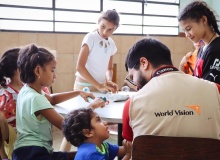
With the first month and a half now having passed since the two earthquakes June, it is essential that we recognise a conviction that must guide all recovery and reconstruction efforts: surviving is not enough.
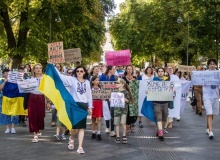
Ukraine is not simply fighting for survival; it is also preserving the civic habits that make survival meaningful.

I hope that the Jeffrey Donaldson revelations will cause us to reflect deeply on the culture that we have allowed to develop, which is insufficiently loving and insufficiently committed to truth.
.jpg)
Psychological and sexual abuse often thrives in the shadow of 'gentlemen agreements' and a hermeneutics of cover-up that prioritises institutional and religious prestige over the dignity of the vulnerable.
.jpg)
“As Christians, we are called to work towards cultures where abuse is never ignored or concealed”, says the Evangelical Alliance Northern Ireland, following the court conviction of former DUP leader Jeffrey Donaldson.
.jpg)
Abusers set up new churches, preach again about God’s love, receive official recognition from ‘the good people’, and host lavish meals to celebrate their own success. Victims try to rebuild their own life, in silence.
.jpg)
Secretary of War Hegseth’s appearance at Rededicate 250 conservative Christian rally in Washington reinforced the perception that a warrior-style, crusading Christianity is gaining influence in nationalist circles. But this neglects the broader biblical trajectory toward justice, mercy and reconciliation.
.jpg)
The way we deal with cases of abuse in our communities is not a minor issue: it is a profoundly spiritual, pastoral, ethical and also missionary matter. An essay outlining three models and four mistakes that churches often make.
.jpg)
150 practitioners and experts serving across Europe discussed topics such as strengthening younger generations, mental health and sexual abuse prevention. The Refugee Highway Partnership organises such gatherings every year.
.jpg)
Technology has not corrected arrogance: it has amplified it, aestheticised it and placed it at the service of new liturgies of the ego. There is no more practical or effective mechanism for dismantling the narcissist’s façade than public laughter.

Jesus' entry on a donkey raises an uncomfortable yet necessary idea: perhaps true credibility does not lie in the spectacular, but in being faithful to oneself.

Growing up in an Evangelical church in the Middle East, the question of an Evangelical Christian’s relationship to power was not something we discussed. Still, we faced one less temptation.
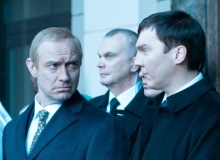
The film explores an age-old human ability: that of constructing structures of power underpinned by carefully crafted narratives.
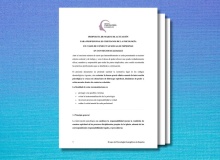
The Evangelical Psychology Group (GPE) publishes a 22-page guide to safeguard the mental health of professionals and protect potential victims. They warn against the misuse of therapy to “preserve institutional reputations or accelerate ministerial restoration processes”.
.jpg)
Bullying, avoidance and narrative control are three mechanisms to consolidate and maintain power. They are the antithesis of the servant leadership to which Christ calls His people.
After launching Stop Abus to tackle sexual abuse in churches, the CNEF says a broader reflection is needed among evangelicals around the the concept of “authority”.
Cropped(1).jpg)
Colombian university lecturer Lina Fernanda Montoya has accompanied around 20 victims. In Madrid, she explained observable patterns when abuse occurs in evangelical churches.
.jpg)
Seven lessons for Christian leaders in the use of power.
A training day in Madrid on abuse in Christian contexts, with experts from GRACE, explored the challenges and opportunities for restoring victims, as well as creating an integrity-based and fair church culture.
.jpg)
GRACE visits Madrid at the invitation of the ‘Psalm 15 Table’ to offer training and meet with pastors, legal experts, politicians and the media.

Now for the fourth time since Russia’s brutal invasion of Ukraine, we are celebrating the Word of God becoming flesh as angels proclaimed peace on earth. So where is the peace?

In the trial at the Provincial Court of Madrid, the pastor is accused of having diverted funds collected by church members for private use without the congregation’s knowledge.

Not seeing is not the same as not knowing.
The third Interdenominational Forum in Spain addressed violence against women and children and the creation of safe churches. 15 speakers addressed the situation from many angles.
Cropped(2).jpg)
Expert lawyer Robert Peters has investigated all kinds of cases of abuse in churches. In an interview with ‘Evangelical Focus’, he argues why the “historically passive and superficial approach” in churches must change radically, and offers keys for action.





Las opiniones vertidas por nuestros colaboradores se realizan a nivel personal, pudiendo coincidir o no con la postura de la dirección de Protestante Digital.

