


Asturias, in the north of Spain, celebrates 45 years of being an Autonomous Community. Among the prominent names in the celebrations features evangelical pastor Rubén Fernández Valle.
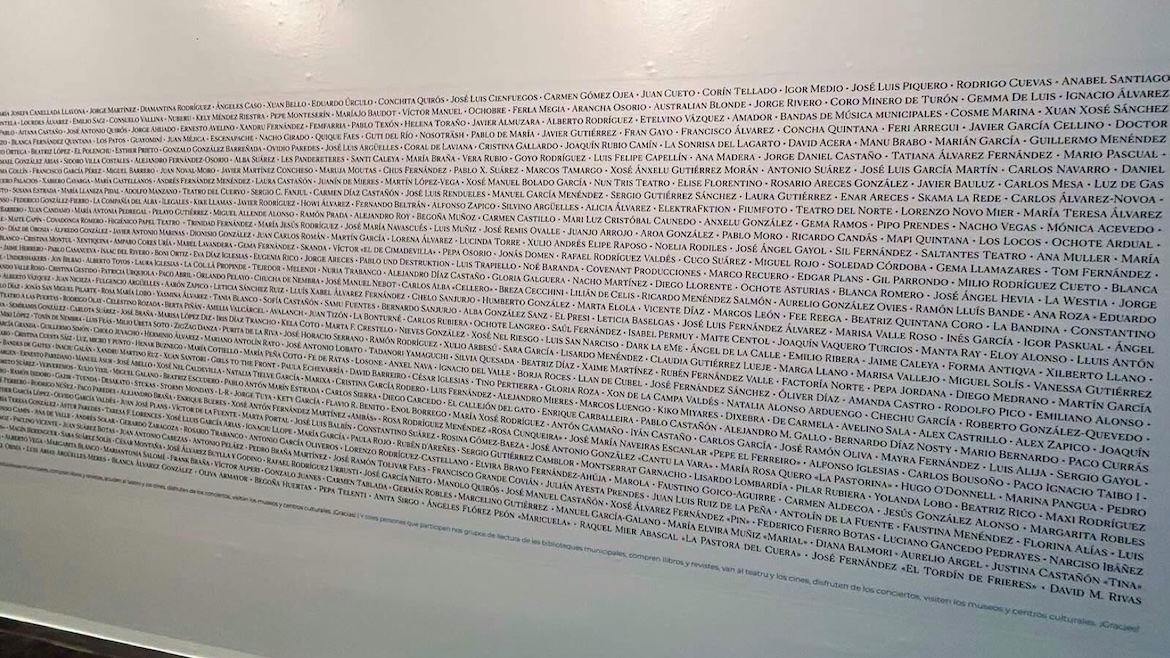 ‘Rain of Stars’ is the title given by the regional government of Asturias to an exhibition marking the 45th anniversary of the Statute of Autonomy.
“Oró Eliséu al Señor y dixo-y:
—¡Señor, ábri-y los güeyos pa que vea!
2º Reis 6:17 [1]
It is very obvious, yet also difficult to recognise, that our tendency as human beings is to look but not see.
This shortcoming becomes exponentially more common when we observe ourselves and our own hearts. Our Lord Jesus Christ made this clear through a parable: “Why do you look at the speck in your brother's eye, yet fail to notice the log in your own?” [2]
Sometimes, we do not perceive the light until that which obscures it is removed, whether by human or divine action (“And dividing the three hundred men into three companies, he gave them all trumpets in their hands and pitchers with burning torches inside”) [3], and we are taken by surprise in the midst of our daily lives by that which is beyond our reach, or which does not depend on our actions or abilities.
All Evangelical Focus news and opinion, on your WhatsApp
Sometimes, we perceive certain events and circumstances as supernatural and perhaps even as miracles.
When that happens, we recognise God’s sovereignty in it. Sometimes this is not without great difficulty, as in the case of Balaam and the donkey [4].
There are many passages in the Bible that address this subject, but what has been said so far will have to be enough as an introduction, since these lines have a different purpose.
I must admit that when I visited the 2026 Gijón International Trade Fair (FIDMA), I looked but didn’t really see.
The FIDMA is an unmissable event in Gijón’s summer calendar. It is a social hub for business, fun and leisure.
Private and public companies and institutions come together with the public at their stands and pavilions, offering games, history, culture and art, as well as commercial agreements and sales.
The regional government of Asturias dedicated its stand to celebrating the 45th anniversary of the Statute of Autonomy. The space, which covered a wide range of topics, objects and texts, featured a list of first names and surnames that I looked at but did not really see.
The publication on social media of a post by someone whose name appears on that list prompted me to take a closer look at the names of that “cultural constellation” over the years. [5]
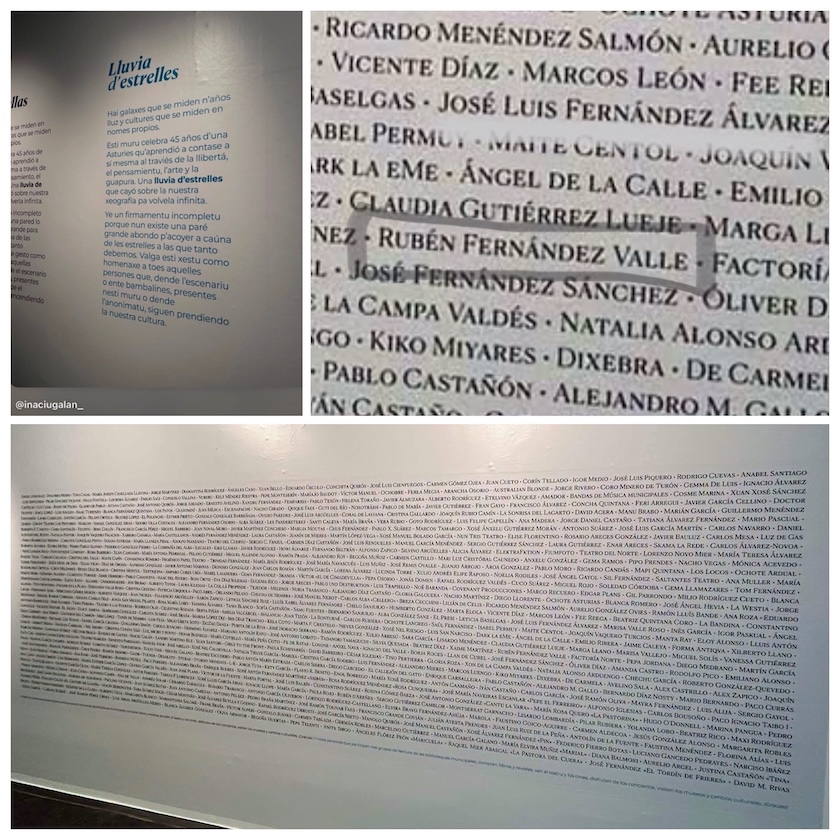
[photo_footer] A closer look at the list of prominent Asturians discovers the name of an evangelical pastor.[/photo_footer]
That is how I came across the name and surname that were very familiar to me: Rubén Fernández Valle (1945–2004).
Rubén was originally from Collera and a member of the evangelical church in Santianes, both of which located in eastern Asturias.
He studied in Tangier (Morocco), before attending the International Bible Training Institute in West Sussex, England. Shortly after his return, he became a pastor at the evangelical church in Oviedo.
He lived during a time of religious persecution under the Franco dictatorship, but he knew how to navigate those difficult years. He knew how to lead his congregation along the new paths that opened up before them.
Firstly, there was the Second Vatican Council. He accepted an invitation to give a lecture on grace at the Oviedo Metropolitan Catholic Seminary.
Secondly, he participated in the public life of Asturias. He agreed to be interviewed in the local newspaper Asturias Semanal. This was a very prestigious publication due to its social and political influence and its role as the voice of the democratic alternative to the dictatorship.
As a representative of the church, he supported the demolition of the wall separating the Catholic and civil burial grounds in Oviedo cemetery.
He also played a key role in organising the meeting of the Federation of Independent Evangelical Churches of Spain (FIEIDE), which was held in what is now the Reconquista hotel. This hotel currently hosts the winners of the Princess of Asturias Awards.
During this national gathering, a young man — now well known doctor and international author Pablo Martínez — gave his first public lecture and several pastors were interviewed on Spanish state television (TVE). This was the first time that evangelicals appeared on Spanish television.
Thirdly, the interdenominational fellowship. He did not only care for his own church. His visits to evangelical churches in the east and west of Asturias were greatly appreciated.
He moved the place of worship in Oviedo from a neighbourhood to a street next to the historic centre, in the heart of the city, bucking the trend that had been in place for some time of moving out to industrial estates.
He promoted the Association of Evangelical Ministers of Asturias, the precursor to what would become the Evangelical Council, the official representative body in dealings with the regional government.
I suggest that the Council consider the possibility of paying him a posthumous tribute, as he was a worker deserving of such an honour.
Fourthly, he knew how to stand firm in the teachings of the gospel, and did not hesitate to defend the rights of evangelicals.
In order to do so, he was could organise a luncheon in honour of José Cardona to thank him for his years of service in defending evangelicals, and to hold a reconciliation meeting with a Catholic priest who had labelled his church a cult, obtaining a retraction.
But that did not prevent him from supporting and promoting the extraordinary work of the Bible Society in the interdenominational translation of the Bible into Asturian, in collaboration with the Catholic priest Federico Fierro-Botas.
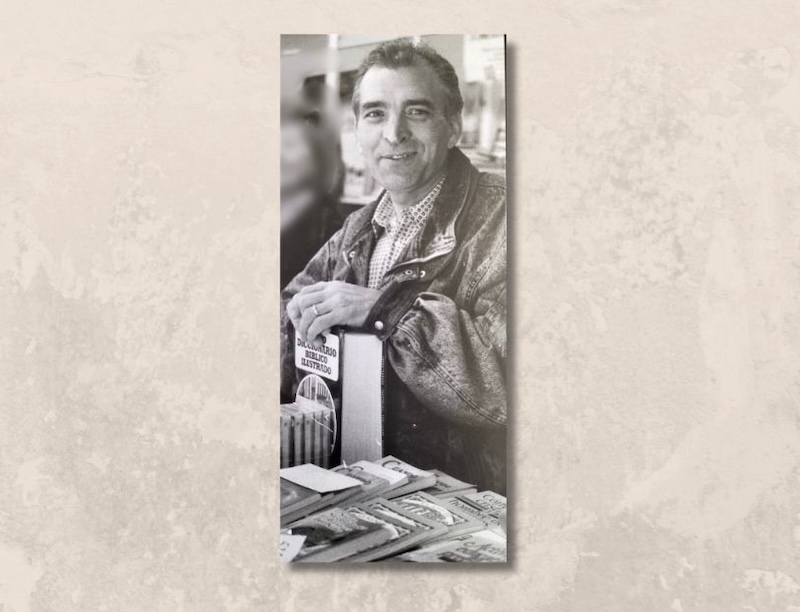
[photo_footer] Rubén Fernández Valle.[/photo_footer]
There is no doubt that the most important thing for a Christian is to have their name written in the Book of Life. However, that is not the purpose of these words.
My aim has been to share the example of someone who knew how to walk this earth as a pilgrim towards his eternal homeland and to highlight the works he carried out because he had a clear vision. [6]
As we recall them, may we join in praise and gratitude to the God he served, who governs history. May this challenge us to view the world and its culture while keeping our eyes fixed on Jesus. May He guide us to see that which is unseen in the natural and everyday things, those things which are eternal. [7]
Let us ask God to enlighten our understanding so that we may know the hope to which he has called us and the riches of the glory of His inheritance in the saints. [8]
Let us recognise God's hand at work in our history and in the history of those around us. Let us give Him thanks and praise, for behind all these things lies an even greater glory. These things include the fact that Rubén’s name is on the list marking 45 years of Asturian autonomy. [9]
I concluded these lines on the Day of Asturias with a ‘Puxa Asturies!’ (Hurrah Aturias!), a region that the Lord Jesus looked upon and loved. May we, the Asturian evangelicals, be faithful in sharing His message of forgiveness, repentance, and reconciliation. [10]
José Luis Fernández Álvarez is a researcher specialising in the history of Protestantism in Asturias. He has given many lectures on the subject and is the author of several articles published in different media.
1 2 Kings 6: 17. TBA2020 Bible in the Asturian language. All other biblical quotations are taken from the NIV.
2 Luke 6:41
3 Judges 7:16
4 “When the donkey saw the angel of the Lord standing in the road with a drawn sword in his hand, it turned off the road into a field. Balaam beat it to get it back on the road” Numbers 22:23
5 See the images accompanying the article.
6 Revelation 14:13
7 2 Corinthians 4:18
8 Ephesians 1:18
9 The author wants to express his gratitude and praise for the fact that his name and surname appear just above those of Rubén Fernández Valle on that list. He does not see this as a reference to himself, but considers it a blessing that his name appears so close to that of such a faithful servant as Rubén Fernández Valle.
10 2 Corinthians 5:18–21
[analysis]
[title] Do you see a need for this kind of journalism? [/title]
[text] Evangelical Focus is a network of many people in Europe and beyond who strive to bring a uniquely Christian perspective to the big issues of conversation.
Through news, interviews, opinion and analysis, we seek to build bridges between evangelical churches and the societies in which they live.
As a non-profit entity, the big challenge is to be sustainable, month by month. We invite you to make a difference! Join the readers who make Evangelical Focus possible.
[/text][/analysis]





Las opiniones vertidas por nuestros colaboradores se realizan a nivel personal, pudiendo coincidir o no con la postura de la dirección de Protestante Digital.


Si quieres comentar o