


The film phenomenon offers an energetic blend of action, music, and humour, wrapped in beautiful, vibrant animation and framed by a mythology with darker undertones.
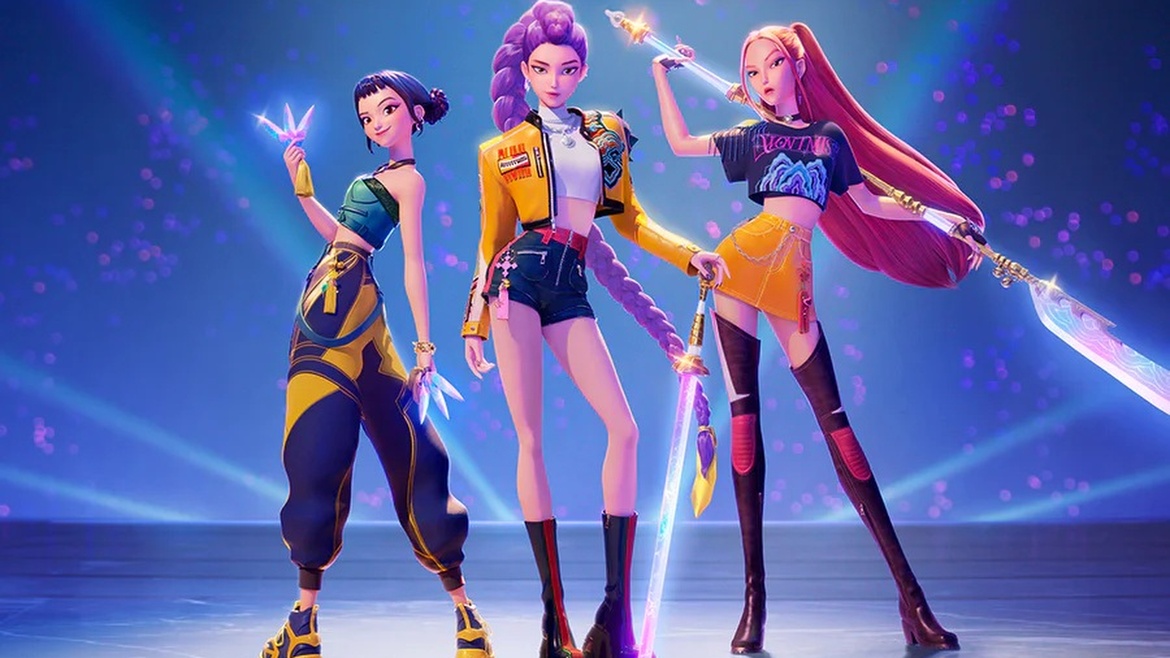 Promotinal image of KPop Demon Hunters, launched in 2025 by Sony Pictures and Netflix.
The story of the girl group Huntrix has become Netflix’s most-watched animated film ever and remained at the top of the platform’s film rankings for ten weeks.
The animated musical has also made history with four songs simultaneously appearing in Billboard’s Hot 100 top-ten singles, including “Golden” reaching the number one spot.
All Evangelical Focus news and opinion, on your WhatsApp.
The film’s songs can be heard everywhere and have captivated both younger and older audiences. The sing-along version quickly embeds the music in the minds of viewers, and younger fans enthusiastically perform songs such as “Golden”, “Your Idol,” “Soda Pop,” and “How It’s Done.”
The soundtrack combines catchy melodies with polished choreography, while the lyrics actively drive the story forward. At the same time, the message conveyed by each song invites reflection.
[destacate] K-pop combines synchronized dance with a global subculture marked by distinctive fashion, language, and beauty ideals[/destacate]
Although the animated film about the fictional world-famous K-pop group Huntrix has global appeal, it is deeply rooted in Korean mythology and culture. The film is based on an earlier story written by one of the screenwriters, Maggie Kang, who sought to reflect her Korean heritage through elements of mythology combined with K-anime and K-pop.
K-anime is characterised by fluid animation techniques and a vivid colour palette, often exploring complex and relatable themes. These are frequently connected to Korean folklore or contemporary culture, where K-pop undoubtedly occupies a central place.
Inspired by Western pop music as well as genres such as hip-hop and rock, K-pop combines synchronized dance with a global subculture marked by distinctive fashion, language, and beauty ideals.
KPop: Demon Hunters is overflowing with visual and verbal symbols drawn from Korean mythology, including references to spirits, guardians, and supernatural messengers. From the opening scenes, viewers are drawn into a world of myths and are presented with the background to the film’s title.
[destacate] The film draws on aspects of Korean shamanism and traditions of ritual purification. The “Honmoon” is a magical barrier created by three female demon hunters. [/destacate]The three K-pop stars—Rumi, Mira, and Zoey—are, above all, demon hunters. Their powerful singing voices and songs of hope and courage are their primary weapons in the struggle to strengthen the “Honmoon,” a protective barrier shielding humanity from demonic invasion.
In this respect, the film draws on aspects of Korean shamanism and traditions of ritual purification and protection through sacred objects and stones. In the film’s universe, the “Honmoon” is a magical barrier originally created by three female demon hunters.
The responsibility for maintaining and strengthening this barrier has been passed down through generations of new female trios. The ultimate goal is for the barrier to become the “Golden Honmoon,” permanently keeping the demons at bay.
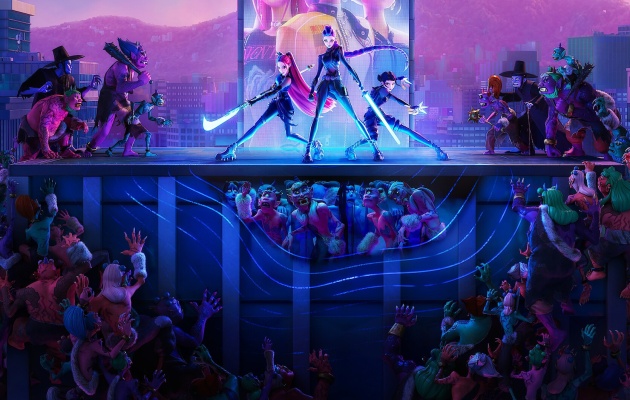
[photo_footer] Promotional image of KPop Demon Hunters. / Netflix[/photo_footer]
The super trio’s archrivals in the boy band Saja Boys also live double lives. When figures dressed in dark coats and wide-brimmed hats appear, they evoke the grim guardians who, according to Korean mythology, escorted the dead across the boundary between worlds. Yet these boys turn out to be demons of a far more sinister kind. Instead of transporting souls, they steal them.
Through the rivalry between the two K-pop groups, the stage is set for the final confrontation between demon hunters and demons. The many mythological references continually echo traditional folk beliefs, reshaped through contemporary choreography and storytelling. Even the presence of frightening creatures takes on a strangely appealing quality. The result is a blend of dark curse and subtle seduction, giving the impression that the film is creating new myths for a new age.
Korean animation is known for combining distinctive cultural perspectives with universal themes that resonate around the world. This is precisely what we see in KPop: Demon Hunters. As the conflict unfolds, themes such as shame, guilt, self-worth, identity, and friendship gradually come to the surface.
[destacate] We can hear echoes of several biblical values that are worth affirming in conversations about the film, even amid the questions and challenges it raises[/destacate] The film clearly communicates that our past should not define us and that acknowledging our mistakes is necessary in order to move forward. Our choices and actions shape who we ultimately become. The importance of self-worth, as well as the value of recognizing something good in every person, is strongly emphasized. Equally significant is the film’s focus on solidarity, loyalty, and friendship.
Here we can hear echoes of several biblical values that are worth affirming in conversations about the film, even amid the questions and challenges it raises.
At the same time, it is important to acknowledge the reality of the spiritual realm. Yet the Bible presents a different understanding of that reality—of what the true battle is about, who the real enemies are, and how victory is ultimately won.
As we engage with the rich diversity of this captivating cinematic universe, let us point people in that direction.
Margunn Serigstad Dahle is Teaching Professor in Communication and Worldviews at NLA University College, Norway, with an emphasis on media pedagogy, mission, and apologetics. She also serves as Editor for Damaris Norway.
This article was originally published in the Norwegian daily newspaper Dagen and is translated by the author. The original Norwegian version is also published here.
[analysis]
[title] Do you see a need for this kind of journalism? [/title]
[text] Evangelical Focus is a network of many people in Europe and beyond who strive to bring a uniquely Christian perspective to the big issues of conversation.
Through news, interviews, opinion and analysis, we seek to build bridges between evangelical churches and the societies in which they live.
As a non-profit entity, the big challenge is to be sustainable, month by month. We invite you to make a difference! Join the readers who make Evangelical Focus possible.
[/text][/analysis]





Las opiniones vertidas por nuestros colaboradores se realizan a nivel personal, pudiendo coincidir o no con la postura de la dirección de Protestante Digital.


Si quieres comentar o