


.jpg)
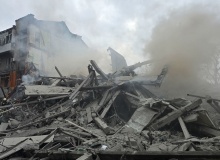
No one was killed, and on Sunday, members of the church began clearing the rubble from the building. “Even a large fire cannot burn down what is built on the solid rock of faith,” say the church leaders in the town near Kharkiv, east of Ukraine.
.jpg)
Assemblies of God leaders from Italy, France, Spain and Portugal emphasise their desire to share resources and promote the planting of new churches in the Mediterranean countries.
.jpg)
A ministry focused on digital mission fields based in the UK offers training and collaboration. “We’re passionate about seeing Christians in gaming communities take opportunities to share their faith online when they arise”, says Heinz Oldewage.
.jpg)
Canals in Amsterdam overflow with boats crammed with orange-clad merrymakers. Music fills streets festooned with orange flags. Children sell old toys and homemade cakes. The old story of the Dutch triumph of freedom over Spanish imperial tyranny carries contemporary relevance.
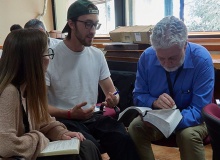
Erudition does not clash with approachability and simplicity. The most effective learning occurs when you “digest” information with others.
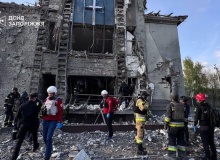
“This is a deliberate attack on people of faith, those who gathered peacefully to pray”, the embassy of Ukraine in the U.S. said in a public statement.
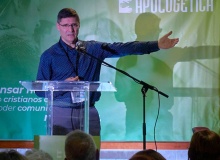
New Testament expert Peter J. Williams joined Marcos Vidal and others in Spain to discuss how to connect the Gospel with today’s society in a wide variety of areas of culture.
.jpg)
Corrie Ten Boom and her sister Betsie demonstrated that the ability to love and forgive when surrounded by hatred is a form of freedom no tyrant can touch. For the sisters, inner freedom became a form of spiritual resistance.
.jpg)
Suspended in the vast blackness, our planet appeared not as a battleground of competing powers, but as a delicate, radiant sphere—fragile yet hospitable and astonishingly alive.
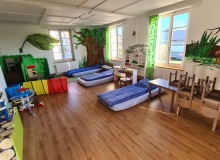
The Swiss Evangelical Alliance helped coordinate the accomodation of around 1,000 refugees. Such actions “have generally had a positive impact on the refugees social, linguistic, cultural and professional integration”, says the Swiss Federal Council.
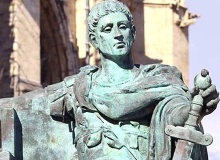
Christianity functions as culture rather than discipleship. The faith becomes a symbol of belonging rather than a call to transformation.
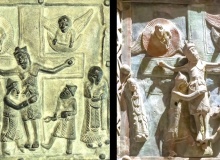
The Romanesque plaque from Verona captures a paradox in bronze: apparent weakness revealing hidden strength, violence confronted by steadfast love, history opened toward redemption.
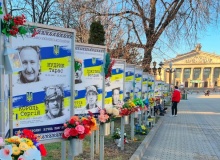
Ukraine is becoming a laboratory of ethics for the global church. Historian Yaroslav Hrytsak says absolute pacifism can become morally irresponsible in the face of violent tyranny.
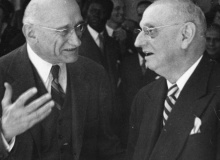
Sadly, when both Moscow and Washington talk ‘peace’ but do war, and trust between allies has been eroded by bellicose behaviour, we have a new reality to face.
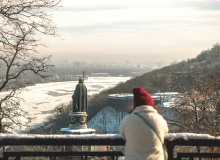
The European Evangelical Alliance invites believers throughout Europe to remain faithful in intercession until peace, justice, and restoration are fully realized.
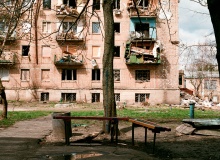
The program Live On explores what it means to continue living when a son, brother, husband, or loved one does not return home. Where can people find the strength to go on after such loss, or to help others carry their pain?
.jpg)
Four years of war leave families broken. Music expresses the feelings of many people's souls.
.jpg)
Will Europe remember the story that formed it? Not as a tool of exclusion, nor as nostalgic conservatism, but as the living source of reconciliation, renewal and hope.

Collectively, churches might become too identified with cultural trends or too remote from the wider society to gain a hearing – and both extremes fail to bring actual transformation.
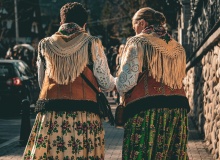
The Roma evangelical movement in Europe is not just a religious phenomenon, but a force of indigenous origin that has redefined the identity, cohesion, and resilience of Roma communities.
.jpg)
“If we don’t register, they’ll come to every service and stop it”, says the pastor of one of the churches after being interrogated by Russian police in the occupied Luhansk region.
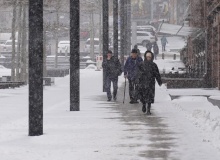
Christian organisations provide aid in the midst of great hardship. “Many people have been without heating for almost the entire month”, says Mariana Laskava from Kyiv.
“We reject any misuse of Christian faith or church authority to legitimize violence, aggression, or domination”, says the European Evangelical Alliance in a new statement.
.jpg)
The cause of the collision between two high-speed trains near Adamuz (Córdoba) is not clear. Evangelicals in the region express their ‘deepest sorrow’ and offer their help ‘for whatever is necessary.’ Christians across the country unite in prayer as the search for survivors continues.
.jpg)
Normally it would be none of my business, as a European, to comment on American politics. Unfortunately, it has become our business too.






Las opiniones vertidas por nuestros colaboradores se realizan a nivel personal, pudiendo coincidir o no con la postura de la dirección de Protestante Digital.

