


Iberia has an extraordinarily rich history, the origins of which date back to antiquity. What many may not realise is that our country also features in the Bible, in both the Old and New Testaments.
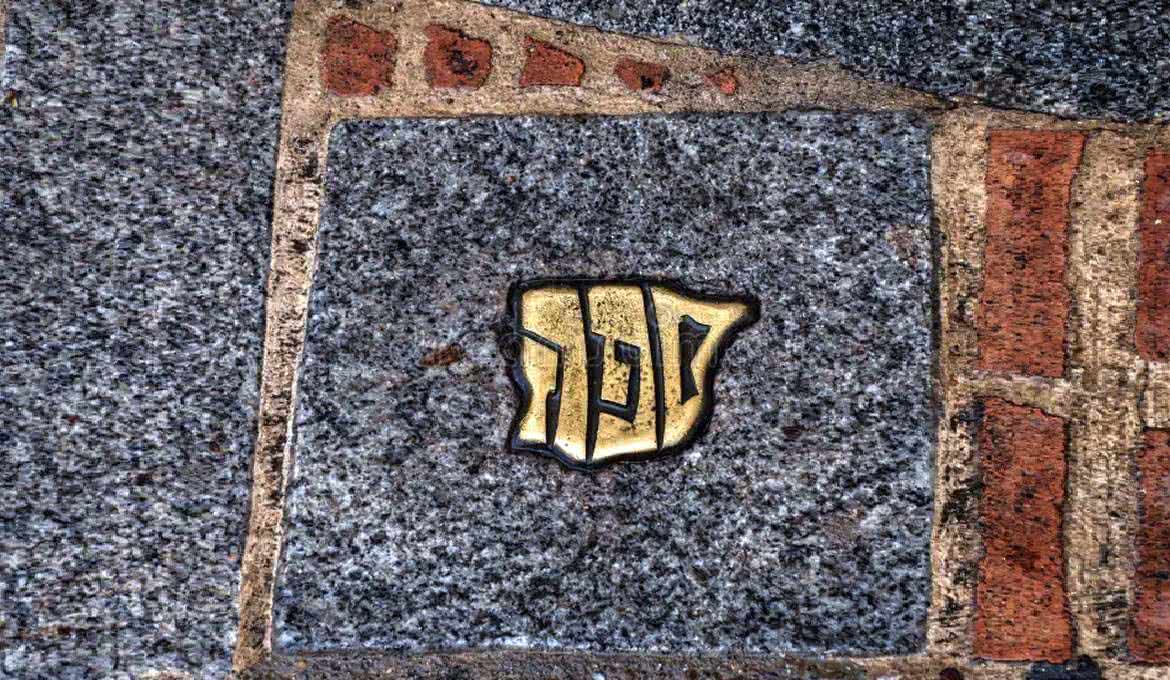 The outline of Spain with the Sefarad motto.
We must understand and appreciate our history, and above all recognise the profound mark that Christianity has left on our country’s history. The annual celebration of Hispanic Heritage Day, held every 12 October, is a good time to set aside some time for this.
Spain has an extraordinarily rich history, the origins of which date back to antiquity. What many may not realise is that our land also features in the Bible, in both the Old and New Testaments.
All Evangelical Focus news and opinion, on your WhatsApp
Shall we take a look? Right then, I’ll try to be brief.
In the Old Testament, the prophet Obadiah (v. 20) mentions a territory called Sepharad, a name which Jewish tradition has historically identified with the Iberian Peninsula.
Also of interest are certain historical traditions relating to the province of Huelva (in Southern Andalusia); according to a study carried out by several historians from the Asociación Hespérides, the town of Zalamea la Real is thought to have originated around 1000 BC and linked to trading expeditions from the eastern Mediterranean, drawn by the region’s mineral wealth. One of these traditions links the city’s foundation to Salomea, said to be the daughter of King Solomon, from whom it is said to have taken its name.
Also curious is the coincidence between the name of an ancient town in Huelva, Abiud, and the character of the same name who appears in the genealogy of Jesus recorded in the Gospel of Matthew (1:13).
In the New Testament we find references that are particularly interesting for our Spanish history. The Acts of the Apostles mentions Cornelius, a centurion of the cohort known as the Italic (Acts 10:1) according to some Spanish translations. More modern translations render it as ‘the Italian’. We also find Rufus, mentioned by Paul in Romans 16:13, whose figure has been linked to the early Christian communities in Hispania, particularly in Tortosa.
A specially significant reference is that of Gallio – not merely because he was from Córdoba, but because he was none other than the proconsul of Achaia, appearing in Acts 18:12–17. His full name is Lucius Junius Gallio, brother of the celebrated Cordoban philosopher Seneca. His presence in the account constitutes one of the strongest historical links between the New Testament and a family closely connected with Roman Hispania.
But perhaps the most explicit reference to our land is found in the Apostle Paul himself, who expresses his intention to travel to Spain in his letter to the Romans (Romans 15:24, 28).
In this regard, Clement of Rome, drawing on the First Epistle to the Corinthians (5:7), states that Paul reached ‘the farthest reaches of the West’, an expression which some authors have interpreted as a reference to Hispania. Eusebius of Caesarea, in his Ecclesiastical History, also records traditions relating to the apostle’s missionary activity following his first Roman imprisonment.
Although there is no conclusive evidence of Paul’s arrival on the Iberian Peninsula, the possibility has featured prominently in the historiography of early Christianity. A doctoral thesis was recently submitted at the University of Córdoba (UCO) on the Christian presence in this area of Córdoba at such an early stage. Coincidentally, in some towns such as Astigi (now Écija), situated on the Via Augusta, there is a strong tradition regarding the presence of the Apostle Paul
We must learn about and value our history, and recognise the profound mark that Christianity has left on the history of our country.
On Hispanic Day, nevertheless, the best thing we can say is – May God bless our country, Spain!
Antonio Simoni, evangelical pastor, historian, theology professor.
[analysis]
[title] Do you see a need for this kind of journalism? [/title]
[text] Evangelical Focus is a network of many people in Europe and beyond who strive to bring a uniquely Christian perspective to the big issues of conversation.
Through news, interviews, opinion and analysis, we seek to build bridges between evangelical churches and the societies in which they live.
As a non-profit entity, the big challenge is to be sustainable, month by month. We invite you to make a difference! Join the readers who make Evangelical Focus possible.
[/text][/analysis]





Las opiniones vertidas por nuestros colaboradores se realizan a nivel personal, pudiendo coincidir o no con la postura de la dirección de Protestante Digital.


Si quieres comentar o