


The Bible should not be welcomed because it supports socialism, conservatism or liberalism. It should be welcomed because it speaks to questions that no political ideology can answer on its own.
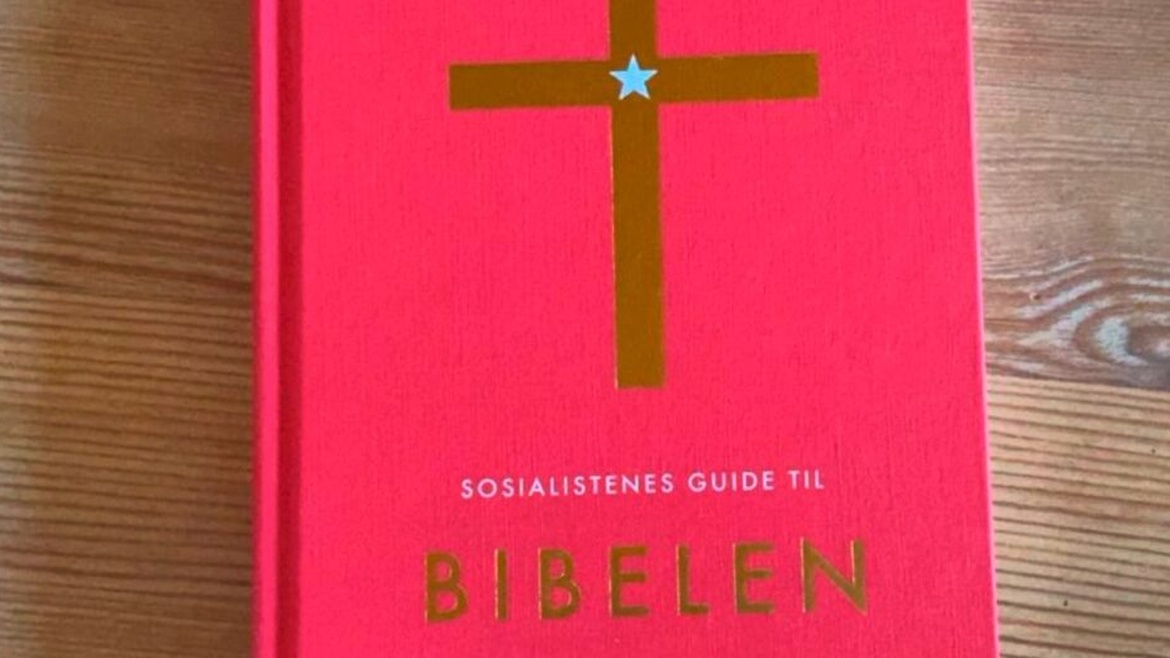 Photo via [link]Weekly Word[/link].
A Norwegian colleague living on the Arctic Circle alerted me this week to a surprising best-seller about the Bible produced by two atheist socialist parliamentarians.
The Bible–they conclude–is far richer and stranger, more radical and compelling, humane and relevant than many secular Europeans have imagined.
When two prominent Norwegian politicians from the Rødt (Red) Party discover that many of the values they cherish—human dignity, equality, solidarity and concern for the vulnerable—are deeply rooted in the biblical tradition, maybe we should all take another look at this extraordinary book.
All Evangelical Focus news and opinion, on your WhatsApp.
For many Europeans largely treat Christianity as a relic of the past—part of our cultural heritage perhaps —but no longer a living source of wisdom for public life.
Many dismiss the Bible as irrelevant, oppressive or simply too religious to contribute to modern democratic society.
[destacate]For two atheist socialist parliamentarians the Bible is far richer and stranger, more radical and compelling, humane and relevant than many secular Europeans have imagined[/destacate]In The Socialist’s Guide to the Bible, Mímir Kristjánsson and Sofie Marhaug don’t set out to convince their readers that Jesus was a socialist. But they do invite their fellow citizens to read the Bible because it remains indispensable for understanding Norwegian culture and public morality.
What surprised the authors was to discover the Bible’s relentless concern for the poor. From the prophets to the teachings of Jesus, wealth is never treated as morally neutral. Economic power is repeatedly judged by whether it serves or exploits others.
The authors were struck by how often Scripture condemns injustice, defends widows and orphans, welcomes strangers and warns against the corrupting power of riches.
Of course, we who ‘know our Bibles’ already knew all this, didn’t we? Or did we? How many discussions about personal morality often receive far more attention than questions of economic justice, business ethics or the responsibilities that accompany wealth in our circles?
As Kristjánsson and Marhaug learnt, the Bible speaks with remarkable consistency about both.
Something they also discovered missing from most political manifesto’s was grace. Politics operates through rights, interests, negotiations and power. Yet the Bible stresses another dimension altogether: mercy, forgiveness and reconciliation.
Justice matters profoundly, but it is never the whole story. Broken relationships can be restored. Enemies can become good neighbours. Human beings are more than members of competing social groups; they are people created in the image of God.
Healthy societies depend upon virtues that markets cannot produce and governments cannot legislate: honesty, humility, forgiveness, responsibility and trust.
[destacate]Something they also discovered missing from most political manifestos was grace. Politics operates through rights, interests, negotiations and power. Yet the Bible stresses another dimension altogether: mercy, forgiveness and reconciliation[/destacate]These are relational virtues before they are political ones. They flourish in families, neighbourhoods, congregations and voluntary associations long before they appear in parliaments.
The Bible’s vision is therefore larger than either capitalism or socialism. It certainly challenges unrestrained capitalism whenever profit is pursued without regard for people. But it also challenges every political ideology that imagines structural change alone can perfect society.
Scripture insists that injustice is not merely embedded in systems; it also resides in every human heart. Greed, envy, pride and the desire for power are not confined to one economic class or one political party. While political institutions matter enormously, they cannot redeem humanity.
Perhaps the greatest contribution of The Socialist’s Guide to the Bible is not its politics but its curiosity.
Instead of finding an outdated religious document, the two sceptics encountered a text that continues to shape Europe’s deepest assumptions about justice, compassion and human worth.
Across Europe there are growing signs of renewed interest in Christianity among people who have little personal faith. Historians increasingly acknowledge the Bible’s decisive influence on human rights and democratic institutions.
Philosophers recognise that concepts such as universal human dignity did not emerge from nowhere. Even secular commentators are asking whether liberal democracy can survive indefinitely after cutting itself off from the moral soil that first nourished it.
Many scholars, religious and secular alike—including Tom Holland, Larry Siedentop, Jürgen Habermas, John Gray, Yuval Noah Harari, Ayaan Hirsi Ali, Douglas Murray and Francis Fukuyama—have challenged the older narrative that human rights and liberal democracy were simply Enlightenment inventions that displaced religion.
Rather, they argue, the Enlightenment often transformed, reinterpreted, and secularised moral concepts that had developed over many centuries within a biblical and Christian cultural framework.
[destacate]If two atheist Norwegian socialists discover unexpected wisdom in the pages of Scripture, perhaps we all should reopen the book as well.[/destacate]So here’s a fascinating question. If socialists are beginning to take the Bible seriously again, why have so many Christians stopped expecting it to shape public life?
Even evangelicals, whom we might expect to take the Bible most seriously, seem to have a blind spot concerning its relevance in the public square.
If two atheist Norwegian socialists can discover unexpected wisdom in the pages of Scripture, perhaps we all should reopen the book as well. Not to recruit God into our political tribe, but to allow the Bible to challenge every tribe—including our own.
The Bible should not be welcomed because it supports socialism, conservatism or liberalism. It should be welcomed because it speaks to questions that no political ideology can answer on its own. What is a human being? Why does every person possess equal dignity? What restrains power? Why should we forgive? What does justice ultimately require?
Even the last line of the book springs a surprise: “Last but not least: Thank you Jesus! Even though we don’t always believe in you, it’s nice to know that you believe in us.”
Jeff Fountain, Director of the Schuman Centre for European Studies. This article was first published on the author's blog, Weekly Word.
[analysis]
[title] Do you see a need for this kind of journalism? [/title]
[text] Evangelical Focus is a network of many people in Europe and beyond who strive to bring a uniquely Christian perspective to the big issues of conversation.
Through news, interviews, opinion and analysis, we seek to build bridges between evangelical churches and the societies in which they live.
As a non-profit entity, the big challenge is to be sustainable, month by month. We invite you to make a difference! Join the readers who make Evangelical Focus possible.
[/text][/analysis]






Las opiniones vertidas por nuestros colaboradores se realizan a nivel personal, pudiendo coincidir o no con la postura de la dirección de Protestante Digital.


Si quieres comentar o