


.jpg)
We ask theologian David Brown in France about today's influence of Catholicism, ‘laicité’ in politics, and the new efforts to promote ecumenism with evangelicals.

Keri Ladner is a compulsive researcher, thanks in part to her autism. More importantly, she’s an inspiring person.

The Bible should not be welcomed because it supports socialism, conservatism or liberalism. It should be welcomed because it speaks to questions that no political ideology can answer on its own.
.jpg)
Fifty years ago, on July 9, 1976, I landed in Frankfurt am Main with my family. A Lufthansa plane had flown us from Moscow to Germany. “To freedom”—as people said. My parents had been waiting for an exit permit since 1956. Now the time had finally come.
A new report shows that 41% of people under the age of thirty want to learn more about the Bible. Surprisingly, a third of men say they have attended at least one church service in the last month.

Europe’s true need is not a change of religious label, but the emergence of biblically sound, intellectually serious and spiritually vibrant churches, capable of responding to the moral and existential void of our age.
A study by the Gordon-Conwell Theological Seminary shows that while Catholics and Orthodox Christians have grown by 0.56% and 0.28%, evangelicals are increasing at 1.34% per year.
.jpg)
The United Kingdom, Belgium and the Netherlands also feature in the world’s Top 15 for religious diversity. The main competitor is not Islam, but religious non-affiliation, a study confirms.
.jpg)
Unlike the Shiites in other nearby Islamic countries, the Azerbaijanis remained largely independent and did not accept the religious authority of the Ayatollahs. Azeri Christians could be a key for the future.
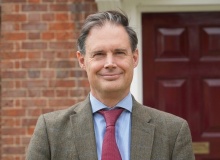
One of the leading academic voices on the historicity of the gospels will be at the upcoming Apologetics Forum in Madrid, which focuses on the theme: ‘Is the Christian faith the best option?’
.jpg)
According to the 2025 confirmation preparation survey, 67 percent of boys and 56 percent of girls believe in the existence of God. 75 percent of Finnish youth attend confirmation classes. Are parishes able to respond to young people's growing interest?
.jpg)
The ‘Global Voice Report’ of the Lausanne Movement addresses the expectations of over one thousand Christian representatives in 119 countries.

Dr Douglas Johnston and his collaborators cite examples from Europe, Central America, Asia, and Africa to show how religion played a crucial role in many international conflicts.
.png)
The church in all its diversity is undergoing a major global reconfiguration, but Europe, with humility, should not fail to contribute what it is able to. A reflection based on Jason Mandryk's talk at the General Assembly of the World Evangelical Alliance in Seoul.
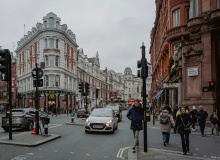
The multicultural context of Britain means that we cannot develop the theology of nationhood in isolation from migrant communities and identities.
.jpg)
A distinguished scholar shows how responses to secularism must depend on the culture.

Dr Amy Orr-Ewing reflects on the changes in Europe's questions about God in recent years, as well as the current approach to faith among many young people in countries like the UK.
.jpg)
Does a renewed interest in a ‘Christian past’ automatically lead to an openness to the gospel? Does undoing ‘woke’ paradigms necessarily mean that there is a genuine interest in the values of Jesus? In the current cultural shift, the challenge for Christians in Europe is to continue to be uncomfortable for those in power.
.jpg)
Because of our cultural glasses in the West today, we miss the criticism that the Old Testament makes of the culture of the time. A classic example of this is the ‘lex talonis’ in Exodus.
.jpg)
A new Pew Research study focusing on the decade 2010-2020 shows how birth rates are key to the growth of Islam, while Christianity shifts its centre of gravity from the US and Europe to Africa.
.jpg)
The gut feeling of many Europeans – and certainly that of many Swedes – is pointing them in the wrong direction.
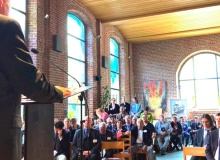
Divorced from its Christian roots, Schuman warned, democracy would degenerate into anarchy or tyranny, a process we see unfolding before our very eyes right now.
.jpg)
As Friedrich Merz’s government takes its first steps, the Evangelical Alliance calls on Christians to “resolutely oppose exclusionary thinking” that vilifies certain groups in the country.
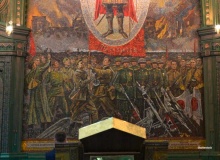
Christian nationalism shows more concern with preserving one’s own ‘tribe’ and national identity than with sharing the Gospel with other ethnicities.
.jpg)
The increase in young men is fivefold, and 37% of all those under 24 say they are curious about the Bible. The YouGov study points to a steady decline in nominal Christianity but faith is becoming “even culturally attractive”.






Las opiniones vertidas por nuestros colaboradores se realizan a nivel personal, pudiendo coincidir o no con la postura de la dirección de Protestante Digital.

