


The film explores an age-old human ability: that of constructing structures of power underpinned by carefully crafted narratives.
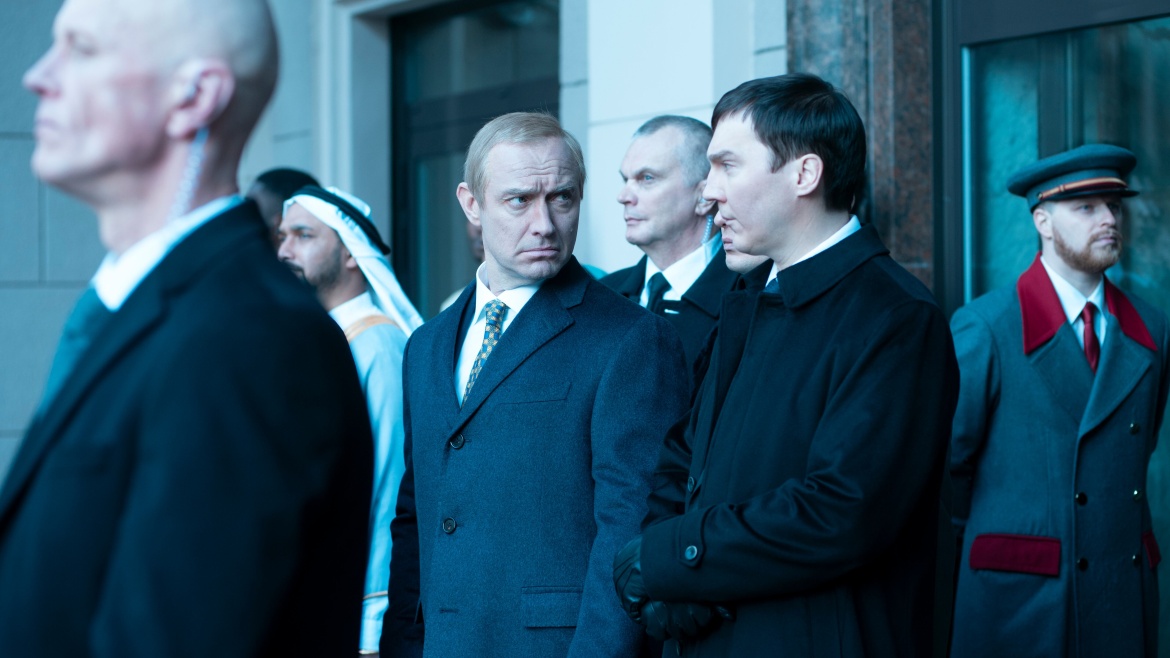 A scene of the film.
The Wizard of the Kremlin, inspired by Giuliano da Empoli’s novel, ostensibly recounts the inner workings of power in post-Soviet Russia. Advisors operating behind the scenes, carefully calculated media strategies, and the patient cultivation of a leader capable of restoring stability to a country that had experienced the dizzying chaos of collapse.
But, once the initial impression has passed, the film leaves us with the uncomfortable feeling that this mechanism is not new.
All Evangelical Focus news and opinion, on your WhatsApp.
Power, at its core, has always been a story. And whoever manages to tell it best usually ends up ruling.
Today we speak quite naturally of propaganda, political engineering or the manipulation of public opinion, as if these were inventions unique to modernity.
[destacate]Power, at its core, has always been a story. And whoever manages to tell it best usually ends up ruling[/destacate] However, one need only open the oldest texts to discover that the fundamental levers of power have been surprisingly constant. Palaces change, empires change, instruments change.
But human nature seems to operate according to an extraordinarily persistent logic.
The Book of Exodus offers a revealing scene. Moses appears before the pharaoh to demand the liberation of Israel and performs a miraculous sign intended to demonstrate the authority of the God who sent him.
But immediately the court magicians replicate the gesture with their own tricks. The episode, read calmly, has something of a theatrical duel about it. It is not merely a matter of miracles, but of a public confrontation in which each side attempts to demonstrate before the ruler and the people who possesses true authority.
Biblical commentators have frequently noted this visible, almost theatrical, nature of the scene. Power needs signs. It needs symbols. It needs gestures that uphold the narrative upon which its legitimacy rests.
Something similar occurs when those in power decide to cloak themselves in legality. The story of Naboth, recounted in the first book of Kings, possesses a disturbing modernity.
[destacate]Power needs signs. It needs symbols. It needs gestures that uphold the narrative upon which its legitimacy rests[/destacate]King Ahab wishes to take possession of that righteous man’s vineyard, but it is his wife Jezebel who devises the plan to achieve this without it appearing to be a simple abuse of power.
She calls for a public fast, organises an assembly and arranges for false witnesses to accuse Naboth of blasphemy. Everything takes place within an apparently impeccable framework: there is a court, there is an accusation, there is a verdict. And yet, the outcome was decided from the outset.
The scene seems written to remind us of an uncomfortable truth: sometimes power does not need to break the rules; it is enough simply to administer them.
The fabrication of a leader also has ancient precedents. When the people of Israel ask for a king ‘like all the nations’, the prophet Samuel warns of the dangers of that decision. But the people insist. They want a visible ruler, a figure who embodies their collective security.
The chosen one will be Saul, and the biblical text itself highlights a seemingly minor detail: he stood out above all the others. In a society where authority had to be perceived before it was proclaimed, appearance was already part of the political narrative.
[destacate]Sometimes power does not need to break the rules; it is enough simply to administer them[/destacate]It is not difficult to recognise in that episode an intuition that modern politics has learnt to handle with extraordinary skill: leadership is also built in the eyes of those who behold it.
Scripture, on the other hand, never idealises human nature. Its pages contain a moral frankness that is sometimes uncomfortable for the modern reader.
The episode of Amnon and Tamar, in the Second Book of Samuel, is an eloquent example. Amnon desires what he ought not to and seeks advice.
Jonadab, described as a very cunning man, proposes a strategy as simple as it is effective: to feign illness, manipulate circumstances and provoke the situation that will allow him to carry out his purpose.
The plan works. The account neither conceals the gravity of what has happened nor softens it with complacent explanations. It simply shows the extent to which human cunning can be placed at the service of injustice when desire prevails over truth.
[destacate]Ancient texts seem to observe our innovations with an almost ironic serenity. They have seen these very same movements before[/destacate]Perhaps that is why the Book of Ecclesiastes recorded one of the most sober assessments of human history: ‘What has been will be again; what has been done will be done again; there is nothing new under the sun’.
Every age convinces itself that it has discovered the definitive keys to power. Every generation believes it inhabits a radically different era.
Yet ancient texts seem to observe our innovations with an almost ironic serenity. They have seen these very same movements before.
The ruler who needs to stage his authority.
The law that is manipulated to serve the powerful.
The leader who constructs himself to respond to the collective desire for security.
The cunning that turns truth into an instrument.
Perhaps that is why stories such as the one suggested by The Wizard of the Kremlin are so fascinating. They do not speak solely of Russia or of 21st-century politics. They speak of an age-old human skill: that of erecting architectures of power sustained by carefully crafted narratives.
And perhaps the most uncomfortable question is not who writes those narratives, but how many times we are willing to believe them.
[analysis]
[title] Do you see a need for this kind of journalism? [/title]
[text] Evangelical Focus is a network of many people in Europe and beyond who strive to bring a uniquely Christian perspective to the big issues of conversation.
Through news, interviews, opinion and analysis, we seek to build bridges between evangelical churches and the societies in which they live.
As a non-profit entity, the big challenge is to be sustainable, month by month. We invite you to make a difference! Join the readers who make Evangelical Focus possible.
[/text][/analysis]






Las opiniones vertidas por nuestros colaboradores se realizan a nivel personal, pudiendo coincidir o no con la postura de la dirección de Protestante Digital.


Si quieres comentar o