


The film depicts a world saturated with demands, conflict and judgement, yet almost devoid of grace. Everyone is struggling, everyone is trying to justify themselves, everyone claims to be right, and yet no one finds peace. A review.
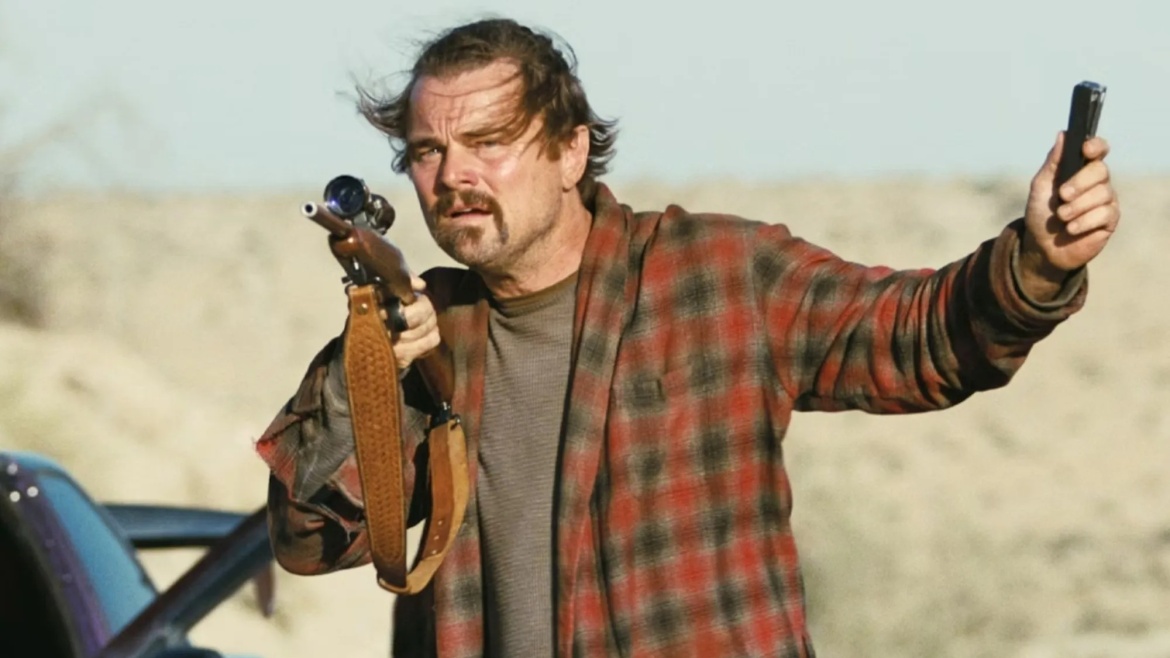 Leonardo Di Caprio, in a picture of the film One Battle After Another.
One Battle After Another stands out as the most honest—and therefore the most demanding—film of the year. It does not seek to please or impose order; it simply remains faithful to the subject matter it portrays.
In an age that has lost the capacity for synthesis, the film refuses to impose a false harmony and embraces fragmentation as a method. Here, form does not merely accompany content: it embodies it. Every aesthetic decision is a moral stance. The film is wounded because the world it observes is, and to pretend otherwise would be a sham.
All Evangelical Focus news and opinion, on your WhatsApp.
Its narrative has been described as schizophrenic, and the term, properly understood, proves illuminating. ‘Schizophrenia’ comes from the Greek schízein —to split— and phrēn —mind—: a split mind. This is how the characters live, torn between incompatible impulses, trapped in an identity that can no longer hold itself together.
[destacate]The film is not disordered due to incompetence, but out of fidelity. To impose order on this world would be to lie about it[/destacate] And this is how the narrative behaves: fragmented, discontinuous, at times contradictory. There is no linear progression because there is no linear life to tell. The film is not disordered due to incompetence, but out of fidelity. To impose order on this world would be to lie about it.
The plot, reduced to its essentials, can be stated without difficulty. A group of characters moves around a violent conflict, a persistent and ill-defined war that never quite takes shape and which, precisely for that reason, permeates everything.
There is no decisive battle nor a final victory; each confrontation begets another. Relationships, jobs, loyalties are subordinated to that logic of permanent combat.
The title promises not epic, but repetition: there is always another battle waiting. The story does not move towards a resolution, but turns in on itself, accumulating wear and tear.
[destacate]Paul Thomas Anderson demonstrates a creative freedom rarely seen. He looks for something more than formal excellence or critical acclaim[/destacate]The freedom with which it is filmed evokes the Nouvelle Vague, not as a nostalgic reference, but as a gesture of radical insubordination. The film resists the conventions of the classic narrative, the reassuring psychological arc and the viewer’s comfort.
At the same time, its visual rigour and its focus on emptiness link it to the aesthetic of Michelangelo Antonioni: shots that do not explain, silences that do not fill, spaces that crush bodies.
As in Antonioni, alienation is not diagnosed; it is made visible.
In this regard, Paul Thomas Anderson demonstrates a creative freedom rarely seen in contemporary cinema.
Alongside Christopher Nolan, he maintains a tacit rivalry for something more than formal excellence or critical acclaim: for the symbolic legacy of Stanley Kubrick.
[destacate]The absence of a reconciling word is not an accidental gap in the script, but the core of its spiritual diagnosis[/destacate]If Nolan pursues total architecture, the perfect system that encompasses everything, Anderson opts here for the opposite: to reveal the crack, to leave the mechanism exposed, to accept that the world can no longer be narrated as a coherent whole.
Two opposing paths towards the same question: how to film the truth in an age that mistrusts all truth.
From a theological perspective, the film proves disturbingly revealing. The universe it presents is saturated with demands, conflict and judgement, yet almost devoid of grace. Everyone struggles, everyone seeks justification, everyone claims to be right, and yet no one finds rest.
The battle becomes identity; violence, language. Scripture reminds us that “we do not wrestle against flesh and blood”, but here every struggle is reduced precisely to that: bodies in conflict, wills in collision, egos trying to save themselves.
The absence of a reconciling word is not an accidental gap in the script, but the core of its spiritual diagnosis.
[destacate]‘One Battle After Another’ does not proclaim hope, but yearns for it with an intensity that few contemporary films dare to sustain[/destacate]And yet, the film does not celebrate that absence. It suffers from it. In its refusal to close the meaning, in its resistance to offering a prefabricated redemption, it hints at a profound intuition: if everything is broken, it is because something—or Someone—is missing.
Fragmentation is not a conquest, but an open wound. The brokenness points to a deeper rupture.
One Battle After Another does not proclaim hope, but yearns for it with an intensity that few contemporary films dare to sustain.
Perhaps that is why its impact endures: because it shows a world exhausted from fighting and yet still unable to surrender, waiting, without knowing it, for a peace it cannot grant itself.
Samuel Arjona, Violinist, composer, singer and writer.
[analysis]
[title] Do you see a need for this kind of journalism? [/title]
[text] Evangelical Focus is a network of many people in Europe and beyond who strive to bring a uniquely Christian perspective to the big issues of conversation.
Through news, interviews, opinion and analysis, we seek to build bridges between evangelical churches and the societies in which they live.
As a non-profit entity, the big challenge is to be sustainable, month by month. We invite you to make a difference! Join the readers who make Evangelical Focus possible.
[/text][/analysis]






Las opiniones vertidas por nuestros colaboradores se realizan a nivel personal, pudiendo coincidir o no con la postura de la dirección de Protestante Digital.


Si quieres comentar o