


Reflections on death, rituals, and a society that preserves forms but is afraid to talk about meaning.
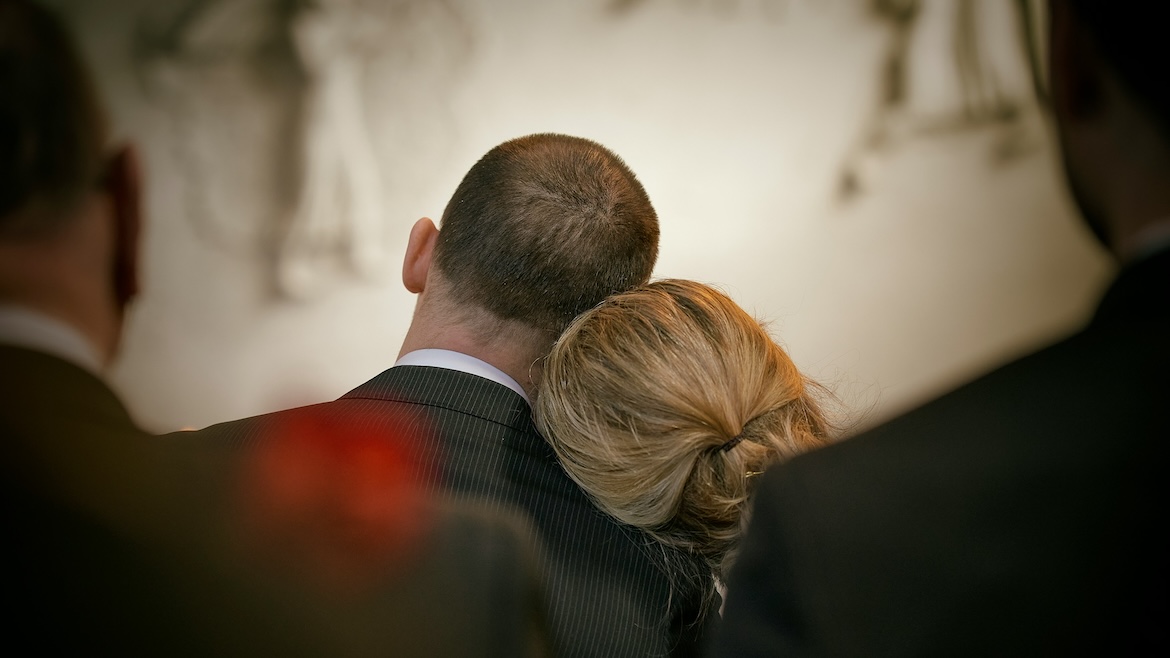 Photo: [link]Vidar Nordli-Mathisen[/link], Unsplash CC0.
Following the tragic train accident in the Spanish town of Adamuz, there has lately been a discussion in the media about whether to hold a secular funeral in Huelva as an official farewell ceremony.
The proposal has been controversial, causing considerable social and family discontent, to the extent that the event has been postponed indefinitely.
I confess that, beyond the specific management of this case, the very term 'secular funeral' makes me feel somewhat uneasy. Not from an ideological standpoint, but from a deeply human perspective: what does it mean to say goodbye to the dead?
All Evangelical Focus news and opinion, on your WhatsApp.
This is not a moral judgement, but I feel that some words lose their meaning when forced. Perhaps that is why I find this particular expression difficult to accept unreservedly.
Culturally and humanly speaking, a funeral has always been about more than just an institutional act or a public tribute. Above all, it has been a ritual.
The word 'funeral' comes from the Latin 'funus', which refers to death and the rites associated with it. Historically, funerals were not only a social farewell, but also a way for the community to try to make sense of what, by its very nature, defies explanation: death.
Death has never just been a biological fact; it has always been an open wound in the human heart. Where there is death, human beings seek not only companionship, but also meaning.
For centuries, that meaning has been provided by religion, and very clearly by Christianity in our cultural context.
That is why many of us feel that something does not quite fit when we hear about secular funerals. This is not because we reject civil ceremonies per se, which can be legitimate and necessary in a pluralistic society, but because a term with significant religious connotations is used to designate a ceremony that explicitly renounces any transcendent reference.
Perhaps that is why the term is uncomfortable: because it attempts to name a rite while renouncing what makes it a rite.
In practice, what is usually called a 'secular funeral' is more of a civil farewell ceremony, a tribute, a time for remembrance, silence, and emotional support. All of this is meaningful and deeply human. However, it is not the same as a traditional funeral.
The problem lies not in the gesture or the intention, but in the name. This is not a legal or ideological issue, but something deeper: language does not always convey what we want it to.
This is not limited to the context of death. In recent years, we have seen the emergence of expressions such as civil first communion and welcome ceremonies, which mimic the structure of traditional religious rites but are empty of spiritual content. Interestingly, civil baptism is rarely mentioned, perhaps because the term is too closely tied to the Christian faith. Nevertheless, the process is the same.
What does all this tell us about our society?
Probably something very revealing: a society may stop believing, but it does not stop ritualising. We still need to acknowledge the key moments in life: birth, growth and death. When the faith that sustained these rites fades, the need does not disappear, but the response does. When faith disappears, the rite does not disappear; its meaning does.
Rather than being a provocation, these so-called 'secular rites' are a symptom. They reveal that secularisation has not eliminated the big questions, but has left them unanswered.
The forms, gestures and even names are preserved, but we no longer always know what they mean or can offer in times of pain.
From a Christian — and evangelical — perspective, the contrast is inevitable. Above all, a Christian funeral is not just a farewell or an act of remembrance; it is a proclamation of hope. Not a naive or evasive hope, but one born of Christ's resurrection.
As the Apostle Paul writes, it is not a matter of not grieving, but of not doing so “as those who have no hope” (1 Thessalonians 4:13). In the face of correct and respectful silence, Christianity dares to utter an uncomfortable word: resurrection.
A Christian funeral does not deny pain, but it refuses to leave it alone. It does not eliminate tears, but accompanies them with a promise born not of human consolation, but of God's faithfulness.
This does not mean that the state should organise religious funerals. In a secular state, it is reasonable for public institutions to hold civil ceremonies and entrust religious funerals to faith communities and families. This protects everyone's freedom.
But perhaps it would be better to be more precise in our language and not call something a funeral when it is actually something else, because words matter. When we use them without paying attention to their deeper meaning, we risk impoverishing not only language, but also our way of dealing with the most serious questions of existence.
Perhaps the real problem is not the existence of secular funerals, but that we no longer know what to do with death.
While we try to say goodbye to our dead with increasingly neutral words, the question remains unanswered, waiting for a response: what hope do we have left when language remains silent?
Lourdes Otero is a journalist and member of the Grief and Suicide Working Group of the Spanish Evangelical Alliance.
[analysis]
[title]Join us to make EF sustainable[/title]
[photo][/photo]
[text]At Evangelical Focus, we have a sustainability challenge ahead. We invite you to join those across Europe and beyond who are committed with our mission. Together, we will ensure the continuity of Evangelical Focus and our Spanish partner Protestante Digital in 2025.
Learn all about our #TogetherInThisMission initiative here (English).
[/text][/analysis]






Las opiniones vertidas por nuestros colaboradores se realizan a nivel personal, pudiendo coincidir o no con la postura de la dirección de Protestante Digital.


Si quieres comentar o