


.png)
The youth of Ukraine are exhausted and impacted daily by a war that they did not choose. This reality impacts the mission along Ukraine’s land border, as well as Ukrainian youth in the diaspora.
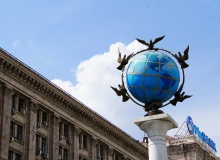
Uncertainty is no excuse for paralysis. The biblical alternative to complacency is watchfulness; the alternative to fear is faithfulness.
.jpg)
“God is at work and churches continue to work. More than 40,000 have been baptised”, says pastor Igor Bandura as a delegation from Ukraine attends ‘Hope for Europe’ in Albania.
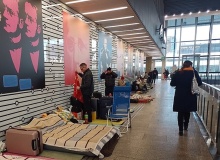
What Ukraine is teaching the Global Church about migration.
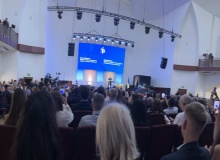
The danger comes when Christianity becomes identified with a political project whose primary purpose is to preserve a particular cultural order.
.png)
David Smith, the government’s Special Envoy for Religious Freedom, visited Ukraine in July. In the country's occupied territories, people only can worship freely in Russian Orthodox Churches, he says.
.jpg)
My trip to Kyiv last week has sharpened my understanding of how increasingly central Ukraine is to Europe’s future.
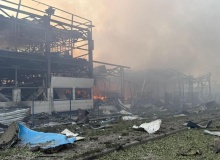
“Everything has been destroyed”, said the Ukraine for Christ ministy. A nearby elderly care home was also struck, leaving 29 residents dead.
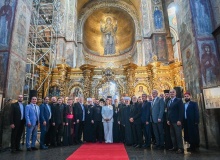
The Ukrainian Prayer Breakfast was a reminder that spiritual leadership remains essential in times of crisis.
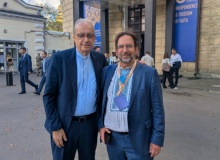
Botrus Mansour of the WEA and Jan Wessels of the EEA met with Christian leaders. They joined the National Prayer Breakfast and the celebrations of the 35th anniversary of Ukraine's independence.
.jpg)
How the Bible anniversary in Ukraine is helping rediscover spiritual inspiration for renewal.
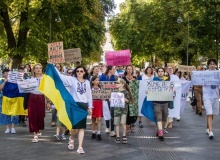
Ukraine is not simply fighting for survival; it is also preserving the civic habits that make survival meaningful.
.jpg)
Europe would not simply sanction a private individual who supports Putin in the war, but the most important figure of the Russian Orthodox Church itself. Is that what we want?
.jpg)
The European Union is proposing sanctions against the leader of the Russian Orthodox Church for inciting the war against Ukraine. Tatiana Kopaleishvili of the European Evangelical Alliance sees sufficient grounds to respond to the theological justification of an unjust war.
.jpg)
Great nations are marked by justice, not mere strength. They respect truth rather than propaganda. They cultivate responsibility alongside freedom. They produce citizens who understand that rights and duties belong together.
.jpg)
Pastor Anatoly Kaluzhny recounts the destruction he found when he arrived at his church after receiving an early morning warning of a Russian attack. “I also saw God’s mercy: our worship centre and sanctuary, though significantly damaged, remained standing”.
.jpg)
New Life Church's Sunday School classrooms wrecked, mobile dental clinic for refugees hit, humanitarian aid vehicles affected. After the attack on 2 June, pastor Anatoly Kalushny is appealing for support to rebuild the site.
.jpg)
No one was killed, and on Sunday, members of the church began clearing the rubble from the building. “Even a large fire cannot burn down what is built on the solid rock of faith,” say the church leaders in the town near Kharkiv, east of Ukraine.
.jpg)
Canals in Amsterdam overflow with boats crammed with orange-clad merrymakers. Music fills streets festooned with orange flags. Children sell old toys and homemade cakes. The old story of the Dutch triumph of freedom over Spanish imperial tyranny carries contemporary relevance.
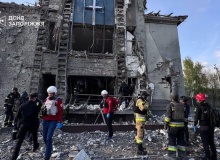
“This is a deliberate attack on people of faith, those who gathered peacefully to pray”, the embassy of Ukraine in the U.S. said in a public statement.
.jpg)
Corrie Ten Boom and her sister Betsie demonstrated that the ability to love and forgive when surrounded by hatred is a form of freedom no tyrant can touch. For the sisters, inner freedom became a form of spiritual resistance.
.jpg)
Suspended in the vast blackness, our planet appeared not as a battleground of competing powers, but as a delicate, radiant sphere—fragile yet hospitable and astonishingly alive.
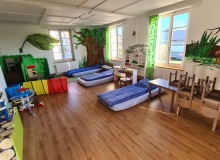
The Swiss Evangelical Alliance helped coordinate the accomodation of around 1,000 refugees. Such actions “have generally had a positive impact on the refugees social, linguistic, cultural and professional integration”, says the Swiss Federal Council.
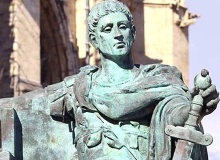
Christianity functions as culture rather than discipleship. The faith becomes a symbol of belonging rather than a call to transformation.
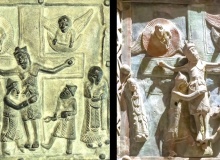
The Romanesque plaque from Verona captures a paradox in bronze: apparent weakness revealing hidden strength, violence confronted by steadfast love, history opened toward redemption.





Las opiniones vertidas por nuestros colaboradores se realizan a nivel personal, pudiendo coincidir o no con la postura de la dirección de Protestante Digital.

