


Christian work is neither meaningless nor sufficient in itself. God is building his Kingdom, but he graciously involves us in the process.
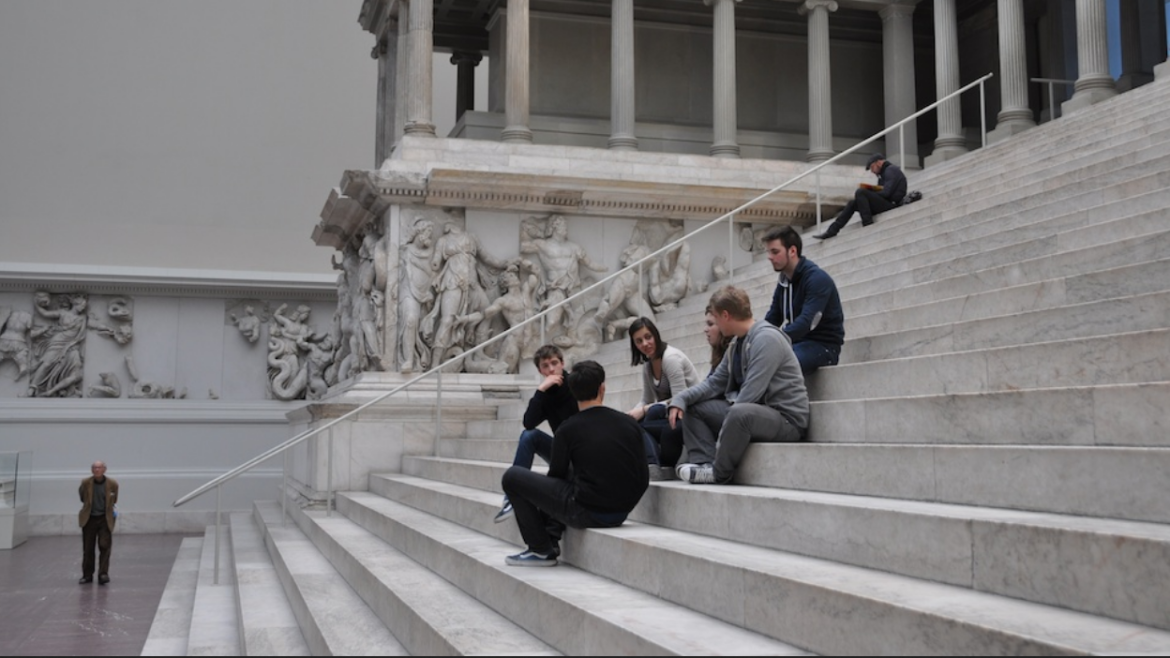 Photo via [link]Bible & Culture[/link].
Christians have never found it easy to know how to engage with public life. Some believe we should focus almost entirely on evangelism and avoid politics completely.
Others are convinced that Christians should seek to transform society through activism, campaigning, influence and even leading. Most of us find ourselves moving somewhere between these poles.
If we do engage, how big should our expectations be of changing society around us? What does success actually look like?
All Evangelical Focus news and opinion, on your WhatsApp
In a time marked by political polarisation, anger, misinformation and deep cultural division, the question deserves fresh attention: What are we actually aiming for as Christians engage in society?
This summer, I led a session exploring this question during IFES Graduate Impact’s Bible & Culture [1].
My former EEA colleague Christel Lamère Ngnambi and I had the privilege and joy of teaching “Christian Political Participation” for a week to highly motivated participants from Albania, France, Hungary, Italy, Portugal and Spain.
[destacate]In a time marked by political polarisation, anger, misinformation and deep cultural division: What are we actually aiming for as Christians engage in society?[/destacate]Some were already involved in the public square. All left with new hope and ideas regarding what the Lord was asking of them.
The course started with foundational teaching on the definition of politics. (It’s what everyone is invited to engage in to help shape society – the affairs of the city – the “polis”.). We considered why and how to engage as “ordinary” evangelical citizens or more deeply as professionally.
We examined how to use the Bible appropriately and to base all our socio-political thinking on a thoroughly biblical worldview. With these firm anchors, we could then look at big topics like migration, gay rights, international law and loving our nations well.
But we also prayerfully considered our hearts and what the Lord required of us. On our last day, with everyone super motivated but also tired and perhaps somewhat overwhelmed, it was time to reflect on the point of socio-political engagement and how big our hopes and aims should be.
Let me give you a glimpse of what we discussed. If Jesus called us to pray “Your kingdom come, your will be done, on earth as it is in heaven”, surely God wants to answer that prayer. Should we anticipate and aim for dramatic social transformation?
We know the world will remain fallen until Christ returns. The Bible offers a more nuanced vision than either unbounded optimism or weary pessimism.
The book of Jeremiah says that the Jewish exiles in Babylon were not to withdraw from society but to seek the welfare of the city where God had placed them.
Despair, assimilation or revolutionary plots were not options. Instead, they were called to bless. This tension helps us avoid two common mistakes.

The first is triumphalism. This is the belief that Christians can effectively build God’s Kingdom through political, cultural or social power. History shows that public influence can achieve significant good.
[destacate]The two common mistakes while engaging in society are triumphalism and defeatism [/destacate]We rightly celebrate figures such as Henri Dunand, William Wilberforce or Jan Amos Comenius, whose faith inspired profound social change. Yet Scripture reminds us that only God will bring about the final renewal of creation. The Kingdom does not arrive through human success alone.
The second mistake is defeatism. This view assumes that little can be done until Christ returns, so Christians should focus exclusively on saving souls while largely leaving social structures untouched.
Yet Jesus’ teaching about loving our neighbours, serving the vulnerable and being salt and light points in a different direction. Our actions matter because God works through them.
The challenge is holding together confidence and humility. Sociologist James Davison Hunter [2] describes the goal not as “changing the world” but as faithful presence. Christians are called to be faithfully present where God has placed them.
We seek the common good, strengthen what pleases the Lord, resist what is harmful and embody a foretaste of God’s coming Kingdom.
Tim Keller [3] similarly argues for balance. Different Christians are drawn to different emphases. Some stress cultural and ambitious engagement. Others aim for distinctiveness from culture. Others emphasise the Church’s primary spiritual mission.
Each perspective contains important truths, but each can become distorted if isolated from the others. The healthiest approach learns from all of them.
Perhaps the most hopeful insight comes from N.T Wright [4]‘s reflections on the resurrection. Christ is already reigning, even though we do not yet see the full results of that reign. The resurrection launched God’s new creation into the present world.
[destacate]Because God’s Kingdom is both already present and not yet complete, we can work ambitiously for good while remaining humble about what only God can accomplish [/destacate]That means Christian work is neither meaningless nor sufficient in itself. God is building his Kingdom, but he graciously involves us in the process.
This perspective changes how we think about political engagement. We are free to work for justice, without imagining that we can create heaven on earth.
We can oppose wrongdoing, without treating opponents as enemies. We can collaborate with others for the common good without compromising biblical convictions.
As Wright memorably puts it, Christians must learn “the arts of collaboration without compromise, and of opposition without dualism.” That may be especially relevant in today’s climate.
Social media rewards outrage. Political tribes demand conformity. Public debate often pushes us towards simplistic choices. Yet the Gospel calls us to something richer: truth without fear, conviction without hostility, hope without naïveté.
So, what are we aiming for? Not political revolution. Not cultural withdrawal. Rather, faithful service under the reign of Christ. Seeking the welfare of our communities. Challenging injustice where we can. Caring for people made in God’s image. Bearing witness to the gospel. Building institutions and relationships that reflect God’s character.
And doing all of this with hopeful realism. Because Jesus already reigns, our labour is not in vain. Because Jesus will return, we need not carry the weight of saving the world ourselves.
And because God’s Kingdom is both already present and not yet complete, we can work ambitiously for good while remaining humble about what only God can accomplish.
That seems a profoundly biblical posture for public life: hopeful, engaged, courageous, humble and faithful.
Julia Doxat-Purser, socio-political representative of the European Evangelical Alliance. This article was first published by the EEA and re-published with permission.
[1] https://www.graduateimpact.org/bible-culture
[2] James Davison Hunter, “To Change the World,” 2010
[3] Timothy Keller (European Edition editor Dr Stefan Paas) Center Church Europe – Doing balanced, Gospel-centred ministry in your city 2014
[4] N.T. Wright, “Surprised by Hope”, 2008
[analysis]
[title] Do you see a need for this kind of journalism? [/title]
[text] Evangelical Focus is a network of many people in Europe and beyond who strive to bring a uniquely Christian perspective to the big issues of conversation.
Through news, interviews, opinion and analysis, we seek to build bridges between evangelical churches and the societies in which they live.
As a non-profit entity, the big challenge is to be sustainable, month by month. We invite you to make a difference! Join the readers who make Evangelical Focus possible.
[/text][/analysis]






Las opiniones vertidas por nuestros colaboradores se realizan a nivel personal, pudiendo coincidir o no con la postura de la dirección de Protestante Digital.


Si quieres comentar o