


How we are seen from the outside? What real impact does our communication have? Are we influencing the public conversation? Or are we speaking almost exclusively to ourselves?
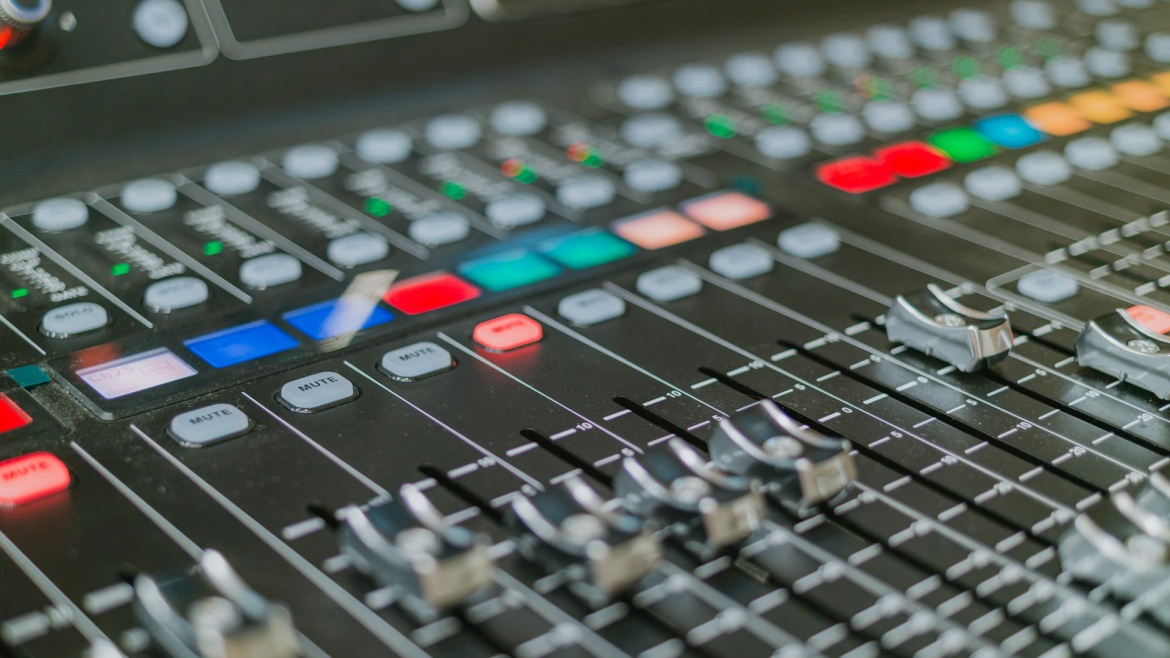 Photo: [link]Seungmin Yoon[/link], Unsplash, CC0.
A prophetic voice needs content, but it also needs channels. If the message does not reach the people it is meant to serve, it becomes nothing more than an echo.
The presentations at a summit may offer prophetic content, but the media are the medium that enables that voice to reach its intended audience. If the voice remains merely a sound emitted within a room, it bounces back like an echo and fades away. Communication is not an afterthought to the message; it is part of the responsibility to ensure it reaches its audience.
All Evangelical Focus news and opinion, on your WhatsApp.
[destacate]Paul went to synagogues, marketplaces and the Areopagus. Every era has its own forums. Ours today are many[/destacate] Jesus sought out spaces where the word could be heard: hills that served as natural amphitheatres, synagogues, roads, homes, squares and conversations. Paul went to synagogues, marketplaces and the Areopagus. Every era has its own forums. Ours are many: digital media, social media, podcasts, newsletters, videos, the mainstream press, radio, television, universities and face-to-face gatherings.
Focusing on evangelical media does not mean ignoring our relationship with non-evangelical media. It means starting with what we are responsible for. The important question is not just how we see ourselves, but how we are seen from the outside. What real impact does our communication have? Are we shaping an identity? Are we influencing the public conversation? Or are we speaking almost exclusively to ourselves?
One of the significant contributions of evangelical media is to establish an identity. Anyone who reads, listens to or follows evangelical media should be able to get a clear picture of who we are, what we believe, how we think and how we serve. That identity should not be uniform or artificial, but it should be recognisable.
[destacate]Diversity is important. So is independence. Evangelical media must not become an institutional propaganda office[/destacate]There is a telling image: when a community sings together, their breathing falls into step and their hearts end up beating in similar rhythms. Something similar can happen with communication. When different media outlets collaborate, share the burden, recognise each other’s value and work in the service of a common mission, their voices can be distinct whilst still forming a choir.
Diversity is important. So is independence. Evangelical media must not become an institutional propaganda office. Their credibility depends on being able to report, analyse, challenge and open up conversation with responsible freedom. But independence does not mean isolation. Collaboration broadens reach, avoids duplication, strengthens trust and helps present a more mature voice to society.
Collaboration between media outlets, radio stations, platforms, magazines and digital projects has often arisen naturally: through friendship, camaraderie, mutual recognition and support at specific times. This dynamic must be nurtured. It is not enough for it to function on the basis of goodwill alone; it should be turned into a shared strategy.
[destacate] Podcasters and new digital voices wield enormous influence but they run the risk of getting lost in individual success, in a narrow, insular approach [/destacate]We must also bring in podcasters and new digital voices. They wield enormous influence, particularly amongst young people, but they also run the risk of getting lost in individual success, in a narrow, insular approach, or in the constant pressure to produce content quickly. Winning them over to a collective effort would be one of the most important communication tasks in the coming years.
We need a evangelical media networks: not a control mechanism, but a network that is mindful of themes, approaches, resources and opportunities. The content developed in forums such as church-culture conferences should not be confined to a single event. It must be transformed into specific messages, articles, interviews, videos, debates, training materials and sustained public conversations.
The media do not create the prophetic voice, but they can distort it or serve it. That is why they must be careful with their tone. We have heard the need to speak with truth and grace, with justice and mercy. That combination must also shape headlines, angles, images, interviews and debates.
[destacate]An evangelical media outlet must not simply seek clicks by stirring up outrage. Nor must it avoid difficult topics for fear of causing discomfort[/destacate]An evangelical media outlet must not simply seek clicks by stirring up outrage. Nor must it avoid difficult topics for fear of causing discomfort. Its task is to make the truth communicable without betraying grace, and to make grace visible without diluting the truth. This requires professionals, volunteers and contributors who love the Word, understand the culture, know their craft and are able to work to the highest standards.
In our specific case, Spanish evangelical media also has a transatlantic reach. What is published in Spain is read in Latin America, the United States and Hispanic communities scattered across the globe. This reality broadens our responsibility. Our words do not merely influence a national conversation; they can shape evangelical narratives on both sides of the Atlantic.
One task still to be addressed is strengthening partnerships with universities, centres for the study of religion and politics, researchers, the mainstream media and forums for civic dialogue. A public presence is not built solely by publishing for an internal audience. It also requires personal relationships, trust, a willingness to explain, the ability to respond swiftly and accumulated credibility.
[destacate]Our media need to shape opinion without manipulating it, open up debate without breaking communion, and point out errors without destroying people[/destacate]Evangelical media can act as a bridge between churches and society, between theology and current affairs, between local concerns and the global conversation. But to do so, they need a clear agenda, unity and professionalism. They need to listen more closely to the Church, but also to listen more closely to society. They need to shape opinion without manipulating it, open up debate without breaking communion, and point out errors without destroying people.
Turning a voice into a public presence requires perseverance. Occasional grand statements are not enough. What is needed is daily, patient and faithful communication, capable of accompanying long-term processes and reminding society that we Evangelicals are neither a caricature nor an imported tribe, but a community with a history, a way of thinking, a commitment to service and hope.
The challenge for Evangelical media is to move from echo to voice. An echo reverberates within a closed chamber. A voice travels across distances, becomes intelligible and calls people together. To achieve this, we need profound content, suitable channels, genuine collaboration, responsible independence and a recognisable evangelical identity.
[destacate] Communication can feed a community’s narcissism or it can help it fulfil its mission[/destacate]The ultimate question is not whether we have platforms, but whether we are using them to serve the Kingdom and the common good. Communication can feed a community’s narcissism or it can help it fulfil its mission. It can trap believers within their own language, or it can translate biblical convictions into the public sphere without watering them down.
If the prophetic voice is to speak out in a changing world, the media must help ensure that voice is not lost. Not to impose a brand, but so that Christ may be proclaimed, the Church may be built up, and society may hear a word of truth, grace and hope.
For evangelical media to serve the prophetic voice, they need a shared editorial agenda without falling into uniformity. Certain topics should be addressed on an ongoing basis: freedom of conscience, religious persecution, the spiritual health of leaders, young people and faith, women and society, public life, migration, poverty, the family, education, mission, digital culture, democracy, truth and reconciliation.
[destacate]If evangelical media merely react to controversies, others will continue to set the agenda for our conversation[/destacate]A common agenda does not mean that everyone publishes the same thing. It means that we stop relying solely on the news agenda dictated by others. It also means that we anticipate issues, train experts, produce materials, ensure continuity in debates and provide resources to churches. If evangelical media merely react to controversies, others will continue to set the agenda for our conversation.
This agenda must include diverse and trustworthy voices. We need theologians who write for non-specialists, journalists who understand the faith, pastors who know the real world, Christian professionals who contribute from their respective fields, young people who articulate emerging questions, and women whose perspective is not sought only when the topic is women.
The aim is not simply to fill spaces, but to develop discernment. A community with discernment is better able to resist manipulation, avoids easy polarisation, and can offer the world more than just religious outrage. It can offer public evangelical thought.
Pedro Tarquis, president of Areópago Protestante, the media effort of the Spanish Evangelical Alliance, which encompasses projects such as Protestante Digital (Spain), Evangélico Digital (Latin America) and Evangelical Focus (Europe). A medical doctor for many years, as well as a pastor, writer and poet, he has devoted much of his ministry to evangelical communication.
[analysis]
[title] Do you see a need for this kind of journalism? [/title]
[text] Evangelical Focus is a network of many people in Europe and beyond who strive to bring a uniquely Christian perspective to the big issues of conversation.
Through news, interviews, opinion and analysis, we seek to build bridges between evangelical churches and the societies in which they live.
As a non-profit entity, the big challenge is to be sustainable, month by month. We invite you to make a difference! Join the readers who make Evangelical Focus possible.
[/text][/analysis]




Las opiniones vertidas por nuestros colaboradores se realizan a nivel personal, pudiendo coincidir o no con la postura de la dirección de Protestante Digital.


Si quieres comentar o