


Human rights violations against Iranian Christians include “imprisonment, exile and forced labour”, says a new report.
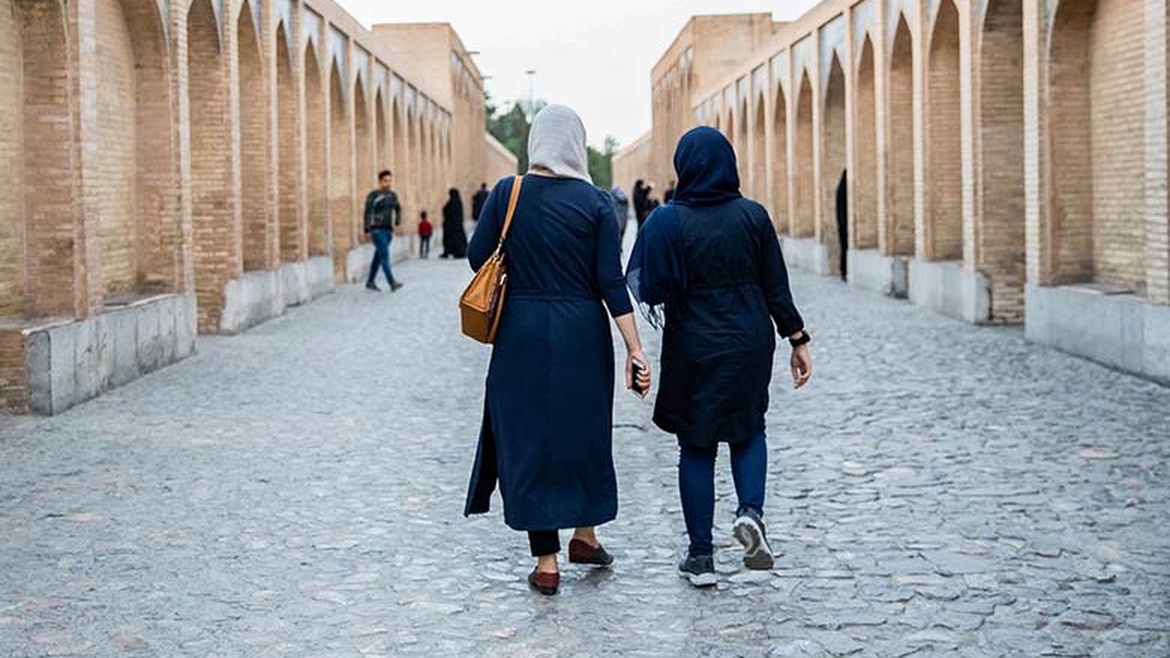 Two women walking in Tehran. / Photo: [link]Open Doors[/link].
On 28 December 2025, nationwide protests began in Iran, calling for an end to the Islamic Republic’s leadership of the country. Months before, the 12-day war with Israel impacted all Iranians but left minorities especially vulnerable of “being scapegoated”, said a United Nations statement.
Those incidents and many more, are the focus of the “Scapegoats: Rights Violations Against Christians in Iran” report, recently released by Article18, Open Doors, Christian Solidarity Worldwide and Middle East Concern.
All Evangelical Focus news and opinion, on your WhatsApp.
The report “details the violations throughout 2025 experienced by just one section of society, the Christian community”, and was published on the anniversary of the murder of Rev Arastoo Sayyah, the first Christian killed for his faith under the Islamic Republic.
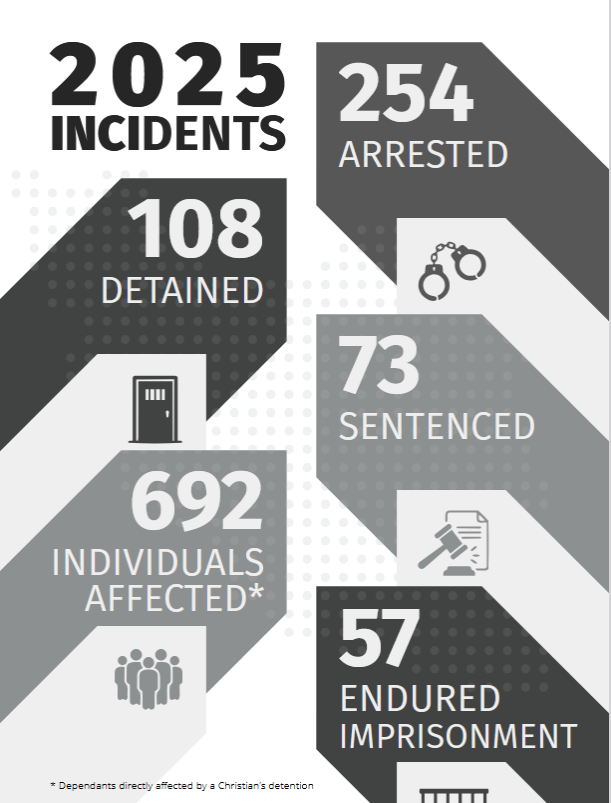
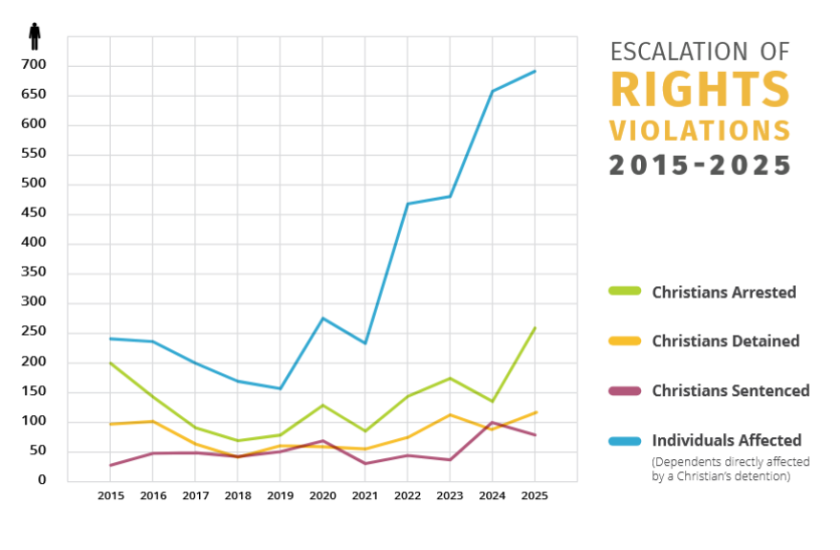
According to the report, 254 Christians were arrested on charges related to their religious beliefs or activities in the year 2025, nearly twice as many as in 2024 (139).
There was a “sharp increase” in arrests following the 12-day war with Israel, as confirmed in a statement by Iran’s Ministry of Intelligence, which said 53 “trained elements” (referring to evangelical Christians) had been “neutralised”.
In the majority of cases (nearly 90%), charges against Christians “were brought under the Article 500 of the penal code, which criminalises propaganda contrary to the holy religion of Islam”, says the report.
It also denounces that “severe mistreatment of Christian prisoners was another notable characteristic of 2025, including denial of healthcare, psychological torture, and a reported beating”.
[photo_footer]Middle East Concern [/photo_footer]
Furthermore, 57 Christians served sentences of imprisonment, exile or forced labour, compared to 25 in 2024.
Forty-three of them were still serving sentences at the end of 2025, while a further at least 16 others remained in pre-trial detention.
The report stresses that “although fewer Christians were sentenced in 2025 than the previous year” (73 vs 96), “the combined total of their sentences (280 years) was higher than in 2024 (263 years), conveying a trend towards harsher sentences”.
[photo_footer]Middle East Concern [/photo_footer]
The government also ordered to confiscate Christians’ personal property, including Bibles and other Christian literature, in at least 2 cases, for the “research purposes of the Ministry of Intelligence and Security (MOIS)”, states the report.
Moreover, “at least 21 Christians received custodial sentences related to their alleged involvement in the distribution of Bibles in Iran, in addition to other forms of punishment, such as fines, exile, and social deprivation”.
The report warns that hate speech against Christians and other religious minorities has increased greatly in recent years.
“The Islamic Republic has stoked sectarian tensions, a policy designed to keep various ethnic and religious minorities at each other’s throats and less attentive to the human rights abuses of the Iranian government”, the report states.
Another trend mentioned is the Islamic Revolutionary Guard Corps’ (IRGC) increasing involvement in intelligence gathering and arrests of Christians, “clearly indicates that the regime perceives them as a threat”, says the report.
According to the Christian organisations, “IRGC involvement in raids tends to be characterised by increased brutality […] IRGC agents go to homes without a legal warrant and arrest people. They say obscene and offensive things and insult and humiliate them”.
They are concerned because in 2025 the participation in foreign Christian activities “was included in the charges brought against Christian converts, and used to criminalise Christian activities held outside the country”.
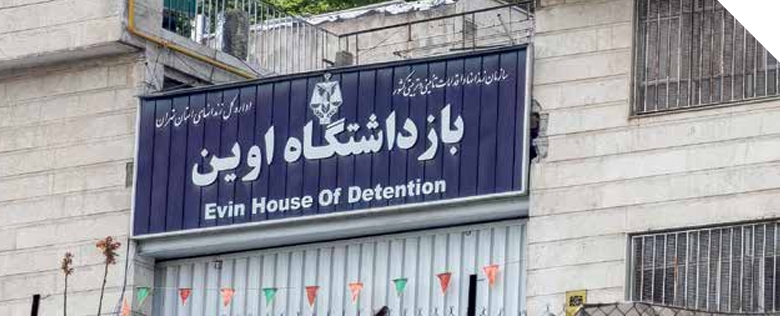
[photo_footer]Tehran's Evin prison, where many Christians are arrested. / Middle East Concern [/photo_footer]
The report also provides a monthly timeline of all incidents that “have reported either publicly or from trusted sources from inside Iran”.
However, “many more go unreported, either because no one raises awareness – arresting authorities frequently issue threats against publicity – or because those involved request confidentiality”.
In adition to the timeline, they present a list of the public cases of Christians charged with offences related to their faith in 2025, including some unpublicised cases, with individuals identified only by their first name, or a pseudonym.
The report concludes with a number of recommendations for the Iranian government, the international community, and the United Nations special rapporteurs.
It asks the Iranian government to reopen the Bible Society, “whose ‘temporary closure’ in 1990 remains in force”, because “the reopening would make it unnecessary for Christians to bring Bibles into Iran from abroad”.
The Christian organisations also call for the “an immediate and unconditional release of Christians and other religious minorities”; the “reopening of forcibly closed churches”; and “clarity on where Persian-speaking Christians may worship freely in their mother tongue, free from fear of arrest and prosecution”.
They recommend the international community to “hold Iran accountable for failures to fulfil its obligations under international law, including to promote, protect and fulfil freedom of religion or belief for all its citizens”,
Furthermore, the report calls on them “to ensure a fair and informed asylum procedures for Iranian Christians seeking international protection, recognising their well-founded fear of persecution if returned”.
Finally, the United Nations special Rapporteurs are asked to “include the situation of Christians (and particularly Christian converts) in all reporting on human rights in Iran”, and encouraged to “speak out against all violations of Iranian Christians’ rights both in public and in private”.
You can read the full report here.
[analysis]
[title] Do you see a need for this kind of journalism? [/title]
[photo][/photo]
[text] Evangelical Focus is a network of many people in Europe and beyond who strive to bring a uniquely Christian perspective to the big issues of conversation.
Through news, interviews, opinion and analysis, we seek to build bridges between evangelical churches and the societies in which they live.
As a non-profit entity, the big challenge is to be sustainable, month by month. We invite you to make a difference: join the readers who make Evangelical Focus possible!
[/text][/analysis]




Las opiniones vertidas por nuestros colaboradores se realizan a nivel personal, pudiendo coincidir o no con la postura de la dirección de Protestante Digital.


Si quieres comentar o