


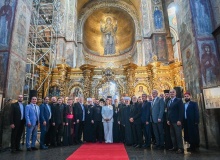
The Ukrainian Prayer Breakfast was a reminder that spiritual leadership remains essential in times of crisis.
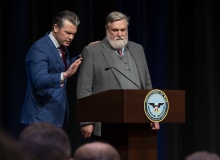
Christians embarrass themselves by pretending to be experts where they are not
.jpg)
Many young adults associate leadership with stress, excessive responsibility, and poor work/life balance. The question is how might they hear us when we invite them to lead.

Reflections on the human desire for a single ruler in light of Psalm 72.

I hope that the Jeffrey Donaldson revelations will cause us to reflect deeply on the culture that we have allowed to develop, which is insufficiently loving and insufficiently committed to truth.
.jpg)
Is it possible to attend the same annual conference for over a decade and still feel that it is crucial to your work?

Starmer is the sixth outgoing prime minister in only ten years. "We ask for your wisdom at this time and for godly guidance for our nation”, prays the Evangelical Alliance.

How can we respond with grace and truth to stories of leaders who fall?
Cropped(2).jpg)
Almost 900 evangelical leaders from 45 countries gathered in Wisla, Poland, for the 2026 edition of the European Leadership Forum. A summary of the key messages heard during the week-long evangelical gathering.
.jpg)
Secretary of War Hegseth’s appearance at Rededicate 250 conservative Christian rally in Washington reinforced the perception that a warrior-style, crusading Christianity is gaining influence in nationalist circles. But this neglects the broader biblical trajectory toward justice, mercy and reconciliation.

Leading from a Christian perspective does not mean filling the company with spiritual language, but rather exercising authority knowing that every decision affects real lives.
.jpg)
Assemblies of God leaders from Italy, France, Spain and Portugal emphasise their desire to share resources and promote the planting of new churches in the Mediterranean countries.
.jpg)
After 25 years, the European Leadership Forum conference taking place this week in Poland continues to offer encouragement to “evangelical leaders who are committed to the truth of Scripture, discipling believers, and persuasively communicating the Gospel”, says Greg Pritchard.
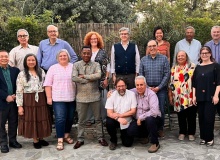
Representatives from nine regions met with World Evangelical leader General Botrus Mansour. “Strengthening kinship among the diverse regional expressions of the church” was one of the aims.
Cropped(2).jpg)
In Cullera, the 70th assembly of the Federation of Independent Evangelical Churches launched a unified strategy prioritising discipleship, small groups open to non-believers, and the practical training of pastors. Around 270 people attended the annual conference.
.jpg)
The way we deal with cases of abuse in our communities is not a minor issue: it is a profoundly spiritual, pastoral, ethical and also missionary matter. An essay outlining three models and four mistakes that churches often make.
.jpg)
The president of the Italian Evangelical Alliance calls for the term ‘evangelical’ to be freed from political affiliations and denounces the “blasphemy” of pastors such as Paula White who compare Trump to Jesus Christ.
.jpg)
Lies grip the hearts of leaders in subtle ways. They stoke the flames selfish ambition. They displace Christ and place self on the throne. They echo the ancient temptation: “You will be like God”.
.jpg)
Evangelical Christians in the UK feel they can live out their faith openly, but half say that expressing their convictions on controversial issues has become more difficult.

Jesus' entry on a donkey raises an uncomfortable yet necessary idea: perhaps true credibility does not lie in the spectacular, but in being faithful to oneself.
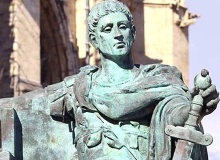
Christianity functions as culture rather than discipleship. The faith becomes a symbol of belonging rather than a call to transformation.
.jpg)
Scripture emphasises tested character, whereas appointment processes often prioritise dynamic personalities, public gifting, familiarity, and relational ease with existing leaders.
.jpg)
In Durrës (Albania), the European Youth Ministry Network sought answers to how to “confidently navigate youth ministry in an unknown and complex Europe”.
The Evangelical Psychology Group (GPE) publishes a 22-page guide to safeguard the mental health of professionals and protect potential victims. They warn against the misuse of therapy to “preserve institutional reputations or accelerate ministerial restoration processes”.
.jpg)
Bullying, avoidance and narrative control are three mechanisms to consolidate and maintain power. They are the antithesis of the servant leadership to which Christ calls His people.






Las opiniones vertidas por nuestros colaboradores se realizan a nivel personal, pudiendo coincidir o no con la postura de la dirección de Protestante Digital.

