



Why Christians should speak up on behalf of Jews.

There is only one possibility of restoration: coming before God.
What should happen as restrictions are loosened and as impatience for normality grows? Can Christians continue to promote both freedom and responsibility?
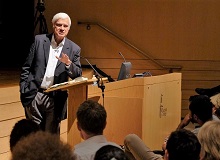
Speaking in Amsterdam in 1983, Zacharias told evangelists from 133 countries that religions, 20th-century cultures and philosophies had formed “vast chasms between the message of Christ and the mind of man”. By Matthew Fearon.

Both authors wrote the books at the end of March. “Christians are able to feel peace, even in an uncertain world”, says Lennox. Piper wants to “provide a God centred place to stand in such fragile times”.

An evangelical doctor working in Spain with Covid-19 patients shares his experience. “I am not a hero, I know I can get the virus and die. But I am sure that whatever happens, the Lord is with me”.

Some will look back on lockdown with a deep sense of regret at having missed a once-in-a-lifetime opportunity to grow closer to God.
As the second-century Christian apologist Athenagoras states, early Christians were accused of three crimes: cannibalism, incest, and atheism.

Like many believers, Philip Roth feels bewildered at the relationship that the Bible establishes between plagues and God’s judgement. But can we apply this to epidemics nowadays?

For all who trust in Christ, there is real and eternal hope. In the storm, at some point, He will reveal his true glory to us.

We are “condemned” to staying at home with our partner, our children or just ourselves.

A University of Copenhagen shows that “in March, internet searches for the topic prayer surged to the highest level during the past 5 years [...] It occurs on all continents and for Christians and Muslims”.
The cinema shows many examples of viruses that affect humans, producing devastating epidemics that remind us of our fragility and vulnerability.

The Bible offers not only encouragement for personal faith in a time of crisis, but also wisdom and insight to guide the Christian in a position of public leadership or influence.

Psalm 91 has breathed encouragement and peace into millions of believers in the midst of trial. Its message is very relevant to our current epidemic situation.

Pastors of the Chinese Christian Church in Spain explain how they handle the Covid-19 crisis. “At work, we notice discrimination. Many think that the Chinese are carriers of the virus”.

Covid-19 deaths rise to over 360 as Italy becomes the second most affected country in the world. Italian evangelical leaders advice churches to follow the recommendations of the authorities and pray for “a spiritual and social revival with lasting effects”.

Prevention is key but panic and fear are irrational feelings that only lead to impulse-driven decisions.

We are called to bear witness to God’s kingdom on earth to transform people’s lives holistically, rather than simply bringing about political solutions.

This is not a horror story, but a story about horror.

This popular culture icon is nowadays described to us as a sad and vulnerable figure, timid and unsure – a far cry from the frivolous, joyful and radiant star that she was for her contemporaries.
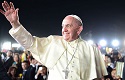
Something is missing in the answers of the Pope. Christ is never mentioned in the whole interview.

The biblical work ethics clashes with a system that, according to the International Labour Organization, “experiences a lack of material well-being, economic security, equal opportunities or scope for human development”.

Isn't it odd that we, who are the sons and daughters of the most victorious being ever to exist, should live in defeat?

We seem to live in a society of fear.





Las opiniones vertidas por nuestros colaboradores se realizan a nivel personal, pudiendo coincidir o no con la postura de la dirección de Protestante Digital.

