


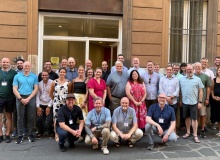
Reflections on the evangelical engagement with Roman Catholicism.
.jpg)
We ask theologian David Brown in France about today's influence of Catholicism, ‘laicité’ in politics, and the new efforts to promote ecumenism with evangelicals.
.jpg)
On 25 September, numerous schools will hold compulsory lessons in which the usual curriculum will be replaced by content about the Pope. The Minister for Education has authorised the move, on condition that no spiritual practices are imposed.
.jpg)
A low fertility rate and the secularisation of the island are the causes. Six out of ten children are registered as Catholic at birth, in a context where ‘cultural Catholicism’ persists.
.jpg)
The Protestant and Catholic Churches have acknowledged in a joint statement that the elections in Saxony-Anhalt “have made our worst fears a reality”. Jews lament a rise in antisemitism.
.jpg)
For 56 million evangelicals—the majority of whom are Pentecostals—their central role in the country's public life is being reinforced.
Is dialogue truly being promoted if one lacks the courage to say and do the things one believes?
.jpg)
Konotopie, a small village in Poland, has built a 55-metre-high statue of Mary, the largest in Europe. The bishop ‘sanctified’ the new place for Roman Catholic pilgrimage.
.jpg)
While people expect the church to offer easily digestible products that can keep pace with the entertainment market, each individual remains the center of their own life, and the church is a convenient afterthought.
Roman Catholicism oscillates between the Roman and the Catholic. Its catholicity is not defined by biblical standards, but by the preservation and implementation of its Roman interests.
Christians should not speak about others in avoidably offensive ways, using derogatory language or an unloving tone. Our aim must be to speak the truth in love.
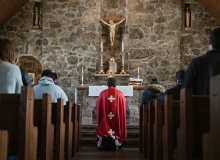
For the Gospel, the threshold is a place of transition, not of lingering. It is a one-way passage, not a platform where one is supposed to remain.
Cropped(1).jpg)
From 15 to 18 June, thirty-five participants from nine countries participated in the eight edition of the Rome Scholars and Leaders Network.
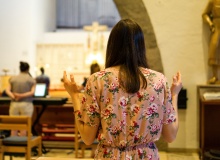
Government statistics from 2026 show that 40% of people identify as “nones”. Although church weddings continue to decline, more young people say they believe in God.
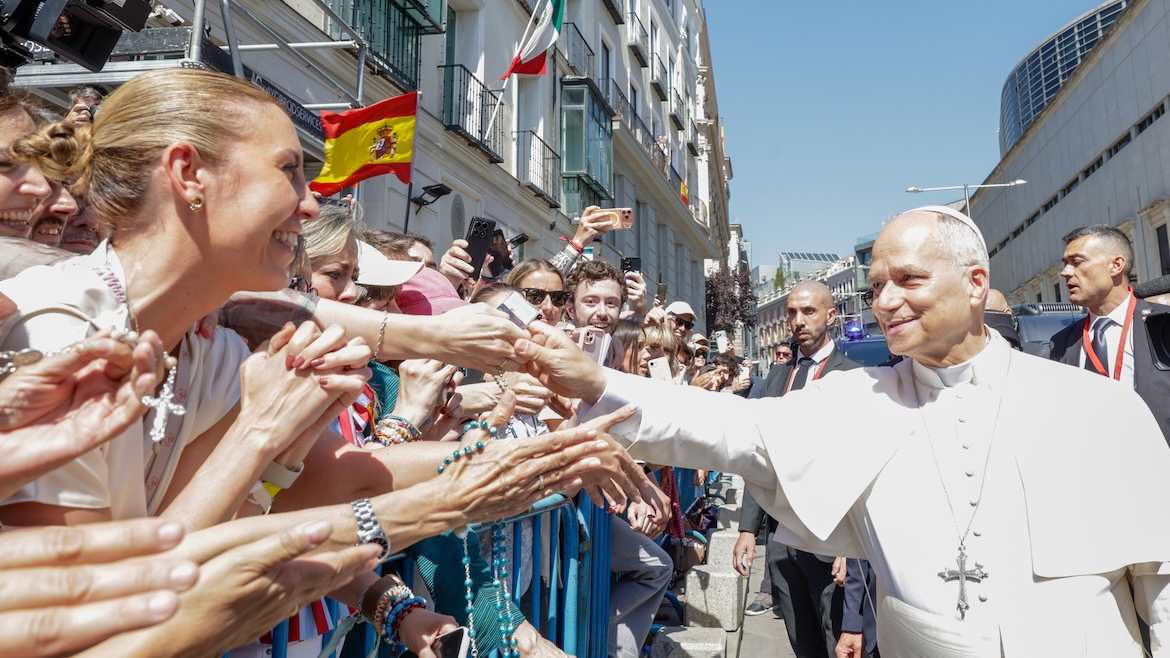
When the Pope spoke about freedom of conscience in Madrid, he forgot to mention that the Roman Catholic Church has been its greatest enemy for centuries.
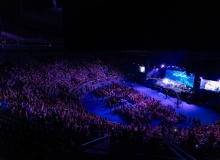
Three big events in Spain, Catholic, evangelical, and Pentecostal, and their sometimes unintended consequences.

The encyclical has little sense of the tragedy of sin, sees the gospel as a process in which nature is made more perfect and justifies the Church's role as a mediator between man and God.
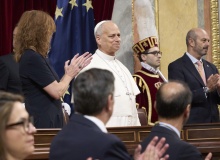
Both the left and the right applauded Leo XIV's speech, in an unprecedented event in recent Spanish history.
.jpg)
Since becoming Leo XIV, Pope Prevost hinted at his desire to build on Leo XIII’s legacy by updating the Social Doctrine of the Church on the pressing concern of today: how to deal with Artificial Intelligence (AI) without succumbing the human person to it.
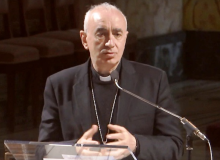
However much it is expressed in lively, pop-culture language, Staglianò’s theological framework is the old Thomism rejuvenated by John Paul II in the encyclical Fides et Ratio (1998).
.jpg)
As membership of the two major churches in Germany declines, the number of pupils attending Christian religious education classes is also falling significantly. Has Christian religious education had its day? Or can it be made fit for the future?
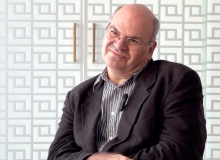
In an interview, Spanish pastor and journalist José de Segovia comments on the renewed spiritual interest among younger generations, the risks of social media, and the state of the evangelical witness in universities.
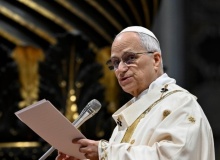
Evangelicals do not seem to be on Pope Leo’s radar, aside from a few indirect critical remarks between the lines of his speeches in Cameroon and Angola.
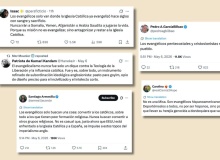
Europe’s true need is not a change of religious label, but the emergence of biblically sound, intellectually serious and spiritually vibrant churches, capable of responding to the moral and existential void of our age.
.jpg)
A Pew study also reveals that, in Sweden and the United Kingdom, the number of Protestants leaving the faith is six times higher than the number of those converting to it.




Las opiniones vertidas por nuestros colaboradores se realizan a nivel personal, pudiendo coincidir o no con la postura de la dirección de Protestante Digital.

