


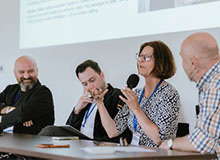
MediaFest 2026 brought together writers, editors, journalists and content creators from across Europe to reflect on what people are really looking for, and whether the church is listening.
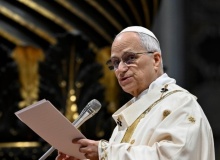
Evangelicals do not seem to be on Pope Leo’s radar, aside from a few indirect critical remarks between the lines of his speeches in Cameroon and Angola.
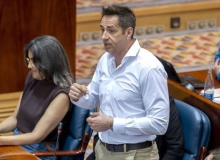
The opposition in the capital’s regional chamber warns against Pentecostal evangelicals who “brainwash people”. A party demands to stop the growing presence of church-related advertising in public spaces.

FC Barcelona will play Olympique Lyonnais in the Champions League final in Oslo. “I like to go to church at least once a week”, says the midfileder.
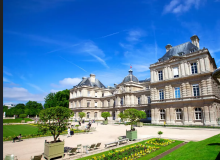
Christians launch a campaign to encourage citizens to speak to their political representatives, as the debate on assisted dying returns to the National Assembly.
.jpg)
The Evangelical Fellowship India expresses “anguish” over the attack in Manipur. “The killing of unarmed church leaders returning from Christian fellowship is deeply disturbing and tragic”.
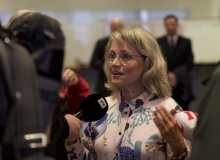
The Finnish politician has appealed to the European Court of Human Rights after the Finnish Supreme Court ruled that the booklet Man and Woman He Created Them, published in 2004, breached legislation on hate speech against homosexuals.
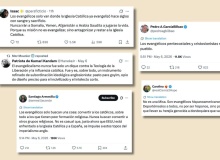
Europe’s true need is not a change of religious label, but the emergence of biblically sound, intellectually serious and spiritually vibrant churches, capable of responding to the moral and existential void of our age.
.jpg)
I was a pastor in Turkey and they branded me a political mole. In Spain, they brand me – and us evangelicals in general – as ideological infiltrators serving certain geopolitical agendas.
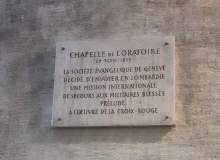
Christian just war reasoning has long treated humanitarian limits as essential criteria for the moral use of force.
.jpg)
At a time of intense media coverage, Spanish evangelicals welcome analysis but ask that people avoid stereotyping regarding the voting habits, background or identity of their faith minority.
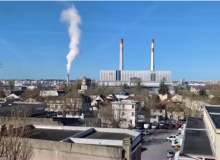
The National Council of Evangelicals in France says it is working with the autorities, to have places of worship that “ensure the safety of believers and the peace of residents”.
.jpg)
The gathering of 35,000 Christians in Madrid last weekend can and should be debated, just like any other public event. But it should not be treated as a democratic anomaly simply because it is evangelical, large-scale and visible.
.jpg)
A Pew study also reveals that, in Sweden and the United Kingdom, the number of Protestants leaving the faith is six times higher than the number of those converting to it.
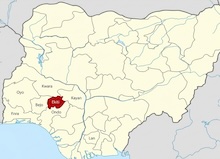
The attack was carried out by gunmen during a worship service in the south-west of the country.
.jpg)
A London branch of the third-largest party in parliament removed its own leader because of his faith values. David Campanale is to be awarded more than £250,000 in compensation.
.jpg)
The Roman Catholic Church attracts different people for different reasons. This simple fact has always been true. However, recent trends in global religious and political affairs are unfolding a new chapter of this old narrative.

The day will come when there will be no confusion about the future.
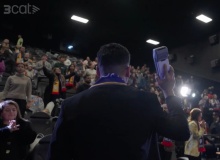
The Catalan public television programme 30 Minuts broadcast an in-depth report focusing on neo-Pentecostal movements which "caused discontent" among evangelical churches.
.jpg)
85% of evangelicals agree that Christianity has helped shape UK’s democracy. A study by the Evangelical Alliance also examines voting intentions.
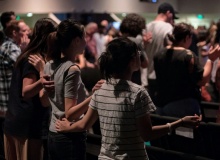
A study by the Gordon-Conwell Theological Seminary shows that while Catholics and Orthodox Christians have grown by 0.56% and 0.28%, evangelicals are increasing at 1.34% per year.

Human trafficking is one of the world’s darkest evils. ‘Women of Hope’ is reaching the victimized with stories of restoration through Jesus Christ.
Cropped(2).jpg)
In Cullera, the 70th assembly of the Federation of Independent Evangelical Churches launched a unified strategy prioritising discipleship, small groups open to non-believers, and the practical training of pastors. Around 270 people attended the annual conference.
.jpg)
Hundreds of amendments and a lengthy debate in both houses of parliament, combined with opposition from doctors, pro-life groups and a divided public, have put an end to the bill. Pro-assisted dying parliamentarians will have to start the process from scratch.
.jpg)
Canals in Amsterdam overflow with boats crammed with orange-clad merrymakers. Music fills streets festooned with orange flags. Children sell old toys and homemade cakes. The old story of the Dutch triumph of freedom over Spanish imperial tyranny carries contemporary relevance.





Las opiniones vertidas por nuestros colaboradores se realizan a nivel personal, pudiendo coincidir o no con la postura de la dirección de Protestante Digital.

