


Reflections on the evangelical engagement with Roman Catholicism.
Is dialogue truly being promoted if one lacks the courage to say and do the things one believes?
.jpg)
While people expect the church to offer easily digestible products that can keep pace with the entertainment market, each individual remains the center of their own life, and the church is a convenient afterthought.
Roman Catholicism oscillates between the Roman and the Catholic. Its catholicity is not defined by biblical standards, but by the preservation and implementation of its Roman interests.
For the Gospel, the threshold is a place of transition, not of lingering. It is a one-way passage, not a platform where one is supposed to remain.

The encyclical has little sense of the tragedy of sin, sees the gospel as a process in which nature is made more perfect and justifies the Church's role as a mediator between man and God.
.jpg)
Since becoming Leo XIV, Pope Prevost hinted at his desire to build on Leo XIII’s legacy by updating the Social Doctrine of the Church on the pressing concern of today: how to deal with Artificial Intelligence (AI) without succumbing the human person to it.
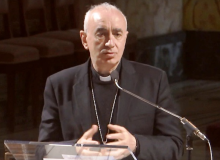
However much it is expressed in lively, pop-culture language, Staglianò’s theological framework is the old Thomism rejuvenated by John Paul II in the encyclical Fides et Ratio (1998).
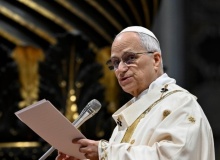
Evangelicals do not seem to be on Pope Leo’s radar, aside from a few indirect critical remarks between the lines of his speeches in Cameroon and Angola.
.jpg)
The Roman Catholic Church attracts different people for different reasons. This simple fact has always been true. However, recent trends in global religious and political affairs are unfolding a new chapter of this old narrative.
The evangelical identity must be lived out in a responsible and credible manner, starting with local churches and being part of evangelical networks that deserve the name. A perspective from Rome, Italy.
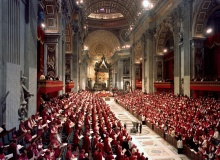
Evangelicals should study the inner dynamics of Rome that allows it to change but not reform itself according to Scripture.
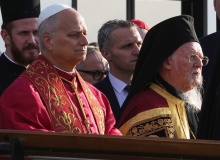
For Evangelical Christians, 2033 will be an opportunity to celebrate the gospel truths. However, ecumenical celebrations will not be neutral and at no cost for evangelical fidelity.
.jpg)
Artificial intelligence, conflict resolution, evangelical theology, and the centrality of the Bible in the Christian faith are the topics of four three-hour online masterclasses offered free of charge by the Forum of Christian Leaders with speakers affiliated with the European Leadership Forum.
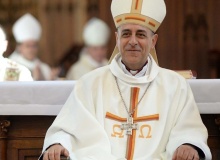
The author’s thinking on the subject is summarized as follows: “God is present in every human being from the moment of conception, not only as Creator, but also as Savior”
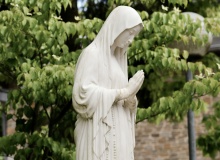
The document reiterates the view of Christ’s mediation as being “inclusive” and participatory, thus making room for Mary’s and the saints’ intercession and mediation.
.jpg)
The exaltation of the Virgin Mary in certain Catholic contexts re-opens the internal debate. Evangelical theologian Leonardo De Chirico in Rome analyses the ‘pendulum’ of the last three centuries and rules out a profound reform of Marianism.
.jpg)
In the Roman Catholic view, there is a transitive property between Christ and the Catholic Church to the point that what can be predicated of the one passes to the other.
.jpg)
A report from the 2025 IFED conference in Padua, Italy.
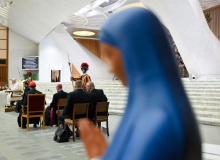
Roman Catholic Mariology always involves a thick doctrinal commitment to the full account of how Rome theologizes, celebrates, and venerates Mary. An analysis from Rome.
.jpg)
In his first canonisation, Pope Leo XIV makes a millennial 'influencer' devoted to spreading the word about miracles and Marian apparitions a saint. Catholicism expert Leonardo De Chirico explains the context.
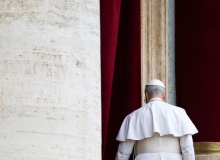
There is an expectation that Pope Leo will be able to exert an attraction from Protestantism towards Roman Catholicism in American society.
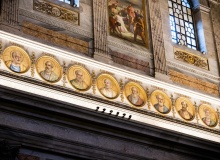
What is the office of the Pope? How does this institution fit into the global world and in the ecumenical relationships outside of Rome?
.jpg)
A prominent Roman Catholic theologian, Matthew Levering, recently wrote a book entitled 'Why I Am Roman Catholic' (2024). Defending why and why not one is Roman Catholic or Protestant is becoming a literary genre in itself.
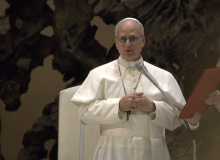
Prevost, still under 70, is a “young” pope with the possibility of a long pontificate. The conclave didn’t choose a bridge, it chose direction.





Las opiniones vertidas por nuestros colaboradores se realizan a nivel personal, pudiendo coincidir o no con la postura de la dirección de Protestante Digital.

