


.jpg)
Of course disabilities do create real limitations. Yet people who have learned to live with disability often develop qualities that others have had little reason to cultivate: resilience, determination, creativity, empathy and unusual powers of observation.
.jpg)
My trip to Kyiv last week has sharpened my understanding of how increasingly central Ukraine is to Europe’s future.
.jpg)
Fire is a constant companion in the human story: threatening, inspiring, warming, nourishing and transforming.
.jpg)
We were made for Earth — for its pull, its feel, its embrace. We are not free-floating beings, but rooted ones.
.jpg)
Too little oxygen, and we suffocate. Too much, and we risk spontaneous combustion. Too much carbon dioxide, and the climate overheats. Too little, and plants cannot photosynthesise.
.jpg)
Water is a true wonder we easily take for granted — a clear, tasteless, shapeshifting, life-carrying, rock-eroding, fire-resisting miracle. It is Earth’s most precious element. Not gold, not oil. Water.
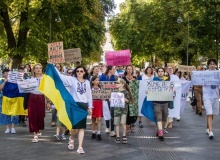
Ukraine is not simply fighting for survival; it is also preserving the civic habits that make survival meaningful.
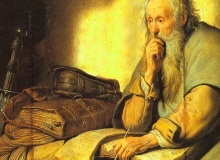
Increasingly, the ‘normal’ Christian experience is no longer that of the comfortable Western church but of believers who worship under pressure.
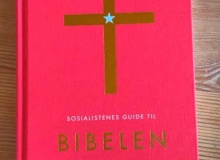
The Bible should not be welcomed because it supports socialism, conservatism or liberalism. It should be welcomed because it speaks to questions that no political ideology can answer on its own.
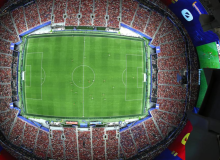
Football became so deeply rooted in British working-class communities because there were chapels, Sunday schools, parish rooms and young men looking for somewhere to belong, long before there were professional clubs, stadiums and television contracts.
.jpg)
International participants are invited to attend three weeks of interactive discussions, taking place in July, on Christian values in cities, countries and at European level, organised by the Schuman Centre for European Studies.
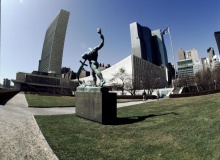
States do face real threats and evil can sometimes only be checked by force. But the lesson is clear: war is a profoundly blunt instrument for creating justice, reconciliation or lasting order.
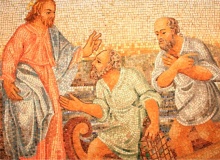
The vision of human dignity, forgiveness, reconciliation, justice and the equal value of every person before God, profoundly shaped European civilisation over centuries.
.jpg)
The president of the Italian Evangelical Alliance calls for the term ‘evangelical’ to be freed from political affiliations and denounces the “blasphemy” of pastors such as Paula White who compare Trump to Jesus Christ.
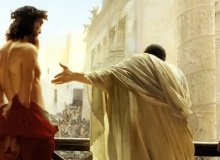
The sense that Christianity is losing influence and moral values are eroding creates a fear that can lead to support for strong leaders, aggressive rhetoric and simplistic solutions.
.jpg)
Will Europe remember the story that formed it? Not as a tool of exclusion, nor as nostalgic conservatism, but as the living source of reconciliation, renewal and hope.
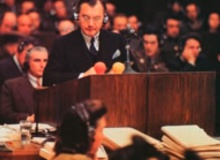
‘Never again’ asks whether Europe still believes that human dignity is non-negotiable, and that silence in the face of atrocity is complicity.
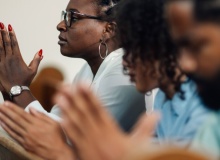
Europe is being transformed beyond recognition, hollowed out culturally and overrun by hordes of Muslim migrants in an irreversible process of civilisational decline. So prominent voices proclaim.
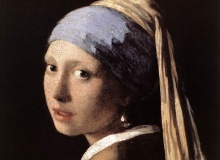
Johannes Vermeer left no letters, diaries or notes about his works. We know almost nothing about his artistic intentions, his training or how he achieved his extraordinary effects of light and color.
.jpg)
To study is a disciplined search for truth in a world marked by confusion, distortion and power without accountability. It is how we learn to discern reality accurately, and to act wisely, proactively rather than reactively.
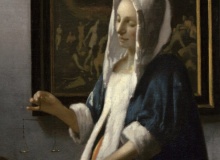
Johannes Vermeer’s Woman Holding a Balance offers a quiet visual parable for this moment. As we face yet another new year of war, polarisation and distrust, we need reflection which goes beyond personal self-improvement.
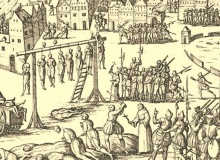
The emergence of the Dutch Republic birthed many features of the modern era. What might Ukraine’s victory over Russian tyranny and oppression mean for our future?
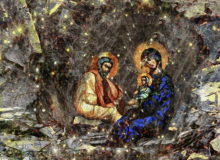
Now for the fourth time since Russia’s brutal invasion of Ukraine, we are celebrating the Word of God becoming flesh as angels proclaimed peace on earth. So where is the peace?
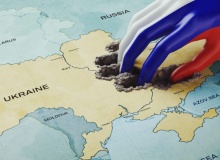
Appeasement only emboldens the aggressor. Can a peace plan that rewards territorial conquest—achieved through invasion, atrocities, mass deportations, and systematic destruction—ever constitute genuine peace?
.jpg)
Article 17 of the Lisbon Treaty represents a Europe of pluralism and dialogue. The US National Security Strategy announced on Friday imagines Europe very differently.




Las opiniones vertidas por nuestros colaboradores se realizan a nivel personal, pudiendo coincidir o no con la postura de la dirección de Protestante Digital.

