


The UK High Court rejects a legal challenge against a clinical trial that aims to recruit over 220 children. “Children should never be used as guinea pigs”, say the claimants.

The current proposals undermine the role of parents and carers while also ignoring freedom of religion and belief, offering no protection for church leaders and others.
.jpg)
The Labour government’s proposals include up to five years of prison. The Evangelical Alliance UK denounces that the definition of abusive practices is “entirely subjective”. Christian Concern speaks of “a ban on conversations”.

Europe’s true need is not a change of religious label, but the emergence of biblically sound, intellectually serious and spiritually vibrant churches, capable of responding to the moral and existential void of our age.
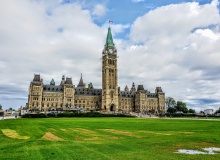
Canada has made international news recently for two pieces of legislation aimed at curbing the spread of hatred. Faith leaders have raised concerns about how these laws might limit religious expression.

A study in Europe analyses the reasons of the gender religiosity gap and explores how religion impacts gender-related outcomes.
.jpg)
Queer activist Kate Osborne spearheaded a resolution passed with a large majority. Some expressed the risk of ideological interference in the responsibilities of parents, teachers, and doctors in their care of minors.

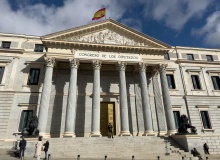
The parliament drafts the law with the aim of complying with the the European Union standards. Faith groups say that the law goes beyond equality between men and women, promoting ideological issues.
.jpg)
The president of the largest Christian institution thanks LGBTQI organisations for their “open arms” and considers it wrong for churches to define “what kind of love is right or wrong”.
“In a free and pluralistic society, citizens should be able to seek spiritual support in accordance with their beliefs, as long as there is no coercion or harm”, evangelicals say in a letter to government.
.jpg)
Does a renewed interest in a ‘Christian past’ automatically lead to an openness to the gospel? Does undoing ‘woke’ paradigms necessarily mean that there is a genuine interest in the values of Jesus? In the current cultural shift, the challenge for Christians in Europe is to continue to be uncomfortable for those in power.
.jpg)
The ruling party explicitly targets “priests, pastors of cults and coaches” as examples of those who could be committing a crime against LGBTQI people.

Young people aged 18 to 29 are most likely to believe that only men and women exist (69%). Members of free churches and Muslims are most likely to agree.
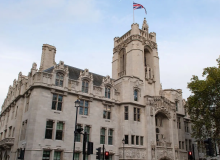
“The terms ‘woman’ and ‘man’ in the Equality Act 2010 refer to biological sex”, says the unanimous ruling. Christians welcome the decision and see it “as a misional moment”.
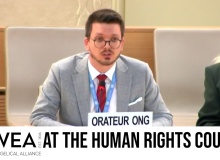
In its address to the UN Human Rights Council, the World Evangelical Alliance proposes better training on religious freedom for state officials and politicians.

A report warns about regions in Spain where educational protocols restrict parental rights and push minors into gender transition without medical advice.
I recommend the Seoul Statement to a wide readership, It presents in a concise way an approach to mission that has the potential to bring together theologians and practitioners.
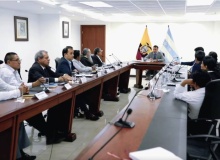
Daniel Noboa made a commitment to Christian leaders to exclude gender ideology in educational texts and to ban sex changes in children.

UK health secretary Wes Streeting said the decision was taken “based on the evidence and advice of clinicians, not politics or political pressure”.

“Most children whose feelings do not align with their biological sex will solve those incongruencies after the normal developmental process of puberty”, the institution says.
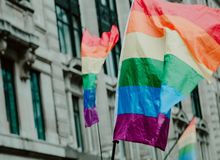
The plan will last from 3 June to 3 September 2024. It does not affect patients already established on those medicines by a UK prescriber.
.jpg)
Activists and politicians want to allow people to register as ‘non-binary’. An evangelical member of parliament says it would be a mistake: “People’s subjective perceptions can change over time”.
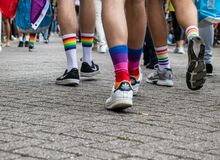
Cass opens up the space for some fascinating missional conversations about dignity, care, respect, bodies and reality, deep discussions on what it means to be human.
.jpg)
Fines of up to 10,000 euros for those who address someone by their former gender. The opposition denounces consequences of a “dangerous madness” for young people.
.jpg)
Gender identity clinics may only offer these controversial treatments to minors in research trials or in “exceptional circumstances”. The government welcomes the decision of the National Health Service.




Las opiniones vertidas por nuestros colaboradores se realizan a nivel personal, pudiendo coincidir o no con la postura de la dirección de Protestante Digital.

