


Queer activist Kate Osborne spearheaded a resolution passed with a large majority. Some expressed the risk of ideological interference in the responsibilities of parents, teachers, and doctors in their care of minors.
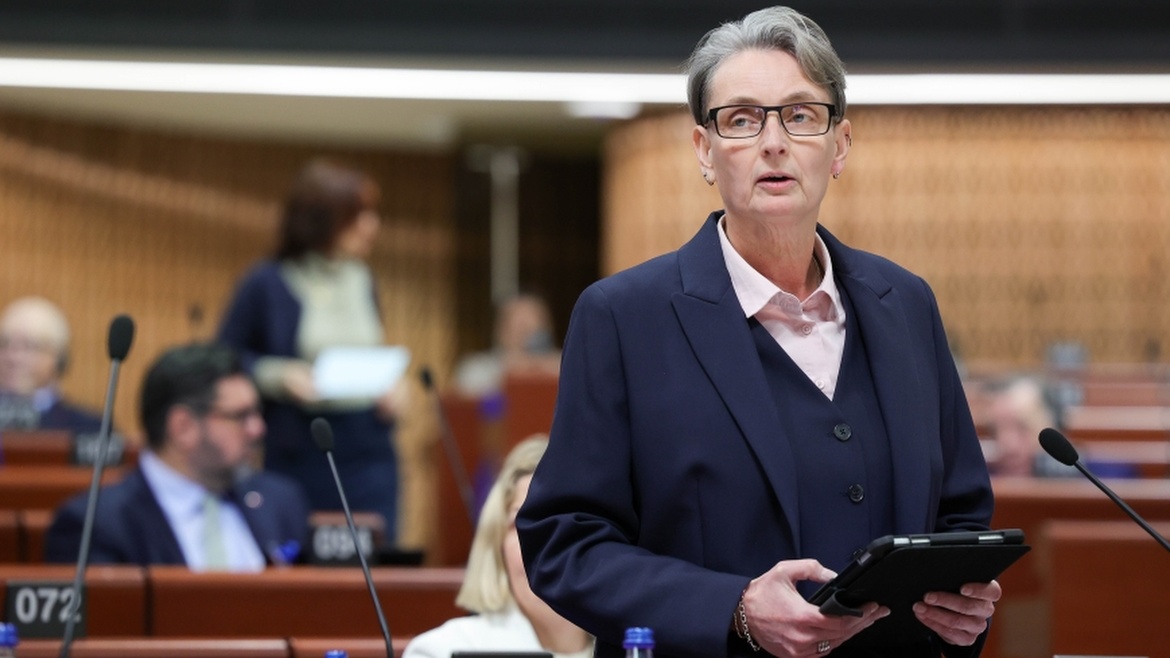 Kate Osborne, speaking in favour of banning conversion practices, January 2026. / Photo: [link]Council of Europe[/link].
The Council of Europe, the organisation that brings together 46 countries on the continent in a Parliamentary Assembly on Human Rights, has called for stronger action against “conversion practices”, that is, attempts to affect the sexual orientation or identity of people who identify within the LGBTQI spectrum.
At its parliamentary assembly in Strasbourg on 30 January, a resolution calling for a ban on these practices, often also referred to as ‘conversion therapies’, was approved by 71 votes in favour, 21 against and 2 abstentions.
All European countries should “provide criminal sanctions based on a clear and comprehensive definition of the proscribed practices”, says the document.
All Evangelical Focus news and opinion, on your WhatsApp.
The initiative was led by Kate Osborne, a British queer MP known for her LGBTQI activism. The text promotes the need to build more structures to monitor and report this form of LGBTIphobia in Europe.
In the resolution approved by a large majority, “conversion practices” are defined as those that seek to “change, repress or suppress or eliminate a person's sexual orientation, gender identity or gender expression” because they consider these characteristics of individuals to be “pathological or undesirable”.
The Council of Europe (not to be confused with the European Parliament or the European Council) called for the text to be passed to “prevent and counter the harm” committed by those individuals or groups on the continent who do not respect the principle of personal autonomy.
The Council of Europe also calls for the promotion of more public policies to “protect” LGBTQI people and “strengthen cooperation with religious entities” in this fight.
Kate Osborne later told the press that her intention was also for parents, teachers and doctors to be “educated” to “understand not just how conversion practices look like but how to spot them”.
Nine amendments to the resolution were rejected by the chamber, including one encouraging therapeutic caution when accompanying young people who identify as LGBTQI and another calling for a ban on surgical procedures on minors that cause irreversible sex changes.
Among those who voted against the resolution during the debate in Strasbourg, policies that “make it illegal to question someone’s self-chosen gender” and end up posing a risk to the protection of children and adolescents were criticised.
The full session of the debate can be viewed here.
Bob De Brabandere, a Belgian Senator, denounced in the debate that the resolution to be adopted went far beyond curbing abuse against individuals and sought to bring a “far-reaching ideological framework” to the fields of education, medicine and the family.
He lamented that LGBTQI rights advocates often “label any form of exploration, hesitation or non-affirmation as harmful”.
Evidence-based policy is needed, he said, not “dogmatic legislation”. He also warned of the risk of placing parents or doctors under “legal suspicion” for “exercising caution, professional judgement or parental responsibility”. He lamented that “disagreement is no longer seen as part of democracy” but presented as “misinformation”.
Another member of the Parliamentary Assembly of the Council of Europe who voted against the report was Rónán Mullen, from Ireland.
Speaking to Brussels Signal, he denounced that “in reality this is not about gay people but this is trans activism: A radical agenda of gender affirmation deliberately stitched into the report”.
As they grow up, children “need support and help, not to be entrenched in gender confusion”, he added.
For Mullen, his position is “a principled opposition of a moderate point of view within the Christian Democratic tradition (...) I would encourage others to do it too, to protect the important distinction between personal liberty and the protection of vulnerable people, children, from toxic ideologies”.
In favour of the resolution, Hellena Dalli, former European Commissioner for Equality of the European Union, had time to present her point of view from the main podium.
She praised the legislation that banned ‘conversion therapies’ in her country, Malta, in 2016.
In her speech to the assembly of the Council of Europe, she asserted that “these practices are grounded in a lie, the lie that diversity is a defect. They are sustained by stigma, and they persist only because institutions and States have allowed them to persist”.
According to Dalli, in her home country “our legislation was clear, proportionate and principled. It did not criminalise belief. It did not interfere with legitimate therapeutic support”.
The aim was to “establish a non-negotiable boundary: no one has the right to deny another person's identity”.
The politician concluded her speech by saying: “Either Europe affirms, unequivocally, that diversity in sexual orientation and gender identity is part of the human condition, or it tolerates practices that treat it as a pathology. ... No state should claim fidelity to human rights while allowing these practices to continue”.
[analysis]
[title]Join us to make EF sustainable[/title]
[photo][/photo]
[text]At Evangelical Focus, we have a sustainability challenge ahead. We invite you to join those across Europe and beyond who are committed with our mission. Together, we will ensure the continuity of Evangelical Focus and our Spanish partner Protestante Digital in 2025.
Learn all about our #TogetherInThisMission initiative here (English).
[/text][/analysis]




Las opiniones vertidas por nuestros colaboradores se realizan a nivel personal, pudiendo coincidir o no con la postura de la dirección de Protestante Digital.


Si quieres comentar o