


The new ‘Censis Report’ on the state of Italian society confirms fears about the future, a lack of confidence and a loss of trust in democracy. What does the Church have to say about all this from the perspective of the Gospel?
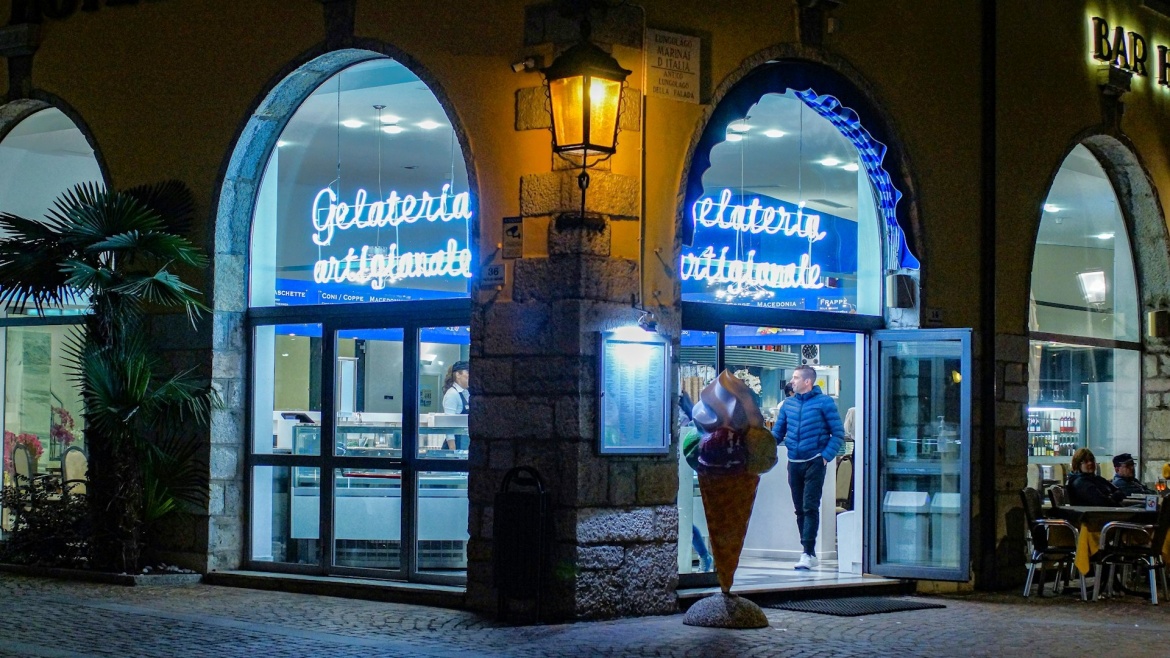 A gelateria in Italy. / Photo: [link]Sebastian Marx[/link], Unsplash, CC0.
The 59th Censis Report paints a picture of Italy in ‘survival mode’: a disenchanted country, focused on the present and lacking a collective vision for the future.
Amid economic stagnation, demographic decline and institutional mistrust, the portrait that emerges is of a society that no longer believes in linear progress, but seeks refuge in niches of individual well-being or in a fascination with power.
From an evangelical point of view, this is not only a sociological crisis, but a spiritual void that calls for a new proclamation of Christ's lordship over life and history.
All Evangelical Focus news and opinion, on your WhatsApp.
The Italian collective imagination is undergoing a profound change: the myth of peaceful progress has given way to cynical realism. While 73.7% of Italians no longer see the United States as a model and 61.9% consider the European Union ineffective, a void of reference points is emerging that is being filled by a fascination with power. It is significant that 55.2% see the world's centre of gravity shifting towards China and India and that 38.8% now consider armed conflict to be the only real means of resolving disputes.
[destacate]A system that spends more on interest payments than it invests in healthcare and education is saying that the past weighs more than the future[/destacate]Theologically speaking, we are witnessing a shift in hope. When almost half the country (46.8%) stops believing in a future of progress and a significant 29.7% looks favourably on autocratic regimes, a modern form of idolatry emerges: the demand for security from the “strong man” or military force (a sector in which production has grown by 32.3%).Christians are called to demythologise this claim, remembering, on the basis of Romans 13, that authority is relative and not absolute, and that true stability does not lie in human potestas, but in the faithfulness of God who governs history beyond the maps of power and the ruins of empires.
The most disturbing economic data is not only quantitative but ethical: public debt has reached 3,057 billion, with interest expenses of 85.6 billion per year. This figure now exceeds state investment in education (76.5 billion) and hospital healthcare (54.1 billion). In a context where the debt-to-GDP ratio is 134.9%, we are witnessing a systematic erosion of tomorrow for the benefit of today.
From the point of view of Christian ethics, this imbalance represents a violation of the intergenerational pact. A system that spends more on interest payments than it invests in healthcare and education is saying that the past weighs more than the future.
The Christian community must denounce this short-sightedness not only as a technical error, but as a structural injustice. The Church's response involves promoting a culture of sobriety and widespread responsibility, arguing that resources are not property to be consumed, but a mandate to be safeguarded for those who come after us. The demand for fiscal equity towards the web giants, put forward by 81.1% of Italians, signals a hunger for justice that must be intercepted and directed.
Italy is an ageing country that works “late”. With 24.7% of the population over 65 (projected to reach 34.1% in 2045) and 84.5% of employment growth driven by the over-50s, a stagnant society is emerging. Young people under 35 are falling behind in the labour market, while real wages have fallen by about 8%. At the same time, deindustrialisation is advancing (manufacturing -4.2% in 2024) and youth entrepreneurship is collapsing (-46.2% in twenty years).
[destacate]The Christian response rediscovers the vocation of work, remembering that human dignity does not depend on entrepreneurial success, but on fidelity to God in one's daily work[/destacate]Biblically, this scenario marks the wounding of three blessings: offspring (few children), the dignity of work and hospitality (with foreigners often relegated to the margins). The “fever” of the middle class, which is trying to maintain consumption despite impoverishment, reveals a crisis of meaning: work has lost its vocational dimension to become mere survival or status.
The Christian response here is twofold and parallel: on the one hand, rediscovering the vocation of work and its boundaries, remembering that human dignity does not depend on income or entrepreneurial success, but on fidelity to God in one's daily work; on the other hand, to mend the social pact, investing in evangelical communities that are increasingly laboratories of integration, where the elderly and young people, Italians and foreigners, are not competing for scarce resources, but are members of the same body.
Faced with a future perceived as a threat, the dominant reaction is to escape into the present: experiential consumption, body care, political disengagement (with abstention often exceeding 40%). It is the eclipse of transcendence: the meaning of life is reduced to the fleeting moment.
In this context, sexuality experienced as consumption and a refuge for identity emerges strongly. With 33.2% of households now consisting of a single person and a growing number of couples (over 22%) ruling out parenthood a priori, eros appears disconnected from generative planning. Often mediated by digital technology (the primary channel of emotional interaction for 28.5% of young adults), sexuality becomes the last bastion of individual sovereignty that no longer finds space in the public sphere.
However, it is precisely this “structural crisis of hope” that opens up an unprecedented space for the Gospel. Christian hope is radically different from naive optimism (contradicted by the data) and trust in human strength or energy alone (sought by 29.7%). It is based on the crucified and risen Christ who breaks into the statistics of human failure.
The Censis 2025 Report is not a judgement, but a diagnosis that challenges the Gospel witness. In an Italy where 46.8% do not believe in progress and where institutions struggle to guarantee intergenerational justice, the Christian presence cannot be limited to welfare. It must dare to be a regal, prophetic and priestly presence:
1. Countercultural evangelical communities: contexts in which a concrete (not just doctrinal) alternative way of life is offered, capable of practising an economy of sharing rather than accumulation, of mending the pact between generations, of witnessing to faithful relationships rather than emotional consumption.
2. A different narrative: proclaiming that the future is not determined by debt or demographics, but is opened up by God's promise.
3. Public vocation: forming believers who, without idolising politics, commit themselves to the common good and justice precisely when collective trust is at an all-time low.
Only by bringing the Gospel back to the centre — as the only true news capable of generating a future — can the numbers of decline be transformed into a context in which God's grace shines with greater intensity.
Giuseppe Rizza, Pastor of Reformed church in Trento, expert in the field of Education.
This article was first published by the Italian magazine Loci Communes. Translated and re-published with permission.
[analysis]
[title]Join us to make EF sustainable[/title]
[photo][/photo]
[text]At Evangelical Focus, we have a sustainability challenge ahead. We invite you to join those across Europe and beyond who are committed with our mission. Together, we will ensure the continuity of Evangelical Focus and our Spanish partner Protestante Digital in 2025.
Learn all about our #TogetherInThisMission initiative here (English).
[/text][/analysis]





Las opiniones vertidas por nuestros colaboradores se realizan a nivel personal, pudiendo coincidir o no con la postura de la dirección de Protestante Digital.


Si quieres comentar o