


Nigeria, Sudan and Mali witness an increase in persecution by armed Islamist groups. Syria, China and Algeria are other places on the planet where Christians suffer restrictions and difficulties in living their faith. The Open Doors World Watch List (WWL 2026) monitors the situation of persecuted Christians around the world.
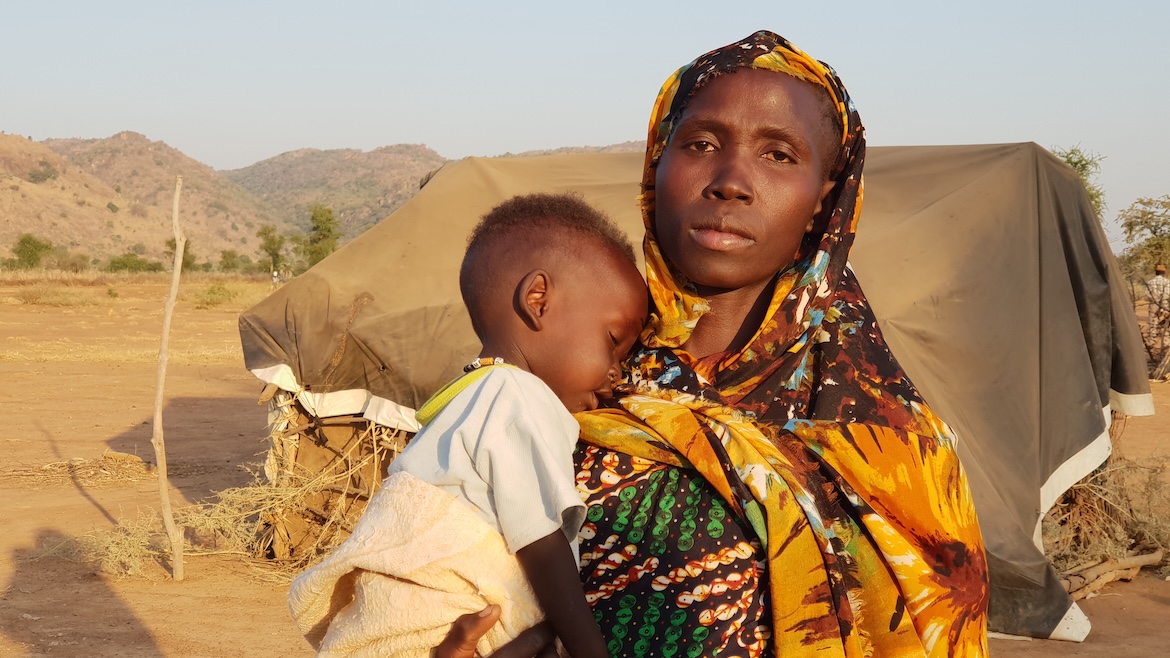 Alia, a Christian woman from Sudan, holds her sleeping son./ Open Doors
The most lethal persecution of Christians in the world continues to be centered in sub-Saharan Africa, where violence has reached historic levels, according to the 2026 World Watch List (WWL) compiled by the NGO Open Doors.
In this region, characterised by institutional weakness and the expansion of armed Islamist groups, millions of Christians live displaced, isolated, or under constant threat.
Of the 14 sub-Saharan African countries included in the List due to their high levels of persecution and religious discrimination, over 721 million people are affected, almost half of whom are Christian.
All Evangelical Focus news and opinion, on your WhatsApp.
Violence rates have escalated alarmingly; a decade ago, they represented 49% of the maximum possible, but by 2026, this figure had risen to 88%.
Sudan, Nigeria and Mali top the list of countries in the region with the highest score for violence (16.7). In large rural areas, the absence of the government allows armed militias to act with impunity, destroying entire communities and forcing Christians to flee their homes.
Nigeria continues to be the deadliest country for Christians. Of the 4,849 faith-based killings recorded worldwide during the analysed period, 3,490 occurred in Nigeria.
In June 2025, Fulani militants attacked the Christian community of Yelwata in Benue State for four hours, killing 258 people, mostly women and children. According to eyewitness, the attackers shouted, ‘We will destroy all Christians.’
The statements made by US President Donald Trump in November 2025, denouncing the killing of Christians in Nigeria, reignited the international debate on religious persecution in the country. However, the situation on the ground remains critical.
This pattern of violence is repeated in other countries in the region, such as Burkina Faso, the Democratic Republic of the Congo, the Central African Republic, and Mozambique, where religious minorities are particularly affected by insecurity and armed conflict.
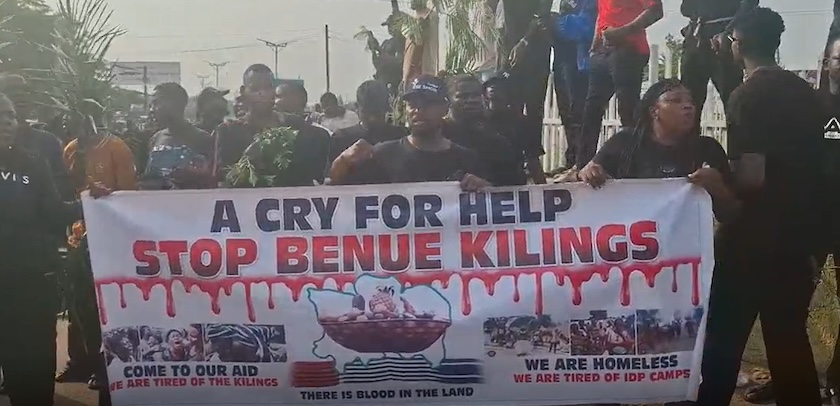
[photo_footer]A demonstration of young people in Nigeria, calling for protection from attacks./ Open Doors [/photo_footer]
Outside Africa, one of the most significant findings in the report is the rapid deterioration of the situation in Syria, which returns to the top ten of the World Watch List for the first time since 2017.
The country has moved from 18th to 6th place, with a record score of 90 out of 100, one of the largest annual increases in the history of the WP. Open Doors attributes this surge to the collapse of Bashar al-Assad's regime and the rise of the jihadist group Hay'at Tahrir al-Sham (HTS).
Over the past year, 27 Christians were killed for their faith and attacks against churches, schools and cemeteries were recorded. The suicide bombing at the Greek Orthodox Church of Mar Elias in Damascus left 22 people dead and more than 60 wounded.
In addition to direct violence, the new constitution imposes Islamic law (Sharia) as the basis of the legal system and severely restricts religious freedom.
In Christian neighbourhoods of the capital, armed groups have spread messages urging conversion to Islam or the payment of jizya, a religious tax.
'When the state collapses and extremist ideology fills the void, religious minorities pay the price,' states research by Open Doors.
In March, Spanish news website, Protestante Digital published an in-depth interview with Matthew Barnes, who knows the reality on the ground in Syria, in which he analysed the real impact of these political and security changes on the country’s Christian communities.
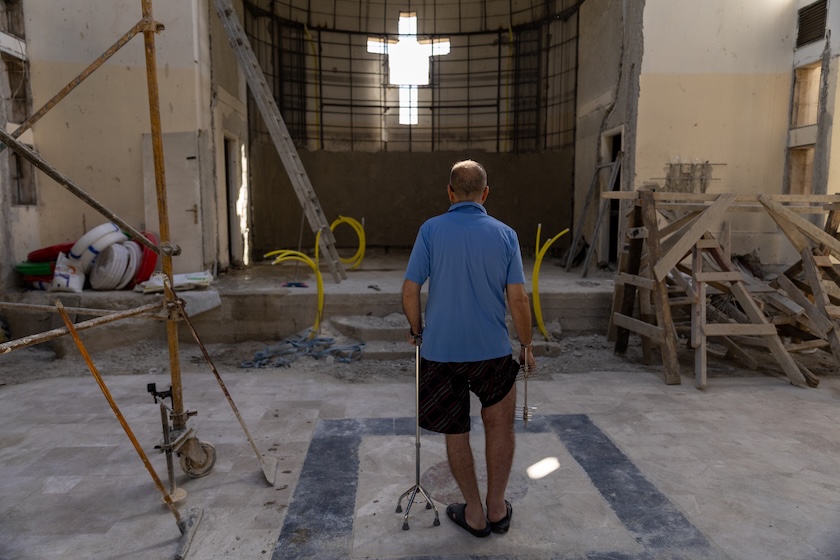
[photo_footer]The Mar Elias Church in Syria, following the attack that left 20 people dead and over 60 injured./ Open Doors [/photo_footer]
According to Open Doors, there are now only around 300,000 Christians left in Syria — hundreds of thousands fewer than before the emergence of the self-proclaimed Islamic State in 2013.
This drastic reduction makes the community even more vulnerable, particularly in areas without a government presence or tribal protection networks.
Many families live in hiding, concealing their faith and avoiding church services for fear of further attacks.
The WWL stresses that repression does not always take the form of murder or attacks. In many countries, pressure comes in the form of surveillance, censorship, and legal restrictions that force churches to operate underground.
In Algeria, all Protestant churches remain closed, and over 75% of Christians have lost contact with their faith community.
In China, new laws ban Bible mobile apps and require Christian leaders to show loyalty to the Communist Party. As a result, many congregations have split into small, secret groups of 10–20 people.
Similar situations exist in Tunisia, Mauritania and Vietnam, where bureaucratic obstacles limit fellowship, public worship and access to the Bible.
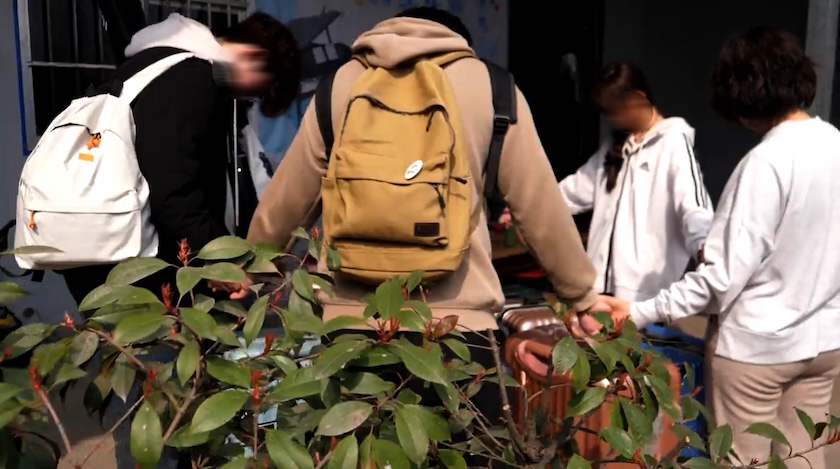
[photo_footer]Young Chinese Christians praying./ Open Doors [/photo_footer]
Persecution in Latin America continues to be shaped by authoritarian regimes and organised crime, which view Christian leadership as a threat to their social and political control.
While the region does not experience the same levels of lethal violence as sub-Saharan Africa, pressure on churches remains constant and is increasing in some countries.
Cuba remains the most hostile Latin American country towards Christians, ranking 24th on the WWL. The Cuban church faces a communist regime that seeks to strictly control religious life in a climate described by the report as "dictatorial paranoia".
The authorities restrict the registration of churches, monitor congregations, and put pressure on leaders who do not align with the ideology of the state.
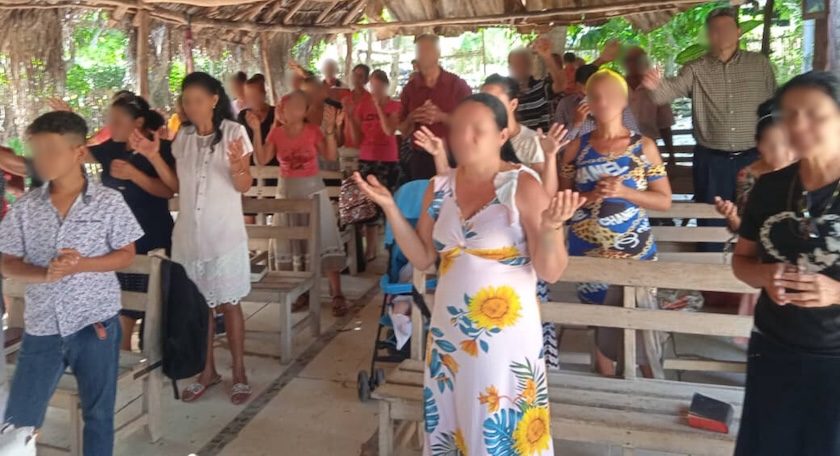
[photo_footer]Christians in Cuba during a worship service./ Open Doors [/photo_footer]
In Mexico, ranked 30th, Christians face a double threat. On the one hand, organised crime groups target pastors and leaders who denounce violence, oppose illegal activities, or work to rehabilitate young people.
On the other, evangelical Christians in indigenous communities in the south of the country suffer displacement, harassment and loss of rights at the hands of local authorities who invoke so-called traditional 'customs and practices'.
Nicaragua, ranked 32nd, continues to see a decline in religious freedom under Daniel Ortega's regime, which maintains a systematic offensive against churches.
State hostility results in the expulsion of religious leaders, the closure of Christian media outlets, and the monitoring of congregations considered critical of or independent from political power.
Colombia, ranked 47th, closes out Latin America's presence in the top 50. In rural areas, illegal armed groups and guerrilla organisations continue to see pastors as an obstacle to their control of the territory.
Furthermore, there is pressure in certain indigenous communities where abandoning ancestral beliefs to follow Christ can lead to social ostracism and even physical punishment.
Despite the overall picture, the report also shows some significant progress. In Bangladesh, violence against Christians has fallen by 20% following the political stabilisation of the country.
In Malaysia, a court reopened the case of Pastor Raymond Koh, who was kidnapped in 2017, acknowledging police involvement and ordering compensation of $7.4 million.
Protestante Digital interviewed Susanna Koh, the pastor's wife, who recounted the long road to justice and the impact of the court ruling both on a personal level and on religious freedom in the country.
In Sri Lanka, an improvement in the government's attitude towards Christians has reduced discrimination and facilitated access to justice, placing the country at number 65 on the WWL.
The World Watch List is an annual report produced by the international NGO Open Doors. It analyses countries where Christians experience the highest levels of persecution and restrictions on religious freedom.
Its methodology assesses pressure and violence in six areas of life: private, family, community, national, church, and direct violence.
The process is audited by the International Institute for Religious Freedom (IIRF) and is based on verified reports covering the 12 months ending on 30 September 2025.
The top ten countries on the 2026 Open Doors World Watch List are:
1. North Korea
2. Somalia
3. Yemen
4. Sudan
5. Eritrea
6. Syria
7. Nigeria
8. Pakistan
9. Libya
10. Iran
[analysis]
[title]Join us to make EF sustainable[/title]
[photo][/photo]
[text]At Evangelical Focus, we have a sustainability challenge ahead. We invite you to join those across Europe and beyond who are committed with our mission. Together, we will ensure the continuity of Evangelical Focus and our Spanish partner Protestante Digital in 2025.
Learn all about our #TogetherInThisMission initiative here (English).
[/text][/analysis]





Las opiniones vertidas por nuestros colaboradores se realizan a nivel personal, pudiendo coincidir o no con la postura de la dirección de Protestante Digital.


Si quieres comentar o