


Around 80 business leaders and executives from Spain gathered in Guadalajara for the 8th LEC gathering, a weekend offering opportunities for networking, training, biblical reflection and generosity.
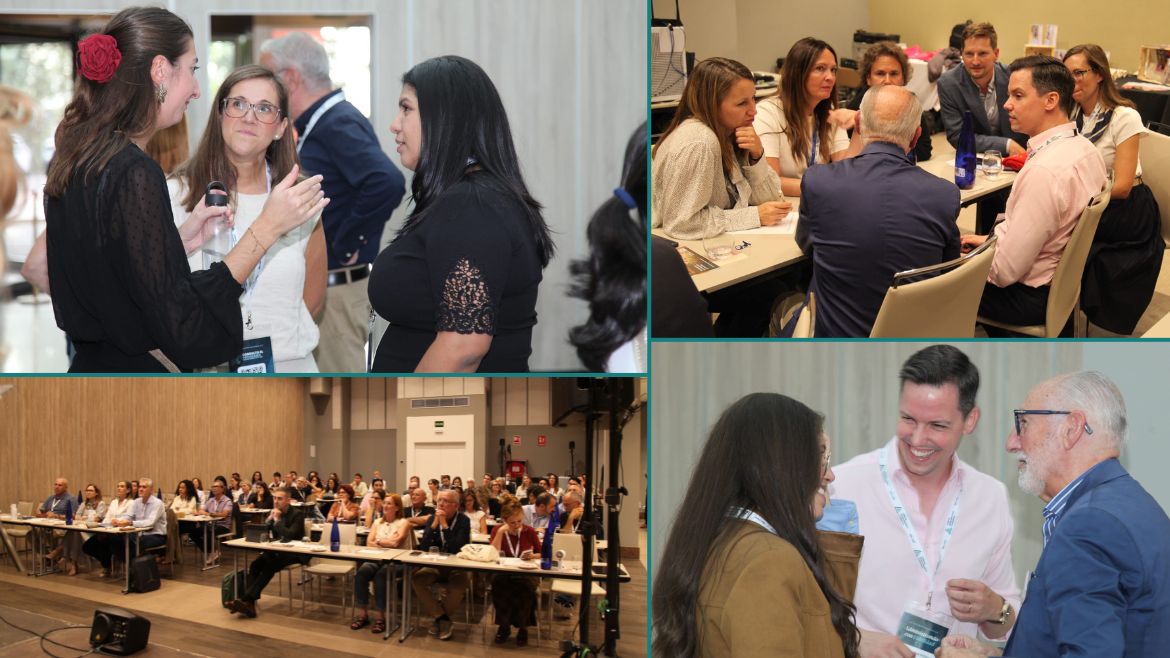 Attendees at the LEC national conference in Guadalajara, at various times. / Photos: Marcos Sancio
Faithfully managing the resources, abilities and responsibilities that God has entrusted to each person was the central theme of the 8th National Meeting of Christian Business Leaders (LEC), held from 2 to 4 October in Guadalajara, south of madrid.
Under the theme “Managing Faithfully”, the conference combined biblical teaching, practical training, personal testimonies and opportunities for Christian professionals to network.
The meeting sought to provide tools for tackling the challenges of business leadership from a Christian perspective, reminding participants that work is not merely a sphere of professional development, but also a space to live out one’s faith, serve others and exert a positive influence. Over the course of the three days, topics covered included personal priorities, delegation, conflict management, character development and generosity.
All Evangelical Focus news and opinion, on your WhatsApp
One of the highlights of the first day was the presentation of the Maclellan Foundation, dedicated to supporting initiatives that contribute to the spread of the Gospel in different parts of the world.
Morgan Maclellan, a member of the family after whom the foundation is named, attended alongside his wife, Lisa, and explained the commitment to generosity that has spanned several generations. He recounted how one of his 19th-century ancestors, Thomas Maclellan, made a commitment to give everything to the Lord. Some thirty years later, he did so again despite having faced difficulties and business failures. At the age of 56, he set up an insurance company which enabled him to build a fortune. Guided by the same belief that all resources come from God and that we are merely stewards, the family has for decades continued a legacy of generosity, funding thousands of social and evangelistic projects around the world.
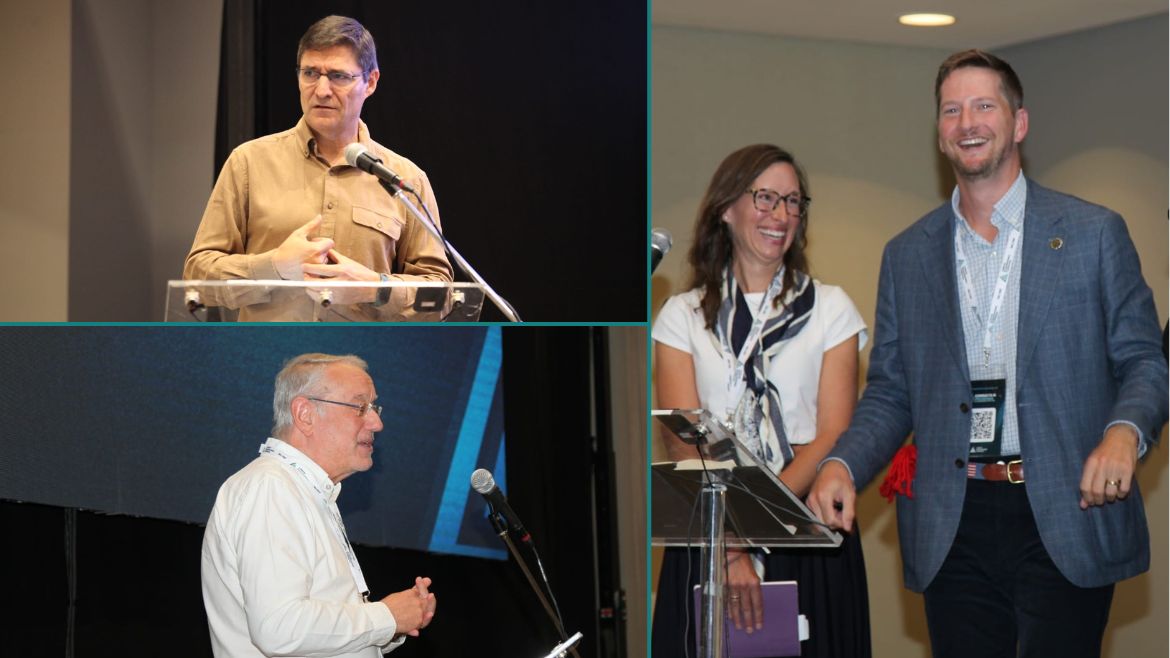
The family’s story also illustrated the conviction that generosity is not limited to financial donations, but can also be expressed through one’s profession, influence and personal abilities. Morgan Maclellan explained that he endeavours to bring this vision into his working environment in the financial sector, participating in initiatives that seek to create spaces for discussing the Gospel in a professional context.
Lee Behar, the foundation’s Director of Finance and Director of Strategy for Europe and Eurasia, expanded on this idea. “We cannot tell someone else to be more generous; that must come from the heart,” he said, emphasising the importance of personal stories in cultivating a generous attitude. He also introduced the acronym LIFE, which brings together four areas in which professionals can put their skills at God’s service: Labour, Influence, Finances and Expertise.
In this context, Generosity Path was also unveiled, an initiative linked to the foundation that helps people reflect on generosity and develop a culture of giving.
Saturday’s programme began with a plenary session led by Pastor Marcos Vidal, from the Salem Church in Madrid, on the meaning of success, based on Psalm 7:1–4. His talk challenged a conception of success based exclusively on achieving personal goals, accumulating wealth or gaining recognition.
Vidal identified five forms of success which, whilst not necessarily negative, can become a trap when they take centre stage in one’s life: financial, professional, public recognition, material and relational.
Thus, money can end up being a burden that dominates those who possess it; professional success can bring greater responsibilities at the expense of personal peace; and the pursuit of recognition can lead to living in constant concern for the opinions of others.
The problem does not lie in these aspirations, but in the place they occupy, explained Marcos Vidal. “Seek first the kingdom of God” was the reference that underpinned his proposal to reorder priorities. Peace does not depend solely on favourable circumstances, but on God remaining at the centre. True success, from this perspective, consists of living with God at the centre, including in the professional sphere and amidst the demands of daily life.
One of the key moments in the practical training session was the talk by Jordi Urbea, a professional in the communications and marketing sector, who addressed leadership from a Christian perspective.
Urbea invited attendees to reflect on the image they project as team leaders and on how those who work with them perceive them: what would their employees say if asked about their leadership style? Drawing on 1 Peter 4:10, he summarised leadership as a way of stewarding what does not belong to us, since God entrusts people, time, talent and resources to those who lead.
His proposal was structured around five pillars: serving first, communicating the vision, delegating with confidence, honouring gifts and nurturing character.
Service, he clarified, does not mean pleasing everyone, avoiding necessary corrections or relinquishing authority, but rather exercising it for the good of people and the development of teams. He also emphasised the importance of conveying a clear vision, explaining why things are done and keeping it at the forefront of the organisation’s daily life: it is not enough simply to set objectives; the leader must embody them.
On the subject of delegation, Urbea recalled Jethro’s words to Moses in Exodus 18, pointing out that no one can take on everything by themselves. Delegating requires knowing people, investing time in them and assigning responsibilities in line with their experience and maturity. He distinguished four levels: indicating how a task should be carried out; asking them to investigate and propose solutions; allowing the person to decide and report back afterwards; and, finally, entrusting them with full responsibility. The aim is to foster the growth of staff members.
He also drew attention to those who carry out less visible but essential tasks, and encouraged leaders to surround themselves with people capable of challenging their decisions constructively, acknowledging that the leader themselves can become an obstacle to the team’s development.
The final pillar was character. “The team follows what it sees, not what it hears”, he summarised, inviting everyone to examine how the fruit of the Spirit is manifested in their daily work. He also warned of the strain on leaders: an exhausted manager can hardly look after others, which is why he insisted on setting boundaries, setting aside time for God and resting.
On conflict management, he encouraged private conversations, listening before judging, avoiding rumours and seeking restoration rather than personal victory, following the principle of speaking ‘the truth in love’. The session concluded with a discussion on the limits of servant leadership and the difficulty of distinguishing between helping others and falling into a state of constant availability.
In a second talk, devoted to priorities, he posed a direct question: at the end of a working week, are we satisfied with what we have done, or have we spent our time on secondary matters? Drawing on the biblical contrast between Martha and Mary, he invited the audience to distinguish between constant activity and the ability to pause and listen to Jesus before acting. He argued that what is important must take precedence over what is urgent and recalled that Jesus himself set aside time for prayer.
He identified five time-wasters: meetings without a clear objective, constant interruptions, mobile phones, perfectionism and the difficulty in delegating. To counter these, he proposed setting clear objectives for meetings, protecting work slots in one’s diary, and periodically reviewing how time is spent, with a thirty-minute weekly exercise: five minutes for prayer, ten to assess what has been achieved, and another ten to set priorities for the following week. The diary, he pointed out, reveals a person’s true priorities.
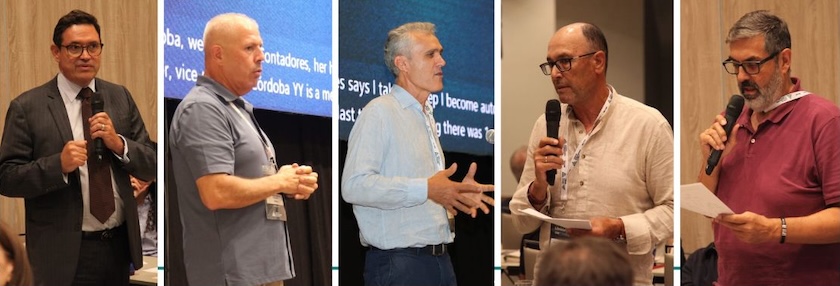
Personal testimonies translated these reflections into concrete experiences. Francisco Pascual recounted how his company collapsed during the 2010 economic crisis and how that transformed his understanding of faith and trust in God. His experience was summed up in one sentence: “Don’t wait until you’ve lost everything to give everything.”
Amidst ruin, he explained, he found a different way of dealing with his circumstances: when he had no answers, he could say, “Lord, I don’t know what to do, but my eyes are fixed on you.” Over time, his situation was restored and he relaunched a public facilities company, where they strive to apply Christian principles. But the most profound lesson was not the economic recovery: God’s restoration is intended to transform people and make them more like Christ. “The storm took many things from me, but He looked after us, my family, and continues to do so,” he said.
Paola Terrazas and Manuel Zamudio, who currently run Krispy Kreme in Spain, also shared their professional and personal journeys, including periods of difficulty and growth, and their desire to continue seeking God’s will in their decisions.
Saturday afternoon concluded with a panel discussion in which three entrepreneurs and executives shared their experiences of integrating faith into their own spheres of work and influence. Rubén Galán, a director at an insurance company, Ivette Barreto, director of AMEIB, and Ezequiel Escobar, chief executive of Fiet, built on the overarching theme of the gathering, delving in a practical way into what it means to be faithful at work, in time management and in leading people.
During the meeting, Raúl Martín, executive secretary of Líderes Empresariales Cristianos, presented a report on the movement’s progress and the internal changes it is driving to continue its development.
Among the latest developments, he highlighted the appointment of Ruth Millán to the national committee and the work of the networking groups, aimed at strengthening relationships between Christian professionals.
LEC’s local activities in Galicia, Barcelona, Madrid, Valencia, Málaga, the Canary Islands, Seville and Granada were also presented.
Martín also referred to opportunities for collaboration with other evangelical organisations: contacts with evangelical councils and the Federation of Evangelical Religious Organisations of Spain (FEREDE), as well as possibilities for dialogue with institutional representatives and organisations of Catholic businesspeople.
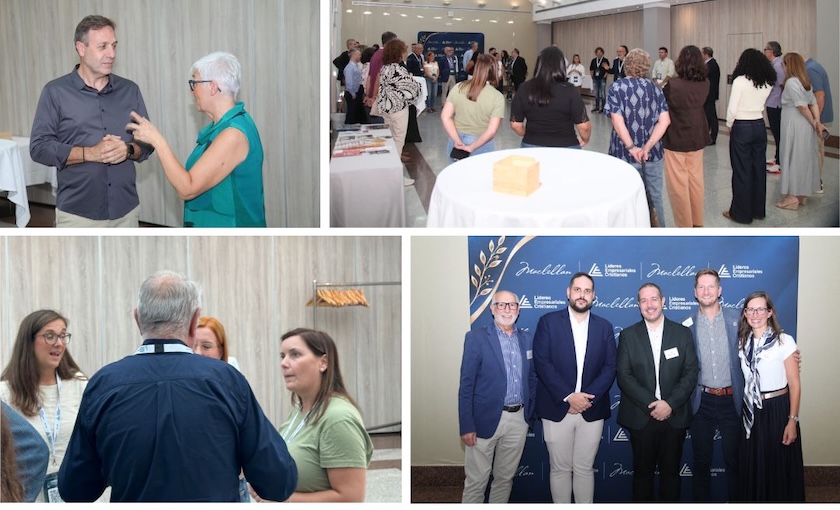
These initiatives form part of LEC’s aim to support Christian businesspeople and professionals in the development of their businesses, helping them to tackle the challenges of their work through their faith and to create opportunities for collaboration. One such opportunity arose shortly before the start of the event with the ‘Ciento x Uno’ celebration, in collaboration with the Maclellan Foundation.
Sunday’s programme included a biblical reflection by Jaume Llenas on Ephesians 4:15–5:4, focusing on the relationship between believers’ new identity and their way of life. He reminded the audience that the church, as a new humanity, is called to be distinguished by unity and holiness, and highlighted three aspects of Christian conduct: the rejection of falsehood, the management of anger, and the use of words. The reason, he explained, is not simply to comply with a moral standard, but to recognise that believers are part of a community built on trust and truth.
Next, Lidia Martín Torralba, a psychologist, writer and Christian speaker, addressed the stewardship of thoughts and emotions, an aspect she considered to be rarely discussed amongst Christians. Drawing on Proverbs 23:7 and the parable of the talents, she explained the relationship between what we perceive, how we interpret it and how we respond, and invited us to compare our way of thinking with the biblical perspective (Isaiah 55:8–9, Romans 12:2 and 2 Corinthians 10:5).
She presented emotions as signals that provide information about what we are experiencing, but which should not necessarily become the guide for our decisions. She concluded with questions to examine how we think, what we do with our emotions, and how both these dimensions shape our influence as leaders and businesspeople.
The 8th National Meeting of Christian Business Leaders structured its sessions around a single conviction: managing with faithfulness means recognising that resources, abilities, time and responsibilities are not ends in themselves, but opportunities to serve.
LEC’s aim is to support those who wish to pursue their business activities without separating their Christian convictions from their day-to-day responsibilities, whilst at the same time strengthening a network of relationships that enables them to share experiences, learn from one another and collaborate on joint projects. Full details can be found on their website, lec.red.
[analysis]
[title] Do you see a need for this kind of journalism? [/title]
[text] Evangelical Focus is a network of many people in Europe and beyond who strive to bring a uniquely Christian perspective to the big issues of conversation.
Through news, interviews, opinion and analysis, we seek to build bridges between evangelical churches and the societies in which they live.
As a non-profit entity, the big challenge is to be sustainable, month by month. We invite you to make a difference! Join the readers who make Evangelical Focus possible.
[/text][/analysis]





Las opiniones vertidas por nuestros colaboradores se realizan a nivel personal, pudiendo coincidir o no con la postura de la dirección de Protestante Digital.


Si quieres comentar o