


Amid a complex political situation, the EAD issues a position paper to “support evangelicals in addressing political and social issues responsibly from a Christian perspective”.

The Bible is clear that the Christian question regarding housing can never be solely: ‘How much can I get for this property?’ But also: ‘What responsibility do I have before God towards the person who needs to live in it?’
The law approved by the Spanish Government seeks to redress the injustice suffered by pastors and their families who were prevented from making social security contributions during the Franco regime and the early years of democracy.

Faith-based healthcare institutions may refuse to allow assisted dying on their premises, “when such a procedure is clearly contrary to the institution's statutory mission or purpose”.

There is a supreme referee, a judge who is above all things, and to whom we will all one day be accountable: God himself.
We recognise the legitimate duty of governments to manage migration responsibly, secure external borders, and combat human trafficking. At the same time, several elements of this Regulation trouble us. Detention will now last longer and can apply to families with children.

Starmer is the sixth outgoing prime minister in only ten years. "We ask for your wisdom at this time and for godly guidance for our nation”, prays the Evangelical Alliance.
.jpg)
Abusers set up new churches, preach again about God’s love, receive official recognition from ‘the good people’, and host lavish meals to celebrate their own success. Victims try to rebuild their own life, in silence.

How can we respond with grace and truth to stories of leaders who fall?
.jpg)
The Church wants to help. However, generosity without a clear understanding of the issue can inadvertently sustain systems that do not serve children as well as we hope. And the evidence on this is no longer ambiguous.

When people are discussing a case like this, Christians can testify to a way that takes justice for all seriously but also seeks to be scrupulously fair and hopes for mercy for all involved.
States do face real threats and evil can sometimes only be checked by force. But the lesson is clear: war is a profoundly blunt instrument for creating justice, reconciliation or lasting order.
.jpg)
Canals in Amsterdam overflow with boats crammed with orange-clad merrymakers. Music fills streets festooned with orange flags. Children sell old toys and homemade cakes. The old story of the Dutch triumph of freedom over Spanish imperial tyranny carries contemporary relevance.
.jpg)
The way we deal with cases of abuse in our communities is not a minor issue: it is a profoundly spiritual, pastoral, ethical and also missionary matter. An essay outlining three models and four mistakes that churches often make.
.jpg)
150 practitioners and experts serving across Europe discussed topics such as strengthening younger generations, mental health and sexual abuse prevention. The Refugee Highway Partnership organises such gatherings every year.

We have to hold out until the end, when God will publicly reveal the truth.

The European Evangelical Alliance invites believers throughout Europe to remain faithful in intercession until peace, justice, and restoration are fully realized.
Cropped.jpg)
Five examples of how Christians raise their voices with humour and courage to explain the precarious life without freedoms under the Castro regime.
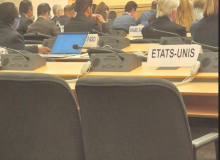
Janet Epp Buckingham, who speaks for Christians at the UN in Geneva, explains why her answer is yes.

In contemporary Venezuela, the dictatorship does not merely tolerate but actively promotes a spirituality rooted in Cuban Santería and occult practices. This spirituality is presented not as folklore, but as a source of legitimacy—openly contradicting the Christian faith.
.jpg)
Trump is skillfully building an autocratic system in his own country with the support of many evangelicals. It is high time that global evangelical networks, such as the WEA or the Lausanne Movement, took a firm stance on the behaviour of the current US administration.
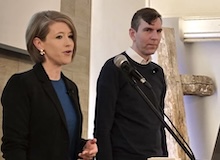
A training day in Madrid on abuse in Christian contexts, with experts from GRACE, explored the challenges and opportunities for restoring victims, as well as creating an integrity-based and fair church culture.
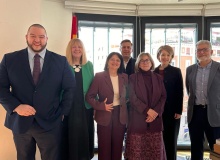
María Eugenia Prendes expressed her support for initiatives that “open the eyes to an unnoticed reality that is important to address” in faith contexts.

“We reject any misuse of Christian faith or church authority to legitimize violence, aggression, or domination”, says the European Evangelical Alliance in a new statement.

Over 500,000 Venezuelans live in Spain. Seven voices recount their experiences of migration, the daily lives of their families back at home and the mixed emotions following Maduro’s fall.




Las opiniones vertidas por nuestros colaboradores se realizan a nivel personal, pudiendo coincidir o no con la postura de la dirección de Protestante Digital.

