


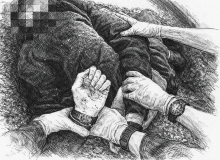
When people are discussing a case like this, Christians can testify to a way that takes justice for all seriously but also seeks to be scrupulously fair and hopes for mercy for all involved.
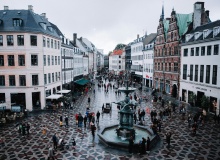
A new report shows that 41% of people under the age of thirty want to learn more about the Bible. Surprisingly, a third of men say they have attended at least one church service in the last month.
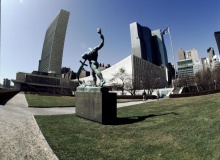
States do face real threats and evil can sometimes only be checked by force. But the lesson is clear: war is a profoundly blunt instrument for creating justice, reconciliation or lasting order.
.jpg)
In an exclusive interview, Franklin Graham talks about his visit to Madrid (Spain), his relationship with Donald Trump, and how the work of Samaritan’s Purse is welcomed by countries despite reservations about it being driven by the Christian faith.
.png)
In Hesse (Germany), some 250 leaders from a dozen countries gathered at the invitation of Pentecostal organisations. AIG Latinos aims to support Spanish-speaking pastors and churches with “spiritual guidance, practical training and tools”.
.jpg)
Bishop Andy Lines highlighted the growth of an Anglicanism that is focused on mission and a clear commitment to the “unchanging truth of the Holy Scriptures”. The General Meeting of 2026 marked a milestone in the life of the province-in-formation.
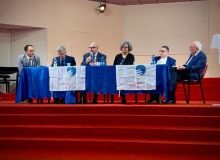
The Italian Evangelical Alliance called on Christians to give a biblical witness “in times of cultural crisis”. Theological training and church planting projects were presented.
Cropped(2).jpg)
Almost 900 evangelical leaders from 45 countries gathered in Wisla, Poland, for the 2026 edition of the European Leadership Forum. A summary of the key messages heard during the week-long evangelical gathering.
.jpg)
No one was killed, and on Sunday, members of the church began clearing the rubble from the building. “Even a large fire cannot burn down what is built on the solid rock of faith,” say the church leaders in the town near Kharkiv, east of Ukraine.
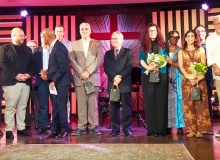
Timóteo Cavaco ended his term as president. Evangelical education in schools, reports about the evangelical realities, and initiatives such as the Portuguese Evangelical Forum are among the AEP’s initiatives.
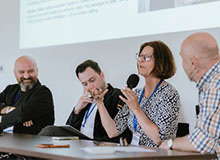
MediaFest 2026 brought together writers, editors, journalists and content creators from across Europe to reflect on what people are really looking for, and whether the church is listening.
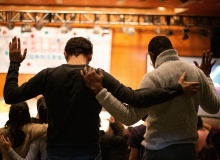
In this complex world, we Christians are building the church of Christ. And if we truly do so, we will quickly realize the enormous potential it holds for combating racism and polarization.
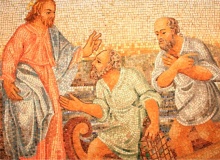
The vision of human dignity, forgiveness, reconciliation, justice and the equal value of every person before God, profoundly shaped European civilisation over centuries.
.jpg)
Assemblies of God leaders from Italy, France, Spain and Portugal emphasise their desire to share resources and promote the planting of new churches in the Mediterranean countries.
.jpg)
After 25 years, the European Leadership Forum conference taking place this week in Poland continues to offer encouragement to “evangelical leaders who are committed to the truth of Scripture, discipling believers, and persuasively communicating the Gospel”, says Greg Pritchard.
.jpg)
Economic dependence, power imbalance and other factors should be taken into account when churches offer help to migrants or refugees. Miriam Araujo addressed risks and good practices.
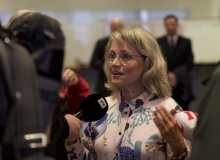
The Finnish politician has appealed to the European Court of Human Rights after the Finnish Supreme Court ruled that the booklet Man and Woman He Created Them, published in 2004, breached legislation on hate speech against homosexuals.
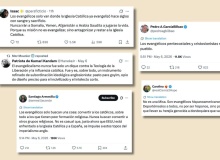
Europe’s true need is not a change of religious label, but the emergence of biblically sound, intellectually serious and spiritually vibrant churches, capable of responding to the moral and existential void of our age.
.jpg)
I was a pastor in Turkey and they branded me a political mole. In Spain, they brand me – and us evangelicals in general – as ideological infiltrators serving certain geopolitical agendas.
.jpg)
Last Saturday was ‘Europe’s’ 76th birthday. You hadn’t noticed? Few European nations make much fuss about “Europe Day”, May 9. But it is great to remember the integration that has helped avoided war among EU's nations.
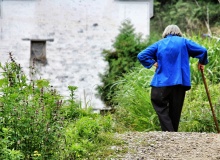
Reflections on declining health, falling birth rates, and a 103 year old woman.
.jpg)
The new prime minister brings an end to 16 years of rule by the controversial Viktor Orbán. Many Christians fear “negative changes” promoted by Brussels.
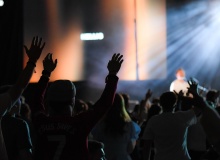
I believe Europe could once again be known as a missionary-sending continent, not to rule, but to serve. Not in isolation, but in deep partnership with churches from the Global South.
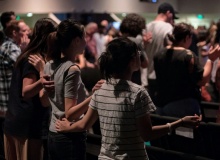
A study by the Gordon-Conwell Theological Seminary shows that while Catholics and Orthodox Christians have grown by 0.56% and 0.28%, evangelicals are increasing at 1.34% per year.
.jpg)
Canals in Amsterdam overflow with boats crammed with orange-clad merrymakers. Music fills streets festooned with orange flags. Children sell old toys and homemade cakes. The old story of the Dutch triumph of freedom over Spanish imperial tyranny carries contemporary relevance.





Las opiniones vertidas por nuestros colaboradores se realizan a nivel personal, pudiendo coincidir o no con la postura de la dirección de Protestante Digital.

