


.jpg)
Fifty years ago, on July 9, 1976, I landed in Frankfurt am Main with my family. A Lufthansa plane had flown us from Moscow to Germany. “To freedom”—as people said. My parents had been waiting for an exit permit since 1956. Now the time had finally come.
I hope that the Jeffrey Donaldson revelations will cause us to reflect deeply on the culture that we have allowed to develop, which is insufficiently loving and insufficiently committed to truth.
.jpg)
At least 12 people have died in the devastating wildfire in Andalusia, Spain. An evangelical pastor, speaking from the scene in Turre: “There are many difficulties in putting out the fire due to the terrain, the wind and also the heat”.
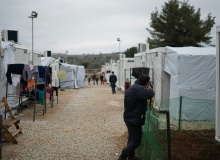
We recognise the legitimate duty of governments to manage migration responsibly, secure external borders, and combat human trafficking. At the same time, several elements of this Regulation trouble us. Detention will now last longer and can apply to families with children.
.jpg)
The fact that liberal-democratic countries such as Switzerland and Germany react so strongly to expressions of faith shows just how far secularisation has progressed. That is why I urge Ruben Vargas, Felix Nmecha and others to continue leavening the dough with a faith lived out genuinely.
.jpg)
The number of births has fallen sharply after the pandemic, although the situation is even worse in Mediterranean countries. Adoptions are also at an all-time low.
.jpg)
The European Evangelical Alliance publishes a seven-page document emphasising the identity of “Good News people” in a context of growing media exposure. “The term ‘Evangelical’ is wrongly linked to political movements and narratives that do not reflect the reality of Evangelical communities in Europe”.

The current proposals undermine the role of parents and carers while also ignoring freedom of religion and belief, offering no protection for church leaders and others.
.jpg)
Is it possible to attend the same annual conference for over a decade and still feel that it is crucial to your work?
.jpg)
The World Evangelical Alliance addressed the Austrian government at the Human Rights Council, requesting that no obstacles prevent the registration of faith minorities.
Football became so deeply rooted in British working-class communities because there were chapels, Sunday schools, parish rooms and young men looking for somewhere to belong, long before there were professional clubs, stadiums and television contracts.
.jpg)
The European Union is proposing sanctions against the leader of the Russian Orthodox Church for inciting the war against Ukraine. Tatiana Kopaleishvili of the European Evangelical Alliance sees sufficient grounds to respond to the theological justification of an unjust war.
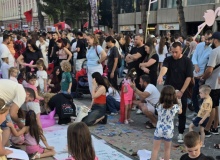
Afrim Karoshi, an Albanian evangelical, analyses the demand for a ‘new Albania’ that thousands of people are voicing on the streets, in a conflict that goes beyond discontent with a major foreign investment in the Zvërnec region.
.jpg)
International participants are invited to attend three weeks of interactive discussions, taking place in July, on Christian values in cities, countries and at European level, organised by the Schuman Centre for European Studies.
Once more, I listened gratefully to biblical concepts being uncompromisingly stated in the European Parliament building, including that human dignity derived solely from the understanding of humanity as created in God’s image.
.jpg)
The Prime Minister’s announcement has drawn criticism from teenagers who conduct most of their social lives via social media. We asked the policy adviser at the Evangelical Alliance UK about the role churches should play in offering places of community and friendship.
To identify the entire evangelical community with certain political movements or with media images from the United States is not only unfair, but deeply misguided.
.jpg)
A Dutch missionary and theologian, her work steadily expanded from Hungary to Central and Eastern Europe and the Balkans, and in recent years also to Central Asia.
.jpg)
Great nations are marked by justice, not mere strength. They respect truth rather than propaganda. They cultivate responsibility alongside freedom. They produce citizens who understand that rights and duties belong together.
Cropped(1).jpg)
Evangelical representatives from France, Austria and Italy took part in an OSCE meeting held in Rome. Julia Doxat-Purser, from the European Evangelical Alliance, expressed concern about how evangelicals are portrayed in a ‘toxic atmosphere’ that increasingly fuels hatred towards ‘the other’.
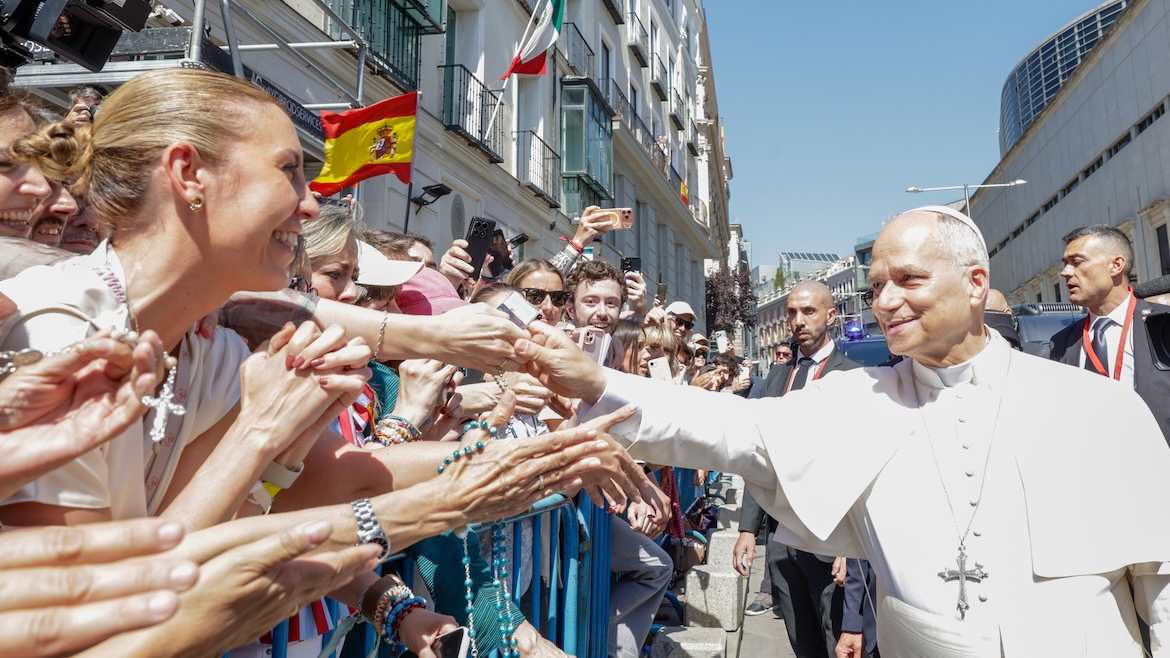
When the Pope spoke about freedom of conscience in Madrid, he forgot to mention that the Roman Catholic Church has been its greatest enemy for centuries.
.jpg)
This year, a joint delegated meeting of the German- and the French-speaking branches gathered 120 people in Murten. The Alliance seeks a middle ground between fundamentalism and liberalism.
How can we respond with grace and truth to stories of leaders who fall?
.jpg)
In Valencia, a church confirms its entrance into the Anglican Convocation in Europe – part of the new Global Anglican Communion (Gafcon) – with a visit from Bishop Andy Lines. Pastor Julian Milson explains the reasons for leaving the Spanish Reformed Episcopal Church (IERE).
.png)
The pastor of ‘Zeal Church’ explains the “very difficult” decision but underlines that nothing will halt “the mission of bringing God’s love to this region”. Critical media coverage only shows that free churches are once again “noticed, heard and seen” in society, says René Wagner.






Las opiniones vertidas por nuestros colaboradores se realizan a nivel personal, pudiendo coincidir o no con la postura de la dirección de Protestante Digital.

