


.jpg)
One in six people (16.3 per cent) in the country identify as “evangelical” or “Protestant”. A chapel in the presidential palace and a government plan to promote Christian centres with a social impact in neighbourhoods are examples of the growing public presence.
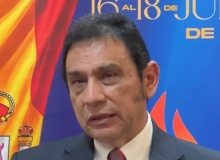
The evangelical entity prepares for its event in Madrid, from 16–18 June 2027, where it hopes to gather 500 believers interested in the influence of faith on public life.
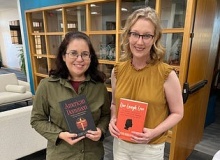
Keri Ladner is a compulsive researcher, thanks in part to her autism. More importantly, she’s an inspiring person.
.png)
When the American Bible Society sold its Manhattan headquarters (in New York) and moved to Philadelphia, its leadership realized it had empty wall space that could be well used.

An initiative honours over a century of educational, social, and cultural contributions for the first time.
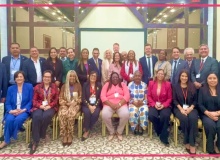
Participants of the Global Forum for Life, Family and Freedoms agreed to set up a convening committee to create the ProLife Core Group, started with the Geneva Consensus Declaration.
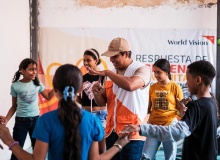
We talk on the situation in Venezuela with Mishelle Mitchell and Joao Diniz of World Vision. Over two months after the earthquakes “churches have been, and still are, essential”.
.jpg)
For 56 million evangelicals—the majority of whom are Pentecostals—their central role in the country's public life is being reinforced.

A creative exhibition expresses good public-health sense.
.jpg)
The Senate has approved the bill, but it will not be included in the school calendar nor will it be a public holiday. The aim is to recognise the volunteering work carried out by thousands of people through churches
.jpg)
Criminals kill 47 people in one night in Kenscoff, in a country plunged into chaos that neither UN support nor foreign aid has managed to stabilise.
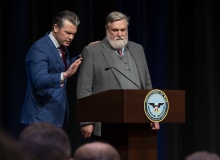
Christians embarrass themselves by pretending to be experts where they are not
.jpg)
The road ahead is long and has only just begun, but its architects believe the time is right to launch this initiative.
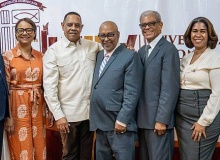
Over the course of these 40 years, UNEV has established an educational model that integrates faith, innovation and social commitment.
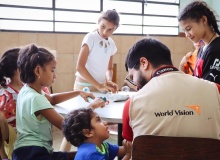
With the first month and a half now having passed since the two earthquakes June, it is essential that we recognise a conviction that must guide all recovery and reconstruction efforts: surviving is not enough.
The EEA winsomely describes evangelicals’ commitment to holistic mission, their history of positive social contributions, and their motivation to value every human being as made in God’s image.
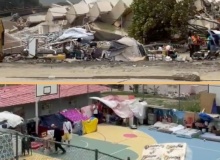
Official figures indicate that at least 4,490 people have lost their lives as a result of the earthquakes. “The scale of the destruction was massive and, above all, we mourn the loss of human lives”, says Rosa Camargo, speaking from the disaster zone.
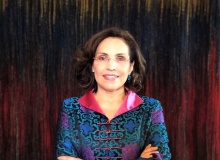
While serving as Colombia's ambassador to France, Viviane Morales stood out for her commitment to humanitarian causes, such as providing assistance to Venezuelan migrants.
.jpg)
World Vision deploys teams on the ground as the deaths of nearly 600 people are reported. “Everything went dark and everything started shaking. Children were screaming in fear”, says one eyewitness. Alianza Solidaria and GAiN are also launching emergency campaigns.
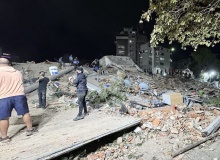
At least 589 people have died and around have been 3,000 injured, say official reports on Friday. Affected areas include La Guaira, where a church collapsed. Thousands are trying to find relatives, pastors call to pray as Christian organisations start sending aid.
.png)
In Hesse (Germany), some 250 leaders from a dozen countries gathered at the invitation of Pentecostal organisations. AIG Latinos aims to support Spanish-speaking pastors and churches with “spiritual guidance, practical training and tools”.
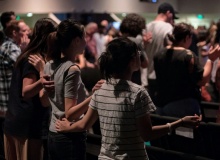
A study by the Gordon-Conwell Theological Seminary shows that while Catholics and Orthodox Christians have grown by 0.56% and 0.28%, evangelicals are increasing at 1.34% per year.
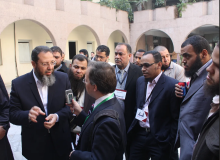
“The Middle East is often characterized as full of explosive religious tension, and I don’t want my spiritual community in the West to misunderstand this region”. An interview with Christian journalist Jayson Casper, in Lebanon.

Canada has made international news recently for two pieces of legislation aimed at curbing the spread of hatred. Faith leaders have raised concerns about how these laws might limit religious expression.

Bible engagement hit record this Easter, with 22 million people accessing the popular YouVersion app on Easter Sunday.




Las opiniones vertidas por nuestros colaboradores se realizan a nivel personal, pudiendo coincidir o no con la postura de la dirección de Protestante Digital.

