



Discipleship is not the church’s ‘next-generation strategy’. It is the church’s core work.

For cultures that prize productivity and speed, Christian communities are called to model a different way: the slow work of presence, the patient cultivation of deep relationships.

The gospel offers an eternal solution for the problem of loneliness, as it connects us with the Lord of life, and places us within the body of Christ, connected with fellow believers.

What, exactly, are we asking people to leave behind when they come to Christ? And what are we asking them to become?

The future of missions will not be built by isolated efforts but by partnerships that honour the gifts of each culture and generation.

AI is already extensively present in the church. The question is, are we going to continue to use them in a way that honors God and serves the people God has placed in our care?

The integration of AI-generated and assisted content will require Christians to be proficient at contextualizing content to address needs in the appropriate languages.

In an age of Artificial Intelligence, the local church can become a beacon of stability and hope, demonstrating what it means to love God and neighbor with heart, soul, mind, and strength.

In an increasingly artificial and disembodied world, it is the authentic and embodied human that brings the tangible love of Christ to the lost and lonely.

As with the printing press or the smartphone, the question before us is not if AI will influence discipleship, but how we will steward it.

The work of biblical scholarship, interpretation, teaching, and learning is the work of the body of Christ, and cannot be responsibly performed by a machine.

AI should help us address ways to collaborate with communities to facilitate spiritual transformation, growth in Christ, and help the emerging church grow and mature.

We must resist the urge to turn our churches into cozy clubs for the converted, and focus on bringing gospel transformation to those within and outside the church walls.
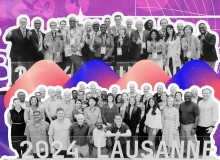
The networks successfully fostered connections and ongoing engagement. However, the disparities in growth and feedback from leaders reveal areas for improvement.

As we reflect on the fruits of this gathering, we are reminded of the ultimate mission: the fulfillment of the Great Commission.

What are the significant outcomes from such a global Christian in-gathering in revitalising our outward vision to impact the world for Christ?
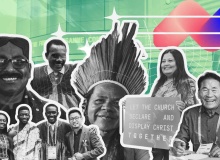
An open letter to those who will lead the global church in 2050.

South Korea is widely recognized as one of the most important mission forces in the contemporary period.

As Christians, should we allow ourselves to be influenced by the world’s perspective or should we embrace God’s perspective on disability?

The consequences of neglecting our responsibility to each other and our shared home are no longer distant, they are here now, and the church cannot wait any longer to act.
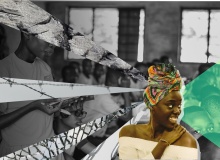
Do migrants, asylum seekers, and refugees feel they can honestly share some of their struggles in our churches or do they feel they will be stereotyped, judged, or misunderstood?

Western agencies must reskill to become effective intercultural facilitators, connecting people, skills, and resources behind Majority World strategies for mission.

Letting the next generation step up.

May the church begin to present an emotionally intelligent community, who is able to weather the intricacies of human experience, choice, and seasons of belief.
.jpg)
The church needs the move of the Holy Spirit more than ever, to bring greater unity and collaboration of churches and mission organizations to fulfil the Great Commission.






Las opiniones vertidas por nuestros colaboradores se realizan a nivel personal, pudiendo coincidir o no con la postura de la dirección de Protestante Digital.

