


The European Union is proposing sanctions against the leader of the Russian Orthodox Church for inciting the war against Ukraine. Tatiana Kopaleishvili of the European Evangelical Alliance sees sufficient grounds to respond to the theological justification of an unjust war.
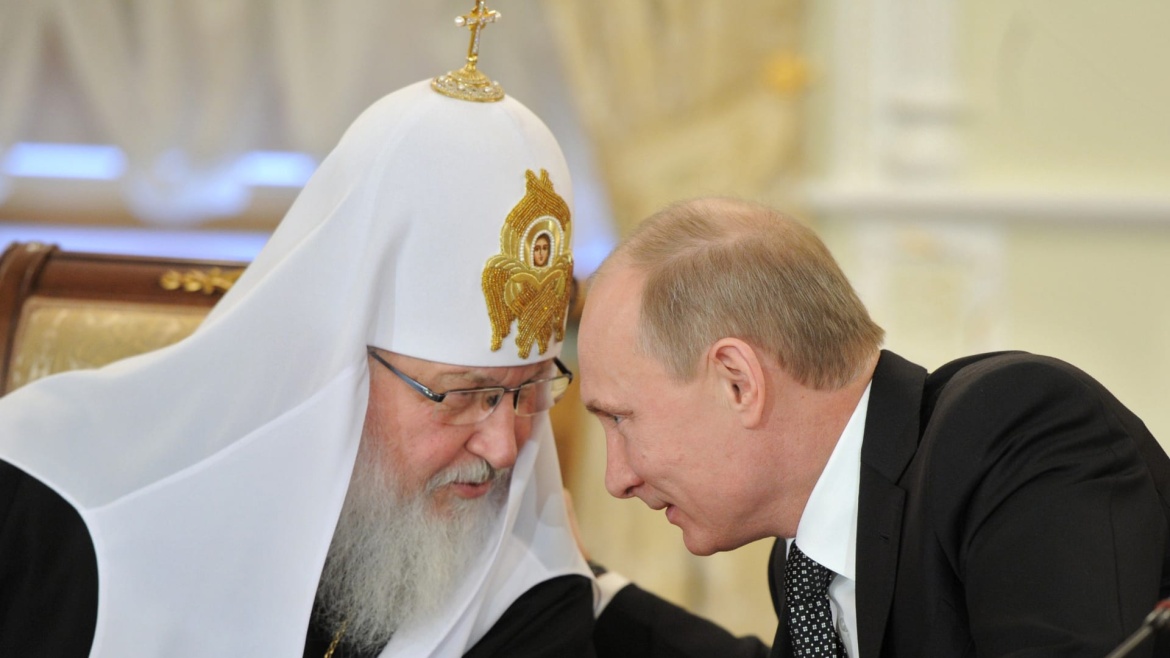 Russian Orthodox Church Patriarch Kirill I, and President Vladimir Putin, in a meeting in 2022. / Photo: [link]KOR[/link], Wikipedia, CC BY SA
Once again, the European Union is considering sanctions against the most visible religious figure, Patriarch Kirill I, leader of the highly influential Russian Orthodox Church.
The reason cited by the EU is that Kirill has spread revisionist propaganda against Ukraine to portray Russia’s attack as a ‘holy war’.
All Evangelical Focus news and opinion, on your WhatsApp.
This is not the first time the proposal has been on the table. In 2022, Hungary vetoed the decision, and now, in 2026, it is the Prime Minister of Bulgaria who has distanced himself from the move, arguing that it is counterproductive to sanction a religious leader. “What message are we sending when we extend sanctions and war into the sphere of religion? Do we realise where this leads?”, said Ruben Rumev. “He is the head of the Russian Orthodox Church, which is Eastern Orthodox, just like our church. I am concerned about the millions of people who belong to that church”, he concluded.
In this debate, how do other Christians in Europe view the fact that a figure who blends religious and political power could be sanctioned by the European Union?
Evangelical Focus asked the Georgian Tatiana Kopaleishvili, the Brussels Representative of the European Evangelical Alliance (EEA).
Question. How do you see the EU sanction of Russian Patriarch Kirill for justifying with theological reasoning the war against Ukraine?
Answer. What is the duty of a religious leader? To speak truth to power, to defend the dignity of every human life. Instead, under Kirill's leadership, the Russian Orthodox Church approved a document calling for the annihilation of Ukrainian independence and branding the invasion a "Holy War".
This is not pastoral language. It is a theological architecture built to sanctify aggression. The sanction targets a political act, not religious belief or worship. In view of this, the EU's reaction is justified and overdue.
Q. In general terms, what are the advantages and disadvantages of imposing political sanctions on influential religious leaders?
A. Wearing a cassock does not give a leader the right to incite political war. When a church leader chooses to merge his office with the state and become an instrument of its policies, he takes on the political responsibility that comes with that choice, and can no longer claim religious immunity for what is, in substance, political action.
Consistency demands that the same standard applied to any political actor inciting war must apply here too, regardless of title.
The real risk though lies in communication: the EU needs to clearly explain that this targets Kirill's specific conduct. This will leave no room for misinterpretation that this is an attack on Orthodoxy itself — the argument Hungary used to block it in the past.
Evangelical Focus will publish a column by analyst Johannes Reimer titled: ‘Should Patriarch Kirill I Be Sanctioned?’
[analysis]
[title] Do you see a need for this kind of journalism? [/title]
[text] Evangelical Focus is a network of many people in Europe and beyond who strive to bring a uniquely Christian perspective to the big issues of conversation.
Through news, interviews, opinion and analysis, we seek to build bridges between evangelical churches and the societies in which they live.
As a non-profit entity, the big challenge is to be sustainable, month by month. We invite you to make a difference! Join the readers who make Evangelical Focus possible.
[/text][/analysis]






Las opiniones vertidas por nuestros colaboradores se realizan a nivel personal, pudiendo coincidir o no con la postura de la dirección de Protestante Digital.


Si quieres comentar o