


Uncertainty is no excuse for paralysis. The biblical alternative to complacency is watchfulness; the alternative to fear is faithfulness.
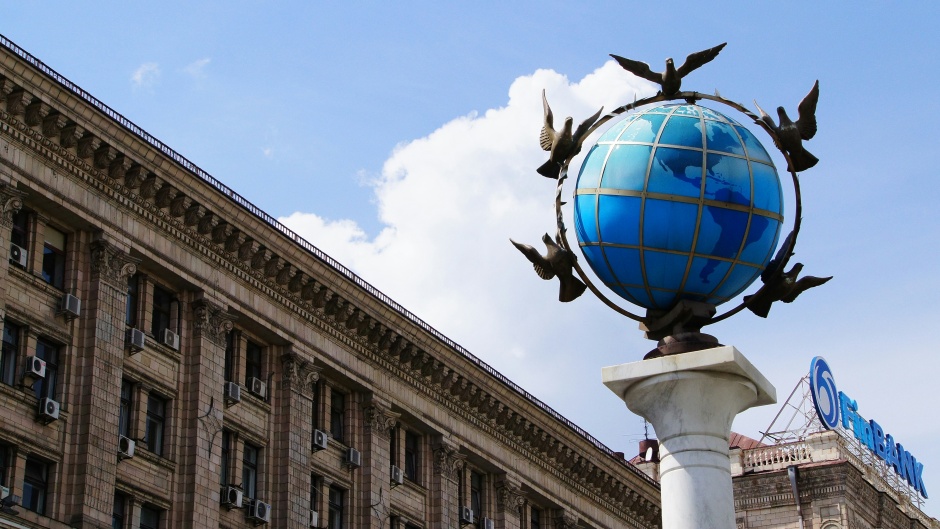 Globus monument at the independence square in Kyiv. / Photo: [link]Tina Hartung[/link], Unsplash CC0.
Many British Christians had their comfort zones disturbed recently when Pete Greig, founder of the 24-7 Prayer movement, sounded the alarm: ‘Prepare for war’.
Speaking at the Wildfires Festival in August he described being impressed in his thoughts one day by those three ominous words.
None of us like hearing that sort of warning. We’d rather not think about a scenario where our comfortable world gets turned upside down, where the future becomes unpredictable and where lives, perhaps those of loved ones, even ourselves, are threatend.
All Evangelical Focus news and opinion, on your WhatsApp
We’d rather dismiss such talk as the rantings of disreputable weirdos – not someone with the global standing of a Pete Greig.
Eight years ago I found myself suppressing such thoughts while standing in Maidan, Independence Square, in the heart of Kyiv.
[destacate]Far from being engaged in a distant conflict out of sight over the horizon, Ukrainians have realised that they are on the frontline of a battle that will shape Europe’s future[/destacate]That’s where the popular uprisings of the Orange Revolution (2004-5) and the Revolution of Dignity (2014-5) had set Ukraine on the path of democratic freedom and full independence from Moscow.
As I took in the scene around me – of flags and monuments in memory of those fallen in the struggle for freedom – the disturbing realisation floated into my consciousness that Putin would not sit by and allow a free, democratic republic to flourish on his southern border.
But I did not want to allow the thought of missiles perhaps one day smashing into the very buildings surrounding me at that moment. And yet that is now what is happening in this very moment.
Ukrainians of course have been living with air-raid sirens, destroyed homes, displaced families, funerals and the daily uncertainty of whether loved ones will return alive for nearly five years now.
Actually for over twelve years, since the Crimean invasion. Their churches have become shelters, relief centres, kitchens, hospitals of the soul and communities of hope.
Far from being engaged in a distant conflict out of sight over the horizon, Ukrainians have long realised that they are on the frontline of a battle that will shape Europe’s future.
The shape of the whole international order, in fact. They have been trying to wake us up for some time.
We in the west have come to regard the abnormal as normal. The past eighty years – of peace, prosperity, security, freedom to travel, expanding opportunities, supermarkets full of food, reliable electricity, holidays abroad and the expectation that our children will enjoy lives better than our own – has historically has been extraordinarily unusual.
For centuries, European history was a succession of wars, invasions, epidemics, famines, persecution and political upheavals.
The peace we have enjoyed in much of Western Europe was a fragile achievement, sustained by values, institutions, alliances, economic cooperation, reconciliation and sacrifices often forgotten by later generations.
[destacate]We forgot the values on which the peace in Europe had been built: of forgiveness and reconciliation, trust and solidarity, dignity and respect, civic responsibility and choosing for the common good[/destacate]What we viewed as a permanent entitlement was a historical exception. We have mistaken comfort for blessing, security for salvation, and prosperity for progress.
Some even declared we had reached the end of history with our liberal politics and capitalist lifestyle of twenty-four hour entertainment, streaming services, sporting spectacles, social media, shopping, celebrity gossip and endless distractions.
But we forgot the values on which that peace had been built: of forgiveness and reconciliation, trust and solidarity, dignity and respect, civic responsibility and choosing for the common good.
The Roman poet Juvenal complained that his compatriots had become preoccupied with panem et circenses – bread and circuses – while neglecting their responsibilities as citizens. And we all know what happened to Rome.
Pete’s warning has brought home to British Christian circles what political and military leaders have been saying over the past year – about Russia, China and even America, as well as internal threats from extreme right parties.
And that’s a healthy wake up call. Prior to World War Two as the nations began rearming themselves, Lutheran evangelist Frank Buchman had called for a moral re-armament.
This raises the question, how should we prepare? What would a Christian wartime mentality look like?
Again, Ukrainian Christians have much to teach us. They have had to radically reorder their priorities. Not an apocalyptic obsession with predicting the future. Not panic. Not hatred of enemies.
Like Jehoshaphat, king of Judah, when faced with an overwhelming threat, they have prayed: ‘We have no power to face this vast army that is attacking us. We do not know what to do, but our eyes are on you.’ (2 Chronicles 20:12).
For them, prayer and practical action belong together. Worship continues in bomb shelters. Churches distribute food and generators, care for the wounded, comfort the bereaved and support displaced families.
[destacate]How do we love our enemies while resisting aggression? How do we forgive without excusing injustice? How do we sustain hope when suffering seems endless?[/destacate]Pastors and chaplains accompany soldiers and civilians facing unimaginable pressures.
They wrestle with questions western Christians can too easily avoid: How do we love our enemies while resisting aggression? How do we forgive without excusing injustice? How do we defend the vulnerable without surrendering to hatred? How do we sustain hope when suffering seems endless?
Everything takes on new meaning in wartime, like when someone receives a fatal diagnosis. Values and relationships become all important.
Trivial disagreements lose their importance. Resources are redirected towards essential needs. Communities discover the necessity of mutual dependence. Sacrifice becomes normal. Courage, resilience, solidarity and trust become indispensable.
Peter urged the early Christians to be sober-minded and watchful in prayer, to love one another deeply and to practise hospitality without grumbling (1 Peter 4:7–10).
Paul described the Christian life in terms of spiritual warfare, not against flesh and blood (Ephesians 6:12), but fought with the weapons of truth, righteousness, faith, salvation, God’s word and prayer. God’s people were to be a community of hope, not an army of hatred.
And hope is not optimism that everything will turn out comfortably. It is confidence that God remains faithful even when everything familiar is shaken.
(Appropriately, the evangelical churches of Ukraine were awarded the Hope Award this week in Albania at the Hope for Europe Conference of the European Evangelical Alliance.)
Let’s consider some very practical changes we can already begin to apply before the sirens ever start sounding.
First, recover prayer as our first response, not our last resort. Not as a substitute for action, but prayer that opens our eyes to reality, disciplines our fears, clarifies our loyalties and strengthens our courage.
Second, simplify our lives. Reduce unnecessary consumption, indebtedness and dependence on constant comfort. Recover the disciplines of generosity, fasting, hospitality and contentment.
Build reserves not simply for personal survival but to share with neighbours in need. A wartime mentality asks not merely, ‘What can I afford?’ but ‘What can I do without so that others may have enough?’
Third, strengthen communities. Churches should become places where people genuinely know and care for one another, where the elderly, disabled, lonely and vulnerable are not forgotten.
[destacate]Let’s resolve to be a church ready to live faithfully when life no longer goes on as normal. Watch and pray[/destacate]We need relationships that can withstand disruption, disappointment and danger. Such communities cannot be improvised overnight.
Fourth, rediscover costly discipleship. Jesus called us to take up our cross, not to live comfortable lives. Are we teaching our young people, our children and grandchildren merely how to succeed, or also how to suffer faithfully?
Fifth, take responsibility for the common good. Christians cannot retreat into private spirituality while public institutions, democratic freedoms and international law come under pressure.
We should be peacemakers, truth-tellers, defenders of human dignity and advocates for justice. Yet we must never confuse the kingdom of God with any nation, political programme or military alliance.
Sixth, choose faithfulness, not fear. Jesus cautioned his disciples that they would hear of wars and rumours of wars, but warned them not to be alarmed (Matthew 24:6).
We do not know what the coming years will bring. A wider European war is not inevitable. Neither is the continuation of the peace and prosperity we have taken for granted. But uncertainty is no excuse for paralysis. The biblical alternative to complacency is watchfulness; the alternative to fear is faithfulness.
Let’s heed the warning and resolve to be a church ready to live faithfully when life no longer goes on as normal. Watch… and pray.
Jeff Fountain, Director of the Schuman Centre for European Studies. This article was first published on the author's blog, Weekly Word.
[analysis]
[title] Do you see a need for this kind of journalism? [/title]
[text] Evangelical Focus is a network of many people in Europe and beyond who strive to bring a uniquely Christian perspective to the big issues of conversation.
Through news, interviews, opinion and analysis, we seek to build bridges between evangelical churches and the societies in which they live.
As a non-profit entity, the big challenge is to be sustainable, month by month. We invite you to make a difference! Join the readers who make Evangelical Focus possible.
[/text][/analysis]





Las opiniones vertidas por nuestros colaboradores se realizan a nivel personal, pudiendo coincidir o no con la postura de la dirección de Protestante Digital.


Si quieres comentar o