


Today’s cancel culture, deplatforming, and loyalty oaths echo earlier demands for correct doctrinal confession in the past.
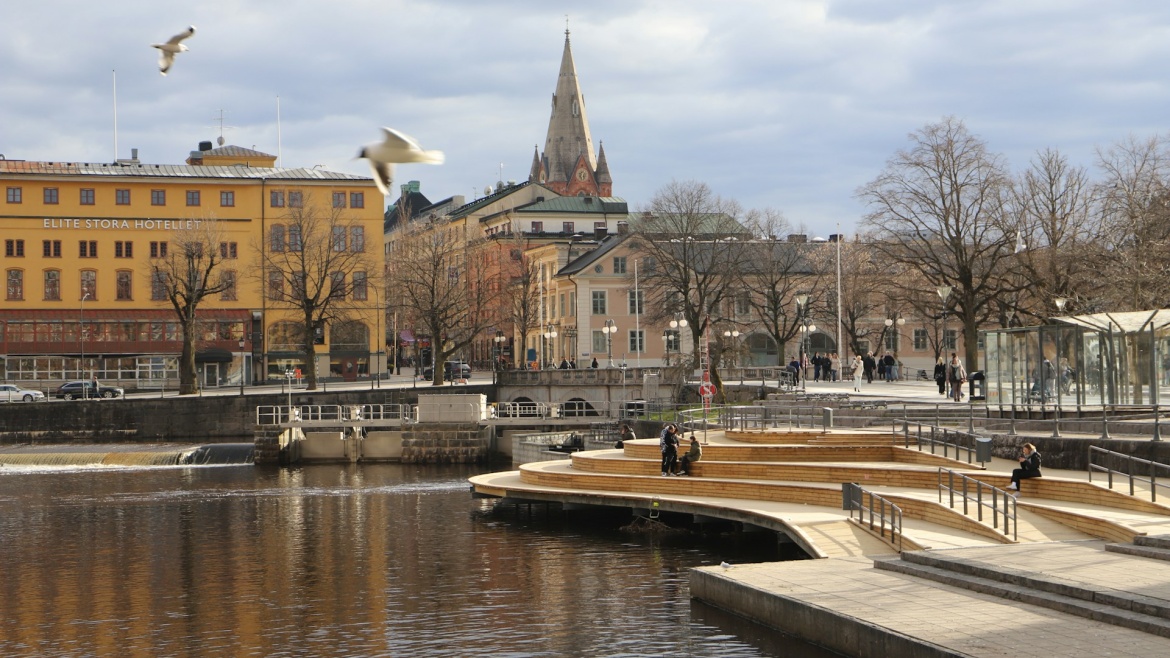 A view of Örebro, in Sweden. / Photo: [link]C. Lässman[link], Unsplash, CC0.
Sweden often prides itself on being a moral superpower. Yet when it comes to religious freedom, our record—past and present—is far less impressive than we like to admit.
Religious freedom has a surprisingly short history in Sweden. It was not until May 19, 1951, that Swedes were granted the unconditional right to leave the state church and hold public office without belonging to the Church of Sweden. Even today, this remains one of our most misunderstood rights.
All Evangelical Focus news and opinion, on your WhatsApp.
[destacate]In the past, state control was pervasive: children were required to be baptized within eight days, church attendance was mandatory, citizens’ beliefs were monitored[/destacate] For centuries, belonging to any denomination other than the established Lutheran church was forbidden, and blasphemy could be punished by death. State control was pervasive: children were required to be baptized within eight days, church attendance was mandatory, and citizens’ beliefs were monitored through household examinations. The parish priest functioned not only as a religious authority but also as a civil servant responsible for education, social welfare, and population records.
When the pietistic movement—emphasizing a more personal and heartfelt faith—gained strength, the state responded with repression. The Conventicle Act of 1726 banned prayer meetings in private homes and remained in force until 1858. Sweden became notorious for its intolerance of religious dissenters. Ironically, this year marks 300 years since the Act’s introduction, and it is now highlighted in the Swedish cultural canon as an example of the state’s pursuit of conformity—and the individual’s struggle for freedom.
[destacate]Today’s cancel culture, deplatforming, and loyalty oaths echo earlier demands for correct doctrinal confession[/destacate]History, however, has a way of repeating itself. While the tools have changed, old patterns endure. Today’s cancel culture, deplatforming, and loyalty oaths echo earlier demands for correct doctrinal confession.
In a remarkably short time, Sweden has moved from a state church monopoly with little tolerance for heretics to a secular state ideology with similarly low acceptance of dissent. We are quick to celebrate diversity, yet instinctively reject opinions that challenge prevailing norms. Even today, disagreeable beliefs are marginalized, censored, or suppressed—often in the name of progress.
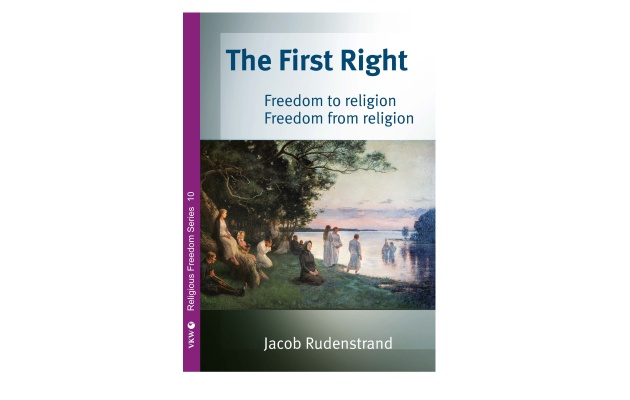
[photo_footer] Cover of the book The First Right: Freedom of Religion, Freedom from Religion, recently made available in English by the International Institute for Religious Freedom by Jacob Rudenstrand. [/photo_footer]
This is especially striking given that religious freedom is protected by the Swedish constitution and is the only freedom of expression defined as absolute. Yet in practice, it is handled with remarkable clumsiness. Religion is routinely reduced to a private matter, stripped of its public and communal dimensions, despite broader protections in international human rights law.
In my book, The First Right: Freedom of Religion, Freedom from Religion, recently made available in English by the International Institute for Religious Freedom, I examine how Sweden’s self-image as a tolerant and open-minded society often masks a deeper discomfort with genuine pluralism. While Swedish society has become more religiously diverse, public debate is marked by uniformity and consensus thinking. Concepts such as “tolerance” and “multiculturalism” shift meaning depending on how closely beliefs align with secular norms.
[destacate]Politicians repeatedly insist that religion should remain private. Yet secularism is often treated not as neutrality, but as an ideological norm[/destacate]This ambivalence is reflected in public opinion. When the Pew Research Center surveyed democratic values, only 53 percent of Swedes considered religious freedom to be very important, compared with 96 percent who ranked gender equality as highly important. The hierarchy of values is telling.
It is therefore no surprise that politicians repeatedly insist—particularly in debates over faith-based schools and religious expression in the workplace—that religion should remain private. We are told this is necessary because Sweden is a secular society. Yet secularism itself is often treated not as neutrality, but as an ideological norm. Religious schoolchildren report having their beliefs ridiculed, while religious communities that dissent from the parliamentary majority on issues such as marriage are dismissed as “outdated” or morally suspect—despite the fact that many of today’s critics held similar views only two decades ago.
The tension between unity and diversity is especially visible in debates over independent faith schools. Critics portray them as threats to social cohesion, treating children as instruments of state-led integration. Supporters, by contrast, see them as legitimate expressions of freedom and pluralism.
[destacate]A country that aspires to moral leadership cannot afford to treat one of the most fundamental human rights as an inconvenience[/destacate]A similar conflict appears in discussions of freedom of conscience in healthcare, where professionals citing religious convictions are increasingly viewed as obstacles to equality rather than bearers of legitimate moral disagreement. Here, equality risks becoming a demand for ideological conformity.
At the same time, Sweden shows a striking blind spot when it comes to religious persecution abroad. Even as evidence mounts that Christians are among the most persecuted religious groups globally, this reality is often downplayed or ignored in foreign policy and human rights discourse.
My argument is not that religious freedom should trump all other rights, but that it deserves to be taken seriously. A country that aspires to moral leadership cannot afford to treat one of the most fundamental human rights as an inconvenience.
Although the Conventicle Act was abolished long ago, its legacy of consensus thinking, opinion policing, and suspicion of dissent lives on in new forms. How we respond today will determine whether we learn from history—or repeat it. Recognizing the full meaning of religious freedom may be an essential step forward.
Jacob Rudenstrand, Deputy General Secretary of the Swedish Evangelical Alliance, theologian and author.
[analysis]
[title] Do you see a need for this kind of journalism? [/title]
[text] Evangelical Focus is a network of many people in Europe and beyond who strive to bring a uniquely Christian perspective to the big issues of conversation.
Through news, interviews, opinion and analysis, we seek to build bridges between evangelical churches and the societies in which they live.
As a non-profit entity, the big challenge is to be sustainable, month by month. We invite you to make a difference! Join the readers who make Evangelical Focus possible.
[/text][/analysis]




Las opiniones vertidas por nuestros colaboradores se realizan a nivel personal, pudiendo coincidir o no con la postura de la dirección de Protestante Digital.


Si quieres comentar o