


.jpg)
My trip to Kyiv last week has sharpened my understanding of how increasingly central Ukraine is to Europe’s future.
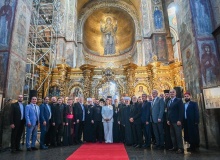
The Ukrainian Prayer Breakfast was a reminder that spiritual leadership remains essential in times of crisis.
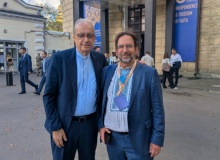
Botrus Mansour of the WEA and Jan Wessels of the EEA met with Christian leaders. They joined the National Prayer Breakfast and the celebrations of the 35th anniversary of Ukraine's independence.
.jpg)
Our lands are suffering from a drought that reminds us of the importance of water. The Bible uses water as a metaphor for our spiritual need.
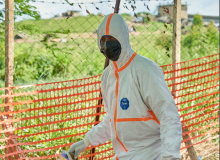
Over 2,400 people have died in the first one hundred days of the outbreak. Evangelical NGOs work on the ground, assisting victims and running prevention campaigns.
.jpg)
How the Bible anniversary in Ukraine is helping rediscover spiritual inspiration for renewal.
.jpg)
The Home Office invests 77 million pounds to better protect religious sites.
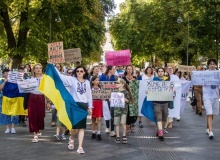
Ukraine is not simply fighting for survival; it is also preserving the civic habits that make survival meaningful.
.jpg)
Europe would not simply sanction a private individual who supports Putin in the war, but the most important figure of the Russian Orthodox Church itself. Is that what we want?
.jpg)
The European Union is proposing sanctions against the leader of the Russian Orthodox Church for inciting the war against Ukraine. Tatiana Kopaleishvili of the European Evangelical Alliance sees sufficient grounds to respond to the theological justification of an unjust war.
.jpg)
International participants are invited to attend three weeks of interactive discussions, taking place in July, on Christian values in cities, countries and at European level, organised by the Schuman Centre for European Studies.
.jpg)
Great nations are marked by justice, not mere strength. They respect truth rather than propaganda. They cultivate responsibility alongside freedom. They produce citizens who understand that rights and duties belong together.
.jpg)
Pastor Anatoly Kaluzhny recounts the destruction he found when he arrived at his church after receiving an early morning warning of a Russian attack. “I also saw God’s mercy: our worship centre and sanctuary, though significantly damaged, remained standing”.
.jpg)
New Life Church's Sunday School classrooms wrecked, mobile dental clinic for refugees hit, humanitarian aid vehicles affected. After the attack on 2 June, pastor Anatoly Kalushny is appealing for support to rebuild the site.
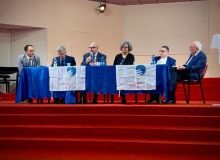
The Italian Evangelical Alliance called on Christians to give a biblical witness “in times of cultural crisis”. Theological training and church planting projects were presented.
.jpg)
No one was killed, and on Sunday, members of the church began clearing the rubble from the building. “Even a large fire cannot burn down what is built on the solid rock of faith,” say the church leaders in the town near Kharkiv, east of Ukraine.
.jpg)
Assemblies of God leaders from Italy, France, Spain and Portugal emphasise their desire to share resources and promote the planting of new churches in the Mediterranean countries.
.jpg)
A ministry focused on digital mission fields based in the UK offers training and collaboration. “We’re passionate about seeing Christians in gaming communities take opportunities to share their faith online when they arise”, says Heinz Oldewage.
.jpg)
Canals in Amsterdam overflow with boats crammed with orange-clad merrymakers. Music fills streets festooned with orange flags. Children sell old toys and homemade cakes. The old story of the Dutch triumph of freedom over Spanish imperial tyranny carries contemporary relevance.
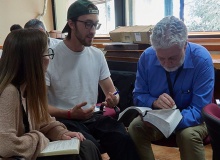
Erudition does not clash with approachability and simplicity. The most effective learning occurs when you “digest” information with others.
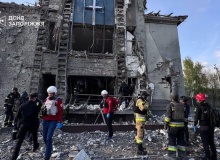
“This is a deliberate attack on people of faith, those who gathered peacefully to pray”, the embassy of Ukraine in the U.S. said in a public statement.
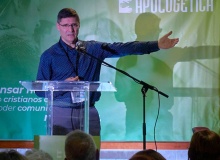
New Testament expert Peter J. Williams joined Marcos Vidal and others in Spain to discuss how to connect the Gospel with today’s society in a wide variety of areas of culture.
.jpg)
Corrie Ten Boom and her sister Betsie demonstrated that the ability to love and forgive when surrounded by hatred is a form of freedom no tyrant can touch. For the sisters, inner freedom became a form of spiritual resistance.
.jpg)
Suspended in the vast blackness, our planet appeared not as a battleground of competing powers, but as a delicate, radiant sphere—fragile yet hospitable and astonishingly alive.
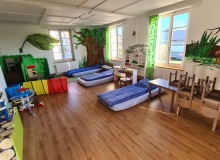
The Swiss Evangelical Alliance helped coordinate the accomodation of around 1,000 refugees. Such actions “have generally had a positive impact on the refugees social, linguistic, cultural and professional integration”, says the Swiss Federal Council.




Las opiniones vertidas por nuestros colaboradores se realizan a nivel personal, pudiendo coincidir o no con la postura de la dirección de Protestante Digital.

