


.jpg)
The Lord is faithful and kind always, but we are more prone to taste this when we find ourselves in moments of transition, right?
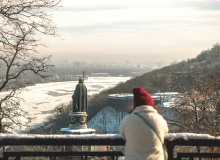
The European Evangelical Alliance invites believers throughout Europe to remain faithful in intercession until peace, justice, and restoration are fully realized.
.jpg)
Authors and publishers from a dozen countries will gather in Prague for MAI's Media Fest (5–8 May). Anna Shirochenskaya explains the vision behind the theme: ‘Jesus is the answer. What is the question?’
.jpg)
Its 270 crew members from 60 countries organise Christian service projects together with local churches. From 20 March to 5 April, the OM ship opens its doors in the Southern Spanish port.
Cropped.jpg)
At its 2026 European meeting, the Refugee Highway Partnership will bring together churches and ministries working with forcibly displaced people. The focus this year is on the realities of children and young people.
.jpg)
Will Europe remember the story that formed it? Not as a tool of exclusion, nor as nostalgic conservatism, but as the living source of reconciliation, renewal and hope.
.jpg)
The Foreign Ministry criticises the European Parliament for “interfering in our internal affairs”. A Protestant pastor laments the Turkish government’s “word games” in trying to hide evidence of more than 200 cases.
.jpg)
Spanish national Carlos Madrigal lived in Turkey for more than three decades. He comments on the government's response to the European Parliament's condemnatory resolution on the expulsion of foreign Christians.
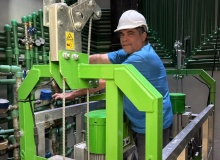
Rafael Ruiz Díaz left Paraguay for Spain as an economic migrant, in search of a better life. His journey of both achievements and great losses, led him to rediscover God.
.jpg)
Twenty-six per cent of respondents in five countries surveyed agree with the following statement: “If my country had a capable and effective leader, I would not mind if they limited democratic rights and were not accountable to citizens for their actions”.

Collectively, churches might become too identified with cultural trends or too remote from the wider society to gain a hearing – and both extremes fail to bring actual transformation.
.jpg)
A large majority approves a resolution expressing “unwavering support for Christians”. Dutch MEP Bert Jan-Ruissen, in Brussels: “Türkiye must stop targeting churches”.
.jpg)
A major survey shows that hate speech online, personal privacy and societal polarisation also concern a vast majority of citizens in EU countries.
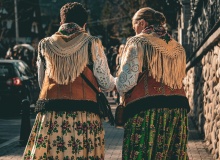
The Roma evangelical movement in Europe is not just a religious phenomenon, but a force of indigenous origin that has redefined the identity, cohesion, and resilience of Roma communities.
Europe is being transformed beyond recognition, hollowed out culturally and overrun by hordes of Muslim migrants in an irreversible process of civilisational decline. So prominent voices proclaim.
.jpg)
A survey shows that half of Germans think pastoral care is the most important job of a Christian church. Only 24% say telling people about Jesus is central.
.jpg)
Queer activist Kate Osborne spearheaded a resolution passed with a large majority. Some expressed the risk of ideological interference in the responsibilities of parents, teachers, and doctors in their care of minors.
.jpg)
The battle between the lower and upper houses could end in February, with a possible victory for those in favour of assisted dying.

Reflections on death, rituals, and a society that preserves forms but is afraid to talk about meaning.
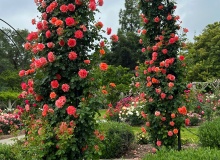
Mission among indigenous people must operate within the story of the people and place concerned, as well as the resurrected Messiah story we profess.
.jpg)
Canada’s prime minister, Mark Carney, said things last week at the WEF in Switzerland that many world leaders, especially Europeans, have been thinking but have been afraid to say.
.jpg)
We must remember that American isolationism and European appeasement created the permissive environment in which Nazism flourished.

The work of biblical scholarship, interpretation, teaching, and learning is the work of the body of Christ, and cannot be responsibly performed by a machine.
.jpg)
Nearly thirty authors paint a diverse picture in the 500 pages of ‘Evangelicalism in Europe’ (Langham 2025), illustrating the presence of Christian faith communities in countries as diverse as Sweden, Romania, the United Kingdom, or Portugal.
A report of the EAUK analyses what prompted those with no Christian background at all to search for God, what helped them along the way and what’s happened since.




Las opiniones vertidas por nuestros colaboradores se realizan a nivel personal, pudiendo coincidir o no con la postura de la dirección de Protestante Digital.

