


A new IFES report on Generation Z, aims “to offer practical frameworks for ministry adaptation and intergenerational collaboration in our rapidly evolving global student context”.
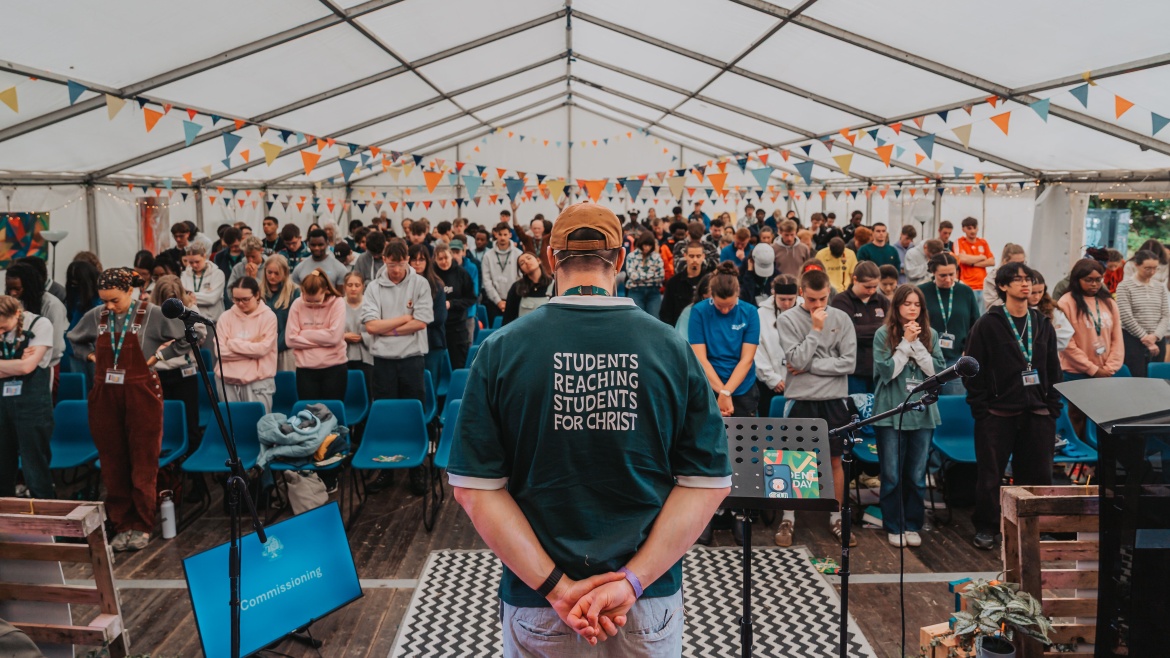 Student conference. / Photo: [link]IFES[/link]
How do Gen Z’s defining characteristics impact Christian ministry among today’s university students?
A new report from the International Fellowship of Evangelical Students (IFES), seeks to “offers practical frameworks for ministry adaptation and intergenerational collaboration in our rapidly evolving global student context”.
“Gen Z is reshaping student ministry. This is a time to go beyond ‘ministry as usual’, and this report is an insightful and practical resource for anyone looking to reimagine how to reach, disciple, and release this potent new generation”, says Annette Arulrajah, IFES Associate General Secretary, in the introduction of the report.
All Evangelical Focus news and opinion, on your WhatsApp.
Titled Gen Z Insights for Global Student Ministry, the new report draws on interviews and focus groups conducted with students, staff, and leaders from the IFES grassroots network.
Other organizations have published studies about it, but “they have been conducted largely in the West, and most Gen Z students live in the Majority World, with more than a quarter in South Asia alone”, says the students organisation.
IFES commissioned Peter Dray to conduct those interviews. Dray, who has served in UCCF (IFES UK) for over 20 years, as a staff worker, Director of Creative Evangelism, and Interim General Secretary, consulted with students and staff from the United Kingdom, Ireland, Kenya, Singapore, Hong Kong, Timor-Leste, and two nations in the Middle East/North Africa.
“I hope and pray the report will kickstart discussions about how to effectively partner with Gen Z to help advance Christ’s kingdom in the world’s universities”, points out Dray.
The report begins with a detailed introduction on Gen Z. Born between 1997 and around 2012, they form the world’s largest single generation, around one-third of the population.
They present five trends that “have shaped and moulded the worldview of Gen Zers, and are helpful to bear in mind as we share the gospel with them, make disciples of Christ among them, and seek to launch them into leadership”.
Those trends are digital proliferation; increasing international migration; swift urbanisation; changing attitudes to health; and disruption due to the pandemic.
The report then mainly focuses on analysing what the authors consider to be four “defining characteristics” of the Gen Z: digital immersion, increased cultural awareness, pursuit of wellbeing, and spiritual openness; and “unpacks their implications for ministry”.

[photo_footer] “Gen Zers have little or no memory of life before constant connectivity”, says the IFES report. / IFES[/photo_footer]
According to the report, “while older generations have adapted to new digital technologies, Gen Zers have little or no memory of life before constant connectivity”.
Because of that, “the gap between Gen Z and other generarions is widest where internet access is newest”, a shift “that is upending how culture and authority typically pass from one generation to another”.
The study also explains that Gen Zers “claim that authenticity matters more to them than production value”, so that they “prefer brevity with depth in communication”.
Furthermore, their unparalleled access to information, “has shaped a generation that is adept at rapid information processing but struggles with sustained, deep focus on singular topics”.
That is why “students need guides who can help them navigate the overwhelming array of voices and perspectives, distinguishing between information and wisdom, knowledge and understanding”.
“Perhaps the most significant tension Gen Z faces is between the speed at which they can access information, and the slower timeframe that is normally required for spiritual transformation”, says the report.
The student body at today’s universities is more diverse than ever, and “while Gen Z students are shaped by similar influences, contributing to a ‘common vernacular’ among them; significant cultural differences remain”.
The report warns that “national movements that assume a common worldview across student bodies may only reach or disciple students somewhat effectively because the gospel is poorly contextualised”.
“Greater cultural awareness and connectivity have created a dual dynamic in which Gen Z feel a sense of shared generational identity, yet individual identity has also become increasingly important”, states the study.
That “highlights a need to foster student communities that celebrate God-given differences while finding deeper unity in Christ”, it adds.

[photo_footer] Asian students at meal. / IFES[/photo_footer]
The report reveals that Gen Z “tends to approach their wellbeing as a holistic, ongoing pursuit, rather than a problem to be solved when illness strikes”.
That is why, “Gen Z students and younger staff expect the communities and institutions in their lives to support their wellbeing, including universities, churches, campus groups, and employers”.
Digital fatigue and mental health challenges are the major concerns for the Gen Zers that participated in the study.
According to IFES, “effective ministry with Gen Z requires careful balance, providing enough support to prevent it from feeling overwhelmed while offering sufficient challenge to promote growth”.
“Strategies might include offering shorter timeframes for initial commitments, guaranteeing ongoing mentoring as they serve, and deliberately increasing their exposure over time to stretching experiences”, underlines the report.
In every country surveyed, students reported that their generation is more willing than their parents were to change their spiritual beliefs.
The report points out that the pandemic was important for the spiritual openess of the Gen Zers, because “prompted them to grapple with profound existential questions”.
“Facing the isolation and uncertainty of lockdowns, students began questioning whether purely secular perspectives could provide the meaning, hope, and comfort they found themselves craving”.
According to the study, “the Gen Z views religious commitment in increasingly individualistic terms”. They “are attracted to authentic fellowship and belonging, yet many want to choose it for themselves rather than simply inherit it through family or cultural tradition”.
The fact that Gen Z encounters spiritual content through podcasts, videos, and social media, “creates opportunities for innovative ministry, but it also means that an individual’s interpretation or personal preference may take precedence over scriptural authority or doctrinal consistency”, warns IFES.
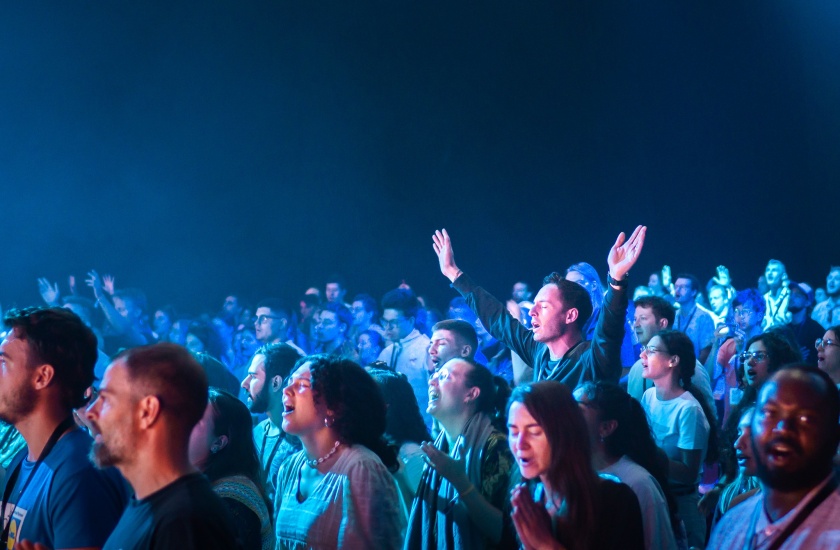
[photo_footer] Students worshiping. / IFES[/photo_footer]
In addition to this report, IFES has launched a collection of Bible studies on these topics, “to inspire and inform a fresh look at how we can help today’s students thrive as disciples and witnesses, and how we engage with and support younger staff”.
They will also launch a podcast mini-series in January 2026. The four-part podcast series “will broaden the conversation by including global perspectives from staff, students, and special guests”.
The resources are also available in Spanish and French.
[analysis]
[title]Join us to make EF sustainable[/title]
[photo][/photo]
[text]At Evangelical Focus, we have a sustainability challenge ahead. We invite you to join those across Europe and beyond who are committed with our mission. Together, we will ensure the continuity of Evangelical Focus and our Spanish partner Protestante Digital in 2025.
Learn all about our #TogetherInThisMission initiative here (English).
[/text][/analysis]






Las opiniones vertidas por nuestros colaboradores se realizan a nivel personal, pudiendo coincidir o no con la postura de la dirección de Protestante Digital.


Si quieres comentar o