


.png)
The pastor of ‘Zeal Church’ explains the “very difficult” decision but underlines that nothing will halt “the mission of bringing God’s love to this region”. Critical media coverage only shows that free churches are once again “noticed, heard and seen” in society, says René Wagner.
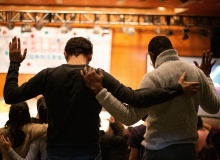
In this complex world, we Christians are building the church of Christ. And if we truly do so, we will quickly realize the enormous potential it holds for combating racism and polarization.
.jpg)
The law is one of several that Vladimir Putin’s regime has introduced to intimidate religious minorities. Missionary activities are forbidden for other groups as well, including evangelical Christians.
By treating behaviour as a valid form of communication, we move away from a power struggle and toward a partnership.

Not seeing is not the same as not knowing.
The Observatory on Intolerance and Discrimination against Christians in Europe also reports a rise “in legal restrictions affecting freedom of religion”.
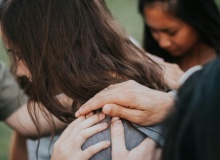
A Pew Research Center survey shows that ‘nones’ in Europe “are much less inclined” to believe in God, and “tend to voice negative views of religion”.
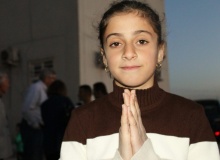
What does religious freedom mean to a community, or a person?
.jpg)
Baptists and Mennonites were later joined by Moravians and Methodists, the Salvation Army, the Plymouth Brethren, various Evangelical streams and eventually Pentecostals, in the voluntary, free church tradition.
.jpg)
The rise in political and church conflicts globally makes responding graciously even more important for Christians.
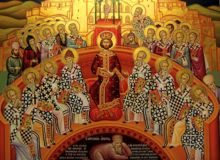
The 4th century began with a period of tolerance towards Christianity, but was soon overshadowed by intense repression. However, it ended with a Christianized Empire. How did this process unfold? A historical summary on the 1,700th anniversary.
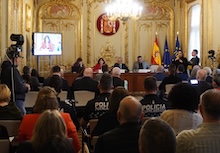
The federation of Spanish municipalities seeks to bring awareness-raising, training and dialogue with faith groups in local contexts to Europe. It is a two-year EU-funded project in collaboration with universities.
.jpg)
Among evangelicals, 17% say they experienced some kind of religious discrimination. Daniela Baumann of the Swiss Evangelical Alliance analyses the latest official data.
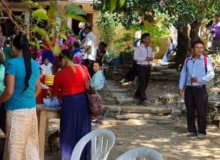
The state, local authorities and the displaced Christians reach an agreement to restore supplies and give evangelicals time to assess damages and request state-sponsored aid.
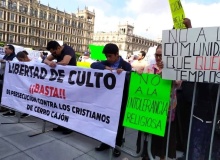
Attackers “burned the evangelical church, took the land, stole their cattle and destroyed the homes of 13 Christians”, pastors in the region denounce.
.jpg)
“Due to the threats, many Christians refused to stand as witnesses in court”, says one of the residents who filed a complaint. 11 more persons accused of blasphemy have lost their lives in the past 18 months.
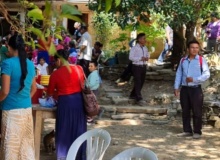
Christians who were forced to leave their homes and are now penalised in a decision that violates human rights protections under Mexican law.
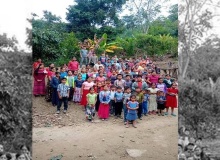
Evangelicals in the area suffer persecution since 2016, with physical attacks, property destruction, looting, jail, and a ban of the use of water wells and schooling their children.
“Extremism is the promotion of an ideology based on violence, hatred or intolerance”, says the new legal definition of the government. Evangelical organisations see a risk in “subjective” decisions about what beliefs can or cannot be expressed.
.jpg)
Both the European Commission and the Parliament are addressing the problem of hate crimes. But without a clear definition of what “hate” is, we will not solve the problem, writes Arie de Pater of the European Evangelical Alliance in Brussels.
.jpg)
Attacks on a cafeteria of a free church in Leipzig and a social justice NGO in Ferrol.
I am alarmed at the number of soundbites that promote intolerance, all in the name of freedom of speech.
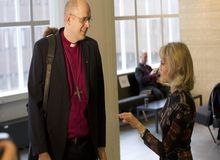
The Christian community as a whole needs to awaken to the intensity and pace at which secular intolerance is progressing.
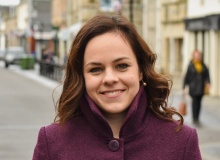
Scotland's First Minister candidate has always been public about her faith. She is clear, thoughtful, kind in her articulation. And she understands the consequences.
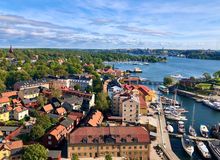
About half of the Swedish population feels they cannot speak openly about their political and religious views.




Las opiniones vertidas por nuestros colaboradores se realizan a nivel personal, pudiendo coincidir o no con la postura de la dirección de Protestante Digital.

