


Cropped(2).jpg)
The IFED annual theological conference in Padua fostered debate on AI and the responsibility and ethics that a biblical worldview demands.

The reference international report reached a record low in science, reading and math. France, Germany and Spain saw their worst results ever. Analyst Jaume Llenas gives a Christian perspective.
.jpg)
The World Humanoid Games 2026 were entertaining, but they also revealed deeper cultural currents: the concentration of technological power, the acceleration of autonomous warfare, and the loneliness that makes artificial companionship seem plausible.

If we have learnt anything in these twenty centuries, it is that the Lord’s work has never advanced through the power of our tools, but through the faithfulness of those who wield them.
.jpg)
The danger is not being exposed to erroneous theology or receiving incorrect information. The real risk is to start relying on AI to such an extent that it affects the natural processes of faith.
.jpg)
After quite a few conversations on the subject, my impression is that within the evangelical world, Artificial Intelligence is being used far more widely than is openly acknowledged, and that almost no one explains how they do it.
.jpg)
In a 24-page guide aimed at churches, the AI Christian Partnership recommends using AI for administrative tasks and to promote the inclusion of people with disabilities. Greatest risks are losing the ability to think critically or turning technology into a spiritual authority.
.jpg)
He began exploring Minecraft after officiating at the funeral of a parishioner who had been an active player. Members of the man's online gaming community showed up to say goodbye. Shortly afterward, he created an account himself.
.jpg)
The widespread use of AI chatbots reinforces the trend. Everything is faster, more effective, more concise. We have more answers to our queries, more information, and more tasks sorted out. But we also have less conversations.

The series aims to portray Jesus’ story from historical and multidisciplinary perspectives, showing how his legacy continues to influence contemporary culture.

Once more, I listened gratefully to biblical concepts being uncompromisingly stated in the European Parliament building, including that human dignity derived solely from the understanding of humanity as created in God’s image.

The encyclical has little sense of the tragedy of sin, sees the gospel as a process in which nature is made more perfect and justifies the Church's role as a mediator between man and God.
.jpg)
Since becoming Leo XIV, Pope Prevost hinted at his desire to build on Leo XIII’s legacy by updating the Social Doctrine of the Church on the pressing concern of today: how to deal with Artificial Intelligence (AI) without succumbing the human person to it.
.jpg)
The demon’s modern revival in AI circles can be traced to philosopher Scott Alexander. Moloch represents impersonal systemic pressures, optimisation, and incentives misaligned with human values.

AI is already extensively present in the church. The question is, are we going to continue to use them in a way that honors God and serves the people God has placed in our care?

In an age of Artificial Intelligence, the local church can become a beacon of stability and hope, demonstrating what it means to love God and neighbor with heart, soul, mind, and strength.

In an increasingly artificial and disembodied world, it is the authentic and embodied human that brings the tangible love of Christ to the lost and lonely.
.jpg)
A major survey shows that hate speech online, personal privacy and societal polarisation also concern a vast majority of citizens in EU countries.

As with the printing press or the smartphone, the question before us is not if AI will influence discipleship, but how we will steward it.

The work of biblical scholarship, interpretation, teaching, and learning is the work of the body of Christ, and cannot be responsibly performed by a machine.

AI should help us address ways to collaborate with communities to facilitate spiritual transformation, growth in Christ, and help the emerging church grow and mature.
.jpg)
I'm excited by how helpful and efficient Ai tools are. Yet they work best when used by someone already shaped by years of training, when one’s skills and relationship with the Bible are essentially in place.
.jpg)
As young adults navigate a world of metrics, self-optimisation and spiritual openness, we must consider how we can disciple this generation and point them to Jesus rather than self-improvement.

Artificial Intelligence is not a panacea, but its potential to transform the lives of children with additional needs is undeniable.
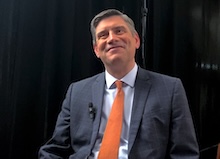
Will Graham, grandson of the well-known 20th-century evangelist, reflects on the challenges of technology and shares his experiences in evangelism.






Las opiniones vertidas por nuestros colaboradores se realizan a nivel personal, pudiendo coincidir o no con la postura de la dirección de Protestante Digital.

