


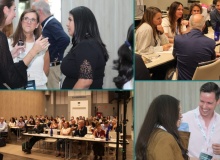
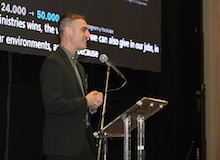
Around 80 business leaders and executives from Spain gathered in Guadalajara for the 8th LEC gathering, a weekend offering opportunities for networking, training, biblical reflection and generosity.
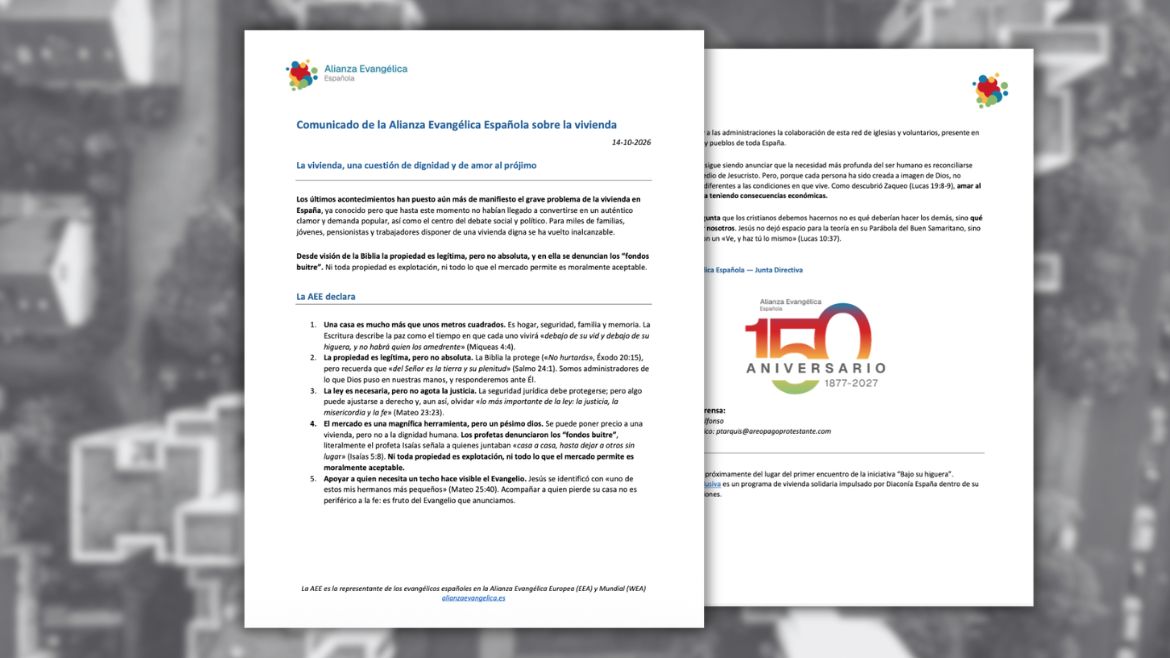
Amid street protests over rent prices and the evictions of vulnerable people, the Prime Minister has called a snap election. The Spanish Evangelical Alliance proposes five lines of action.
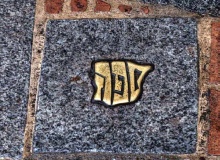
Iberia has an extraordinarily rich history, the origins of which date back to antiquity. What many may not realise is that our country also features in the Bible, in both the Old and New Testaments.
Cropped(1).jpg)
Lisette González Torres has been promoting the initiative for nearly a decade, in collaboration with church and community organizations. The aim: to bring together women from a wide variety of professional backgrounds.
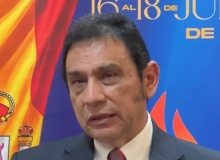
The evangelical entity prepares for its event in Madrid, from 16–18 June 2027, where it hopes to gather 500 believers interested in the influence of faith on public life.
In a year in which evangelicals felt the contempt of media outlets, we also see that others appreciate it when someone stands up for their beliefs. Readers have now the opportunity to support this work.

The Bible is clear that the Christian question regarding housing can never be solely: ‘How much can I get for this property?’ But also: ‘What responsibility do I have before God towards the person who needs to live in it?’
The evangelical federation welcomes the initiative, but rejects the requirement for pastors and widows to pay contributions. It will request a meeting with the government and does not rule out legal action.
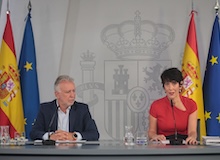
The law approved by the Spanish Government seeks to redress the injustice suffered by pastors and their families who were prevented from making social security contributions during the Franco regime and the early years of democracy.
Cropped(1).jpg)
The ‘Jesus Film Project’ invests in “people who have a deep understanding of their own culture, language and context” with a view to creating authentic stories.

The case of a father who was barred by the Spanish courts from taking his young son to church or teaching him about the faith, due to the mother’s opposition, has been referred to the European Court of Human Rights.
Asturias, in the north of Spain, celebrates 45 years of being an Autonomous Community. Among the prominent names in the celebrations features evangelical pastor Rubén Fernández Valle.

We talk to Luis Fajardo, director of the Spanish Bible Society, which is celebrating its 190th anniversary with the Month of the Bible events.

The new FC Barcelona striker spoke at his presentation about how he is facing this new chapter in his football career, trusting in God.
The journalist Paco Niebla tells the life and murder of his grandmother Ángela in the Spanish city of Vigo. “People who lose their memory lose their identity”, he said.
.jpg)
After quite a few conversations on the subject, my impression is that within the evangelical world, Artificial Intelligence is being used far more widely than is openly acknowledged, and that almost no one explains how they do it.
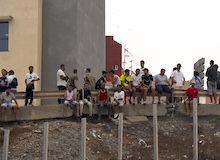
Javier Santolaria, pastor of Casa de Alabanza, describes a city that remains overwhelmed a week later. Evangelical churches distribute aid, food and Christian literature to the thousands of migrants still living on the streets.
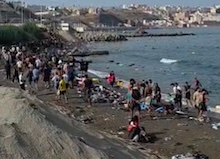
“We pray that we may be a beacon of hope in the midst of this crisis”, says an evangelical pastor in Ceuta. Around 50,000 migrants have entered an overwhelmed city.
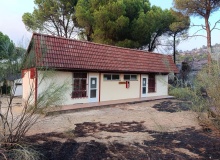
The managers of Pinos Reales confirm in a statement that the fire had not damaged the buildings. They emphasise 'God's care and favour' and thank everyone for their prayers.
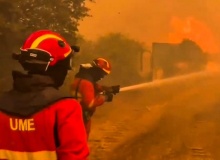
The large fire continues unabated and has destroyed at least 80,000 hectares. Over 92,000 people have been evacuated or confined. A Christian camps centre in the area has also been affected.
.jpg)
At least 12 people have died in the devastating wildfire in Andalusia, Spain. An evangelical pastor, speaking from the scene in Turre: “There are many difficulties in putting out the fire due to the terrain, the wind and also the heat”.
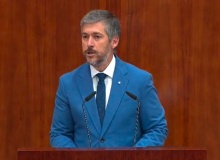
The law recognises the unborn as a family member for administrative purposes from the start of pregnancy. Abortion advocates in the regional parliament showed their opposition in a tense debate.
“Let’s continue making history together” is the motto for the 2027 celebrations, which will feature a wide range of activities in areas such as leadership, society, childhood, family and bioethics. The main event marking the anniversary will take place on 21 and 22 May in Madrid.
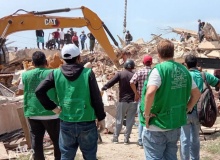
World Vision, REMAR, Alianza Solidaria, Diaconía and several denominations have launched coordinated responses following the earthquakes on 24 June.
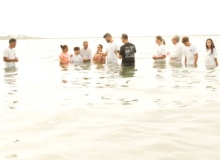
Sixteen people, aged between 14 and 80, were baptised in June by the ‘La Trinidad’ evangelical church in the coastal town near Alicante. They have been bearing witness to their faith for over a century.




Las opiniones vertidas por nuestros colaboradores se realizan a nivel personal, pudiendo coincidir o no con la postura de la dirección de Protestante Digital.

