


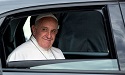
Five years ago, Jorge Mario Bergoglio was elected Pope Francis.

There is no sign of a massive turn of evangelicals to Roman Catholicism. Nonetheless, what is happening is worth investigating.

The World Evangelical Alliance admits that “evangelical-Catholic relations are a highly sensitive issue for evangelicals in many parts of the world”, and says it will seek better communication with its members.

A look at polycentric missiology.

What are the views of Evangelical Focus readers on the refugee crisis, marriage, ecumenism, sexual exploitation and the reliability of the Bible? We have selected the answers to some of the questions asked on our website.
“The historic positions on biblical unity and biblical confrontation of errors that the Alliance has stood for over a hundred years seem now to be eroded and replaced by ecumenical attitudes”. World Evangelical Alliance responds: “The concerns raised are being taken very seriously”.

Let the Reformation continue… yes, but let it continue in the gospel terms of Scripture alone and Faith alone.

The 2013 document, signed by the Lutheran World Federation and the Roman Catholic Church in preparation for the 2017 Reformation anniversary, indicates the goal of an ecumenical trajectory for the two church bodies.

A response by Leonardo De Chirico and Greg Pritchard to articles written by Thomas Schirrmacher and Thomas K. Johnson.

We sometimes receive strong criticism from evangelical Christians over our friendly interaction with senior Roman Catholic leaders. A response by Thomas Schirrmacher and Thomas K. Johnson.

I have attempted to demonstrate that the Catholic and Protestant systems of salvation are mutually exclusive, and that ecumenical dialogue must take seriously the distance that the word “alone” puts between them.
The World Evangelical Alliance and the Vatican issue a joint document on ‘Scripture and Tradition’ and ‘the Church in Salvation’.

Modern Catholicism is “a synthesis of medieval essentialism and modern existentialism”, the Dutch philosopher and theologian Cornelius Van Til said.

So far, Evangelicals and Pentecostals have been talking about unity among “born again” believers. If they commit to “greater oneness” with the Roman Catholic Church and WCC, they need to reflect on what they become committed to.

The only way the Reformation could possibly not still matter would be if beauty, goodness, truth, joy and human flourishing no longer mattered.

A week of lectures, seminars, and discussions to study and evaluate Roman Catholic theology and practice.
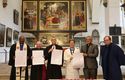
In Wittenberg, the WCRC signed the Joint Declaration on the Doctrine of Justification (1999).
The Catholic Charismatic Renewal movement gathered thousands to celebrate its 50 years of existence. Pentecostal leader Giovanni Traettino: “Let’s walk together towards the unity of the faith.”

Rereading Schaeffer some thirty years later seems eerily prophetic.

In the last months, the two historic religious institutions have made clear ecumenical statements in favour of more unity.

The EAUK has published “A statement for the 500th Anniversary of the Protestant Reformation”. It analyses the theological impact of the reformers and the relationship between evangelical Christians and Roman Catholicism.
With Pope Francis the Roman Catholic Church is simply becoming more “catholic”, i.e. embracing and absorbing all, without losing its being “Roman”.
In assessing the ecumenical scene, the risk of looking at Lund without being aware of what happens in Rome is real.

If the Lutheran and Catholic traditions seek “full unity,” they must arrive at the same understanding of salvation and authority. An opinion article sent by Andrew Messmer, one of our readers.
The European Evangelical Alliance publishes a press release: “When a Pope understands Luther better than many Protestants do”.





Las opiniones vertidas por nuestros colaboradores se realizan a nivel personal, pudiendo coincidir o no con la postura de la dirección de Protestante Digital.

