



Faith-based healthcare institutions may refuse to allow assisted dying on their premises, “when such a procedure is clearly contrary to the institution's statutory mission or purpose”.
.jpg)
The National Council of Evangelicals in France laments the “turning point” which, they fear, will serve to push the most vulnerable towards death. The controversial law has been passed by a narrow margin following three years of debate.

Christians launch a campaign to encourage citizens to speak to their political representatives, as the debate on assisted dying returns to the National Assembly.
.jpg)
Hundreds of amendments and a lengthy debate in both houses of parliament, combined with opposition from doctors, pro-life groups and a divided public, have put an end to the bill. Pro-assisted dying parliamentarians will have to start the process from scratch.
The Spanish evangelical body issues a statement analysing the assisted death of the young woman and warns that the right response to suffering is not to hasten death, but to increase care.

The draft law failed to pass by 69 votes to 57. “This is a fantastic result for life, for compassion and for the most vulnerable”, evangelical leaders say.

Evangelicals and other faith leaders say in a letter: “True compassion does not mean ending a life. It means accompanying those who suffer, easing their pain, supporting families”.
.jpg)
The battle between the lower and upper houses could end in February, with a possible victory for those in favour of assisted dying.

Although the law was passed in July, a campaign led by conservative groups and medical associations gathered 46,000 signatures to force another referendum.
.jpg)
An expert committee considers that the right to choose and not be manipulated is not sufficiently guaranteed for people with disabilities. The French government defends its position.
.png)
In a narrow vote, 314 MPs voted for the draft law and 291 voted against it. Both supporters and opponents describe the law as a historic moment. Christians hope the House Of Lords will introduce amendments.
.jpg)
The National Assembly backed the bill, but the law supported by President Macron may not be passed before 2027. Evangelicals among those who warn against the “removal of basic protections” for human dignity.
.jpg)
Evangelicals in France have been reflecting for years on the dignity of people at the end of their lives. Thierry Le Gall, who works with the CNEF in political circles, explains his point of view on the new assisted suicide law that is about to be voted on.
.jpg)
Scottish parliament will hold a first vote on 13 May. Christians are calling for the voices of palliative care doctors, people with disabilities and the most vulnerable to be heard.
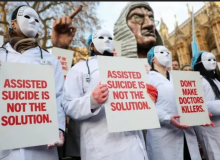
As the Evangelical Alliance United Kingdom we are vehemently opposed to this bill and communicated as such. We are speaking with MPs and write submission to the parliament committee.
.jpg)
While the Westminster Parliament in London debates a similar initiative for the UK, the island of 84,000 inhabitants has approved its own law, which Christian organisations oppose.

Parliament voted to advance the Bill by 330 votes to 275. “This is te biggest proposed change to our social fabric in a generation”, Christians say.

Several people were arrested after an American woman died in the so called ‘Sarco’ capsule. The Swiss interior minister says it is not legally compliant.
.jpg)
The National Evangelical Council of France describes the new draft law as an “attack on humanity” as it puts pressure on “socially fragile people who feel a kind of duty to leave life”.

The government wants “a balance between opening up this new right to the French people and the legitimate concerns of professionals”.

“The bill will result in human life being valued on its efficiency and utility, and increase pressure on the vulnerable”, religious leaders say.
.jpg)
The final law is passed despite the veto of the republic’s president. Half of the population is against, including Christian doctors.

Almost 3,000 people requested euthanasia in 2022. Most were over 70 and had terminal cancer, but 17% “were not expected to die in the foreseeable future”, says official report.

According to a report from the OPG, one year after its approval, the most common reason given for requesting assisted suicide is fear of existential suffering in the future.
.jpg)
The Portuguese Evangelical Alliance laments that there was neither a broad “philosophical, social and religious” conversation nor enough guarantees of “palliative and social care”. The parliament passed a third version of the text in December.






Las opiniones vertidas por nuestros colaboradores se realizan a nivel personal, pudiendo coincidir o no con la postura de la dirección de Protestante Digital.

