



In his book, Miguel Ángel Fernández tells the stories of people who turned to tarot, reiki, astrology or Santería, and reflects on how Christians can reach out to those who are on a spiritual quest.
.jpg)
The Evangelical Alliance UK has published a 36-page guide containing definitions of popular New Age concepts, testimonies of conversions to Christianity and ideas for engaging with spiritual seekers.
.jpg)
My trip to Kyiv last week has sharpened my understanding of how increasingly central Ukraine is to Europe’s future.

If we have learnt anything in these twenty centuries, it is that the Lord’s work has never advanced through the power of our tools, but through the faithfulness of those who wield them.
.jpg)
Too little oxygen, and we suffocate. Too much, and we risk spontaneous combustion. Too much carbon dioxide, and the climate overheats. Too little, and plants cannot photosynthesise.
.jpg)
The film phenomenon offers an energetic blend of action, music, and humour, wrapped in beautiful, vibrant animation and framed by a mythology with darker undertones.

Beneath the noise of social media, many young people are searching for meaning, purpose, and truth. They are looking for guidance on what it means to follow Jesus in a tangible way.

To identify the entire evangelical community with certain political movements or with media images from the United States is not only unfair, but deeply misguided.

Biblical spirituality is both vibrant and balanced.

In an interview, Spanish pastor and journalist José de Segovia comments on the renewed spiritual interest among younger generations, the risks of social media, and the state of the evangelical witness in universities.
.jpg)
The way we deal with cases of abuse in our communities is not a minor issue: it is a profoundly spiritual, pastoral, ethical and also missionary matter. An essay outlining three models and four mistakes that churches often make.
.jpg)
Corrie Ten Boom and her sister Betsie demonstrated that the ability to love and forgive when surrounded by hatred is a form of freedom no tyrant can touch. For the sisters, inner freedom became a form of spiritual resistance.

After launching Stop Abus to tackle sexual abuse in churches, the CNEF says a broader reflection is needed among evangelicals around the the concept of “authority”.
Cropped(1).jpg)
Colombian university lecturer Lina Fernanda Montoya has accompanied around 20 victims. In Madrid, she explained observable patterns when abuse occurs in evangelical churches.
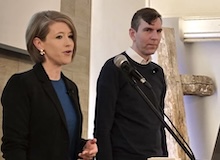
A training day in Madrid on abuse in Christian contexts, with experts from GRACE, explored the challenges and opportunities for restoring victims, as well as creating an integrity-based and fair church culture.

Johannes Vermeer’s Woman Holding a Balance offers a quiet visual parable for this moment. As we face yet another new year of war, polarisation and distrust, we need reflection which goes beyond personal self-improvement.
.jpg)
According to the 2025 confirmation preparation survey, 67 percent of boys and 56 percent of girls believe in the existence of God. 75 percent of Finnish youth attend confirmation classes. Are parishes able to respond to young people's growing interest?

We talk to professor, author and lecturer Paul S. Williams about the challenges of discipleship in a fast-paced world, the pressure of secularism, and what it means to have a relevant faith<
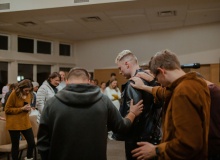
Pray for each other, spend time with each other. Just because a handful of people take turns in the pulpit does not mean you have a preaching team.

Not seeing is not the same as not knowing.
Cropped(1).jpg)
Almost 40 countries were represented at the annual FEUER conference in Calpe.

The former pastor of My Gospel church was charged with 14 offences, including “sexual assault, rape with abuse of authority, coercion, and other offences”. Around 50 victims are being supported, according to sources.

The online class on 8 November will “equip Christians to better understand their spiritual gifts, serve more effectively through them, and help others to do the same”.
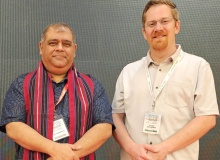
There was no triumphalism, yet no despair either—only a clear sense that leaders must be held to the highest biblical standards and repent where they have failed.

The Amsterdam Réveil never became a mass movement. Yet by insisting that faith must be personal, passionate, and socially relevant, the Réveil planted seeds that would later bear fruit in Dutch political, social and church life.






Las opiniones vertidas por nuestros colaboradores se realizan a nivel personal, pudiendo coincidir o no con la postura de la dirección de Protestante Digital.

