


.png)
When the American Bible Society sold its Manhattan headquarters (in New York) and moved to Philadelphia, its leadership realized it had empty wall space that could be well used.

The law approved by the Spanish Government seeks to redress the injustice suffered by pastors and their families who were prevented from making social security contributions during the Franco regime and the early years of democracy.
.jpg)
Our lives are still affected—and many of us seem to have learned the wrong lessons. A perspective from the US.

Asturias, in the north of Spain, celebrates 45 years of being an Autonomous Community. Among the prominent names in the celebrations features evangelical pastor Rubén Fernández Valle.

We talk to Luis Fajardo, director of the Spanish Bible Society, which is celebrating its 190th anniversary with the Month of the Bible events.

Reflections on language, Irishness and the incarnation.
.jpg)
How the Bible anniversary in Ukraine is helping rediscover spiritual inspiration for renewal.
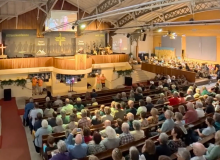
The German Evangelical Alliance celebrates its 140th anniversary at the annual conference, from 5 to 9 August.
.jpg)
Fifty years ago, on July 9, 1976, I landed in Frankfurt am Main with my family. A Lufthansa plane had flown us from Moscow to Germany. “To freedom”—as people said. My parents had been waiting for an exit permit since 1956. Now the time had finally come.

The series aims to portray Jesus’ story from historical and multidisciplinary perspectives, showing how his legacy continues to influence contemporary culture.

The thirteen original American colonies had to find a way to live together without becoming either thirteen separate nations or a new centralised empire. They found a framework for healthy interdependence among themselves, despite their religious diversity.

Sixteen people, aged between 14 and 80, were baptised in June by the ‘La Trinidad’ evangelical church in the coastal town near Alicante. They have been bearing witness to their faith for over a century.

Football became so deeply rooted in British working-class communities because there were chapels, Sunday schools, parish rooms and young men looking for somewhere to belong, long before there were professional clubs, stadiums and television contracts.

When the Pope spoke about freedom of conscience in Madrid, he forgot to mention that the Roman Catholic Church has been its greatest enemy for centuries.
.jpg)
Secretary of War Hegseth’s appearance at Rededicate 250 conservative Christian rally in Washington reinforced the perception that a warrior-style, crusading Christianity is gaining influence in nationalist circles. But this neglects the broader biblical trajectory toward justice, mercy and reconciliation.
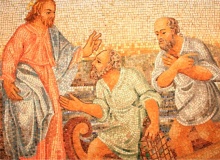
The vision of human dignity, forgiveness, reconciliation, justice and the equal value of every person before God, profoundly shaped European civilisation over centuries.
.jpg)
Last Saturday was ‘Europe’s’ 76th birthday. You hadn’t noticed? Few European nations make much fuss about “Europe Day”, May 9. But it is great to remember the integration that has helped avoided war among EU's nations.
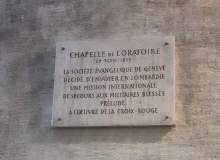
Christian just war reasoning has long treated humanitarian limits as essential criteria for the moral use of force.

Christian faith isn’t grounded in a sanitised, sentimental version of events; but in the stark reality that God became flesh and bore the full weight of human brokenness to bring us life.
.jpg)
Canals in Amsterdam overflow with boats crammed with orange-clad merrymakers. Music fills streets festooned with orange flags. Children sell old toys and homemade cakes. The old story of the Dutch triumph of freedom over Spanish imperial tyranny carries contemporary relevance.
.jpg)
Technology has not corrected arrogance: it has amplified it, aestheticised it and placed it at the service of new liturgies of the ego. There is no more practical or effective mechanism for dismantling the narcissist’s façade than public laughter.
María José García-Pelayo received the ‘Unamuno, Friend of Protestants Award’ in recognition of her work to promote coexistence and institutional openness towards the Evangelical community in the Spanish city.
.jpg)
The word “wrong” does not even do justice to the scale of Hitler’s crimes. But why was this not obvious in Nazi Germany?

Victor Glover is not the first Christian astronaut: others like him have also recited the Lord’s Prayer during the countdown to their space journey.
.jpg)
These independent churches—known for their emphasis on the Lord’s Table, biblical interpretation and collective leadership— emphasised their identity within the current evangelical movement.






Las opiniones vertidas por nuestros colaboradores se realizan a nivel personal, pudiendo coincidir o no con la postura de la dirección de Protestante Digital.

