


As membership of the two major churches in Germany declines, the number of pupils attending Christian religious education classes is also falling significantly. Has Christian religious education had its day? Or can it be made fit for the future?
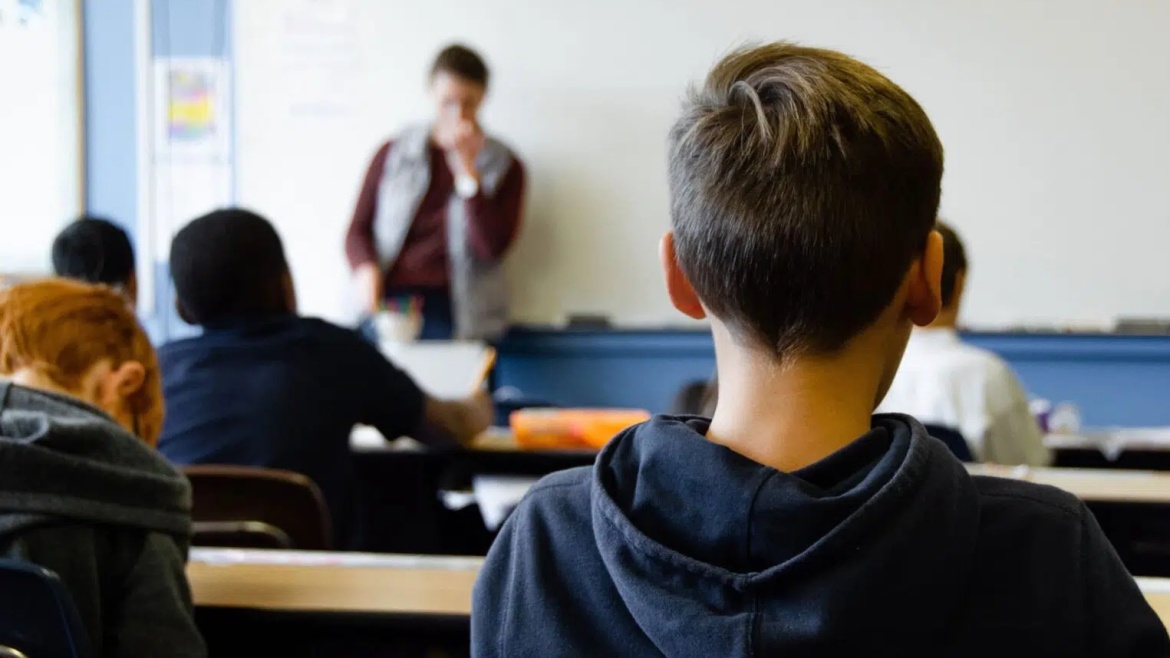 Pupils in a classroom. / Photo: [link]Taylor Flowe[/link], Unsplash, CC0.
Empty church pews have increasingly characterised Christian Sunday services for years. Since 2022, for the first time, fewer than half of all Germans are members of the Roman Catholic or the mainline Protestant Church (EKD). In the wake of this development, another effect is becoming apparent: in recent years, more and more school desks have also remained empty when the school bell rings for religious education.
Figures from the Ministers of Education and Cultural Affairs show a massive decline in attendance at school religious education classes in recent years. Whilst around 69 per cent of pupils in years one to ten attended religious education classes in the 2015/2016 school year, the proportion of pupils attending Catholic or Protestant classes fell to around 54 per cent in the 2023/2024 school year.
During the same period, ethics classes saw an increase from 15.2 per cent to 26.4 per cent. Meanwhile, participation in Islamic religious education has doubled. In absolute terms, this represents a rise from 24,000 to around 50,000 pupils. Overall, however, they account for only 0.7 per cent of all pupils.
The churches are also taking note of these figures – even if they do not interpret the decline solely as a sign of a lack of appeal. Many observers see this primarily as a consequence of long-term social changes. Theologian Joachim Willems, Professor of Religious Education at the University of Oldenburg, points out that this primarily reflects the ongoing secularisation of society.
“It would be surprising if the number of pupils in religious education were not to decline,” says Willems. “The proportion of Christians in the total population is falling – and this is inevitably reflected in schools as well.” The Protestant Evangelical Church in Germany (EKD) also sees a key factor here: declining church affiliation, growing religious diversity in classrooms, and the expansion of alternative subjects such as ethics or philosophy have altered the situation in schools in many places, explains Karolin Wetjen, advisor for schools and religious education at the EKD’s church office.
At the same time, the Church emphasises that Protestant religious education is still attended by many pupils who are not Protestant at all. In some regions, their proportion is as high as 30 per cent or more, says Wetjen. Religious education is therefore often deliberately perceived as an open religious educational programme – not just by church members.
Willems points out, however, that such figures do not automatically allow conclusions to be drawn about the subject’s appeal. In school practice, the subject is often taught in mixed-faith classes for organisational reasons, meaning that pupils of different denominations or with no religious affiliation attend lessons together. Often, children and young people do not consciously decide whether they want to participate, for example when no alternative lessons are available. “In many cases, non-Christian pupils or parents do not make a conscious, informed decision in favour of Christian religious education – they are simply placed in the class,” says Willems.
However, this practice does not correspond to the model envisaged by the Basic Law. For the constitution refers to instruction in accordance with the principles of a church or religious community. According to Willems, the current practice also gives rise to a further problem, namely a conflict between two fundamental rights: on the one hand, there is positive freedom of religion – that is, the right to receive religious education. On the other hand, there is negative freedom of religion: no one should be forced into religious discourse. If Muslim, Jewish or non-denominational pupils are automatically placed in a Christian discourse space, this may infringe upon their negative freedom of religion.
For religious education teachers, the decline is nevertheless painful. “Of course, this makes me think,” says Marcus Hoffmann, chairman of the Federal Association of Catholic Religious Education Teachers. “Not only because it is my subject, but also because there are strong factual arguments as to why this subject belongs in the school curriculum.” For religious education not only imparts factual knowledge, but also opens up perspectives on fundamental questions of life.
He, too, sees the reasons for the decline in an “increasing distancing” from the major churches. When parents no longer see the church as credible or relevant to their own questions and life situations, this experience is passed on to the children.
At the same time, Hoffmann observes that many reservations about religious education are based on misunderstandings. It is still occasionally portrayed as a place of proselytising or indoctrination. “Those days have been over for decades,” he says. In class, the focus is rather on engaging objectively with fundamental questions of human existence.
How religious education might be organised in future has been the subject of discussion for years. For Hoffmann, the key will be to enable more flexible organisational structures. In the state of Lower Saxony, for example, the joint school subject ‘Christian Religion’ is currently being introduced, in which Protestant and Catholic schoolchildren are taught together.
The EKD views such cooperative models as promising. “The Protestant and Catholic Churches are jointly responsible for the lessons whilst maintaining a Christian profile,” explains Wetjen, referring to the Lower Saxony model. There, pupils learn the basics of the Christian faith whilst also engaging with religious diversity. Furthermore, there are other dialogue-based approaches. Models such as “Religious Education for All 2.0” demonstrate that religious education can also be organised on an interfaith basis without losing sight of the respective traditions.
However, the religious education specialist Willems emphasises that every model brings new challenges. Joint Christian teaching may resolve organisational issues, but in the long term it can hardly compensate for declining church membership. Interfaith models, in turn, raise the question of which religious communities are involved and how smaller groups are represented.
Despite all the changes, those involved continue to regard religious education as indispensable. Hoffmann points out that knowledge of religions is important for understanding history and culture. Especially in times when religion is repeatedly exploited for political ends, nuanced knowledge is needed.
The EKD also emphasises the subject’s social significance. Religious education opens up a space “to reflect on fundamental questions of meaning, responsibility, justice and coexistence”, says Wetjen. In a pluralistic society, it promotes the ability to engage in dialogue and mutual respect between different worldviews.
It is currently difficult to predict how religious education in Germany will develop. The only thing that seems clear is that it must reposition itself in a religiously pluralistic and increasingly secular society. For Willems, it is crucial that religious education remains compatible with fundamental rights in the future. Pupils should learn to reflect on their own religious or non-religious stance – whilst respecting the beliefs of others. Religious education could continue to play an important role in this – even if it is likely to look different in the future than it does today.
This article first appeared in the print edition of the German Pro Christliche Medienmagazin. Translated and published with permission.




Las opiniones vertidas por nuestros colaboradores se realizan a nivel personal, pudiendo coincidir o no con la postura de la dirección de Protestante Digital.


Si quieres comentar o