


It is half a century since Robert Redford’s film brought the Watergate scandal to the big screen. The journalist Daniel Silliman has published a biography that examines Richard Nixon’s spiritual quest.
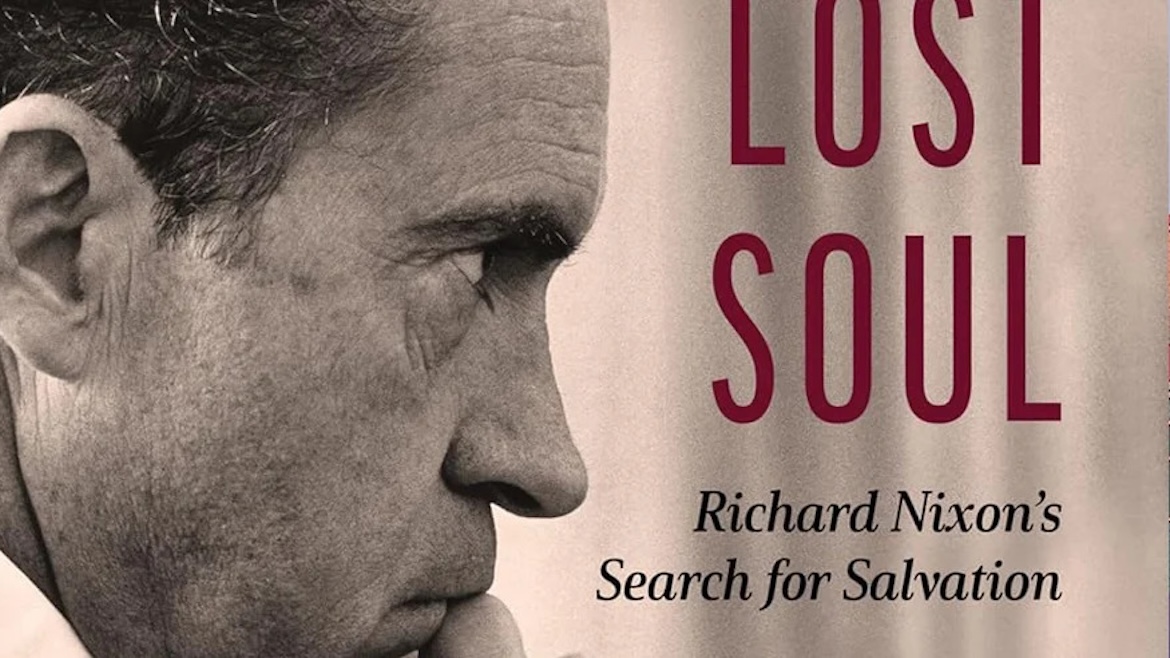 Daniel Silliman’s book on Nixon shows a surprising degree of compassion for a figure towards whom nobody feels any particular sympathy.
This year marks half a century since the ‘Watergate scandal’ was brought to the screen in that classic journalistic film, All the President’s Men (1976). A former writer at Christianity Today, Daniel Silliman, has now also surprised us with a compelling biography of President Richard Nixon’s spiritual disorientation in his search for salvation, A Lost Soul.
The man who did find salvation whilst in prison was his chief adviser, Chuck Colson, the ‘plumber’ who dealt with the White House’s ‘dirty laundry’, but who discovered the wonder of forgiveness in C. S. Lewis’s Mere Christianity.
All Evangelical Focus news and opinion, on your WhatsApp
What is it about the film starring the late Robert Redford that makes a young person who has not the faintest idea what Watergate is become so captivated by it? “It’s the perfect film,” says director Steven Soderbergh. It is constructed in such a way that you can follow this detective story with the utmost attention, without really knowing what it’s all about. It is the masterpiece of what so many series are now called: a ‘procedural’ drama.
You follow the investigation of these journalists, with their mistakes, reprimands and tenacity. And it never ceases to amaze you, every time you watch it, the many ways they find to get a person to talk, when people are determined to say nothing. It is subtle, courteous and intelligent journalism that has gone down in history. Today, all we’re left with is the crude, aggressive and foolish kind of journalism that some people mistake for news.
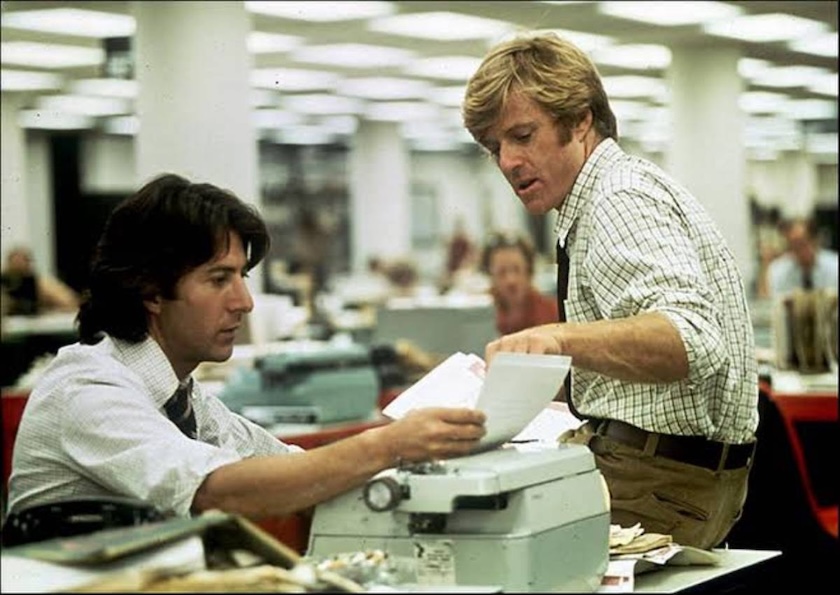
[photo_footer] This year marks half a century since the Watergate scandal was brought to the screen in that classic journalistic film, All the President’s Men (1976). [/photo_footer]
Redford had been interested in the Watergate affair ever since it came to light in 1972, whilst he was promoting the film The Candidate. He read the book by the Washington Post journalists Bob Woodward and Carl Bernstein before shooting The Way We Were and spoke to Woodward as early as 1972.
The actor bought the rights to the book in 1974 and hired the renowned screenwriter William Goldman – author of Butch Cassidy and the Sundance Kid (1969) and The Princess Bride (1973) – who had just finished adapting the novel Marathon Man (1976). He submitted a first draft that summer to Warner Bros., which failed to impress Redford, nor did it satisfy Woodward and Bernstein.
It was clearly Redford’s project, which brought director Alan Pakula on board in the final stages, when he decided to adapt the script with him, based on Goldman’s screenplay.
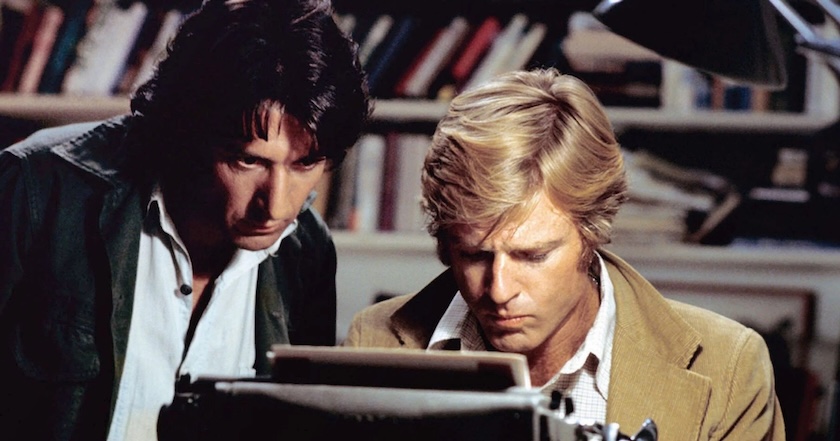
[photo_footer] The film follows these journalists’ investigation, with all its mistakes, reprimands and tenacity. [/photo_footer]
Some people today wonder why the Watergate affair was considered such a serious matter. It was a crime involving the break-in at the offices of President Nixon’s opposition party – the Democrats – which were located in a building in Washington named “Watergate”. It was carried out by a group of Cubans: they planted listening devices and stealing documents. When they were caught by a security guard on 17 June 1972, he called the police upon discovering that tape had been stuck in the locks. A real sloppy job. They were tried as burglars, but it was then that the FBI spotted the name of a CIA agent in the notebook of one of them, Howard Hunt.
No one suspected at the time that this would implicate Nixon himself, to the point of forcing his resignation. It was a story lost amongst the pages of the newspapers, to which no one had paid much attention. What prompted the FBI and the press to start investigating it was a cheque found in the account of one of the burglars, intended for Nixon’s re-election campaign. This is where the phrase ‘Follow the money!’ comes from, which in the film is attributed to Woodward and Bernstein’s informant, Deep Throat.
It was not until 33 years later, in 2005, that it emerged that Deep Throat was none other than the FBI’s deputy director, Mark Felt. The reason for his betrayal was, as is often the case, simple spite towards Nixon for having chosen Patrick Gray as director, rather than him, following Hoover’s death. Felt died three years after revealing to magazine Vanity Fair that he was the informant, a fact confirmed by the editor of the Washington Post. He did so, as is also often the case, because his family wanted to capitalise on the book deals and other lucrative opportunities that came with revealing the secret.
The film’s most famous line appears to be Goldman’s – ‘Follow the money!’ – as it does not appear in the book, nor in the Watergate documentation. It is clearly the key to this story. It reflects what Bill Clinton’s adviser would later say in 1992: ‘It’s the economy, stupid!’ Most people remain confused when it comes to politics. It is believed to be about ideologies and parties – left or right – but, for those who crave power, all this is nothing more than rhetoric that acts as a ‘smokescreen’. We humans are that predictable: driven by a hunger for fame, power and money, we’ll say whatever it takes to get it. In this sense, Nixon is the archetypal politician who lies more than he speaks.
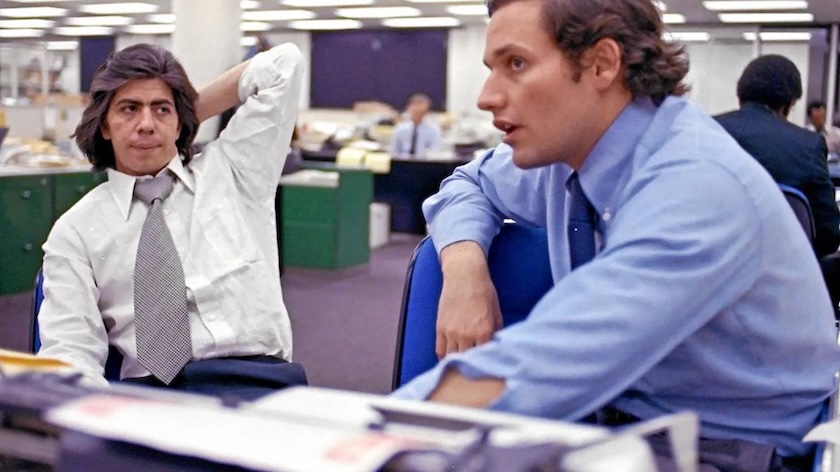
[photo_footer] Redford read the 1972 book by the Washington Post journalists Bob Woodward and Carl Bernstein on Watergate. [/photo_footer]
I found Daniel Silliman’s book fascinating, original and moving for its curiosity and compassion towards a figure for whom nobody feels any particular sympathy. For me, it is a true model of what journalism and historical research should be in this age where everyone is either good or bad, in a Manichaean world where there is nothing but black and white.
Nowadays, the grey areas are gone. The polarisation we are experiencing reveals such manipulation that algorithms reign supreme, and no one is capable of offering even a single point of criticism against the leader or party they admire. We swallow the ‘whole package’, we are the perfect example of the ‘useful idiot’.
Nixon was born in Yorba Linda (California) in 1913 into a family centred around his father’s shop, which was housed in a former church bought from the ‘Society of Friends’ to which they belonged, as they were Quakers.
His childhood was marked by poverty, illness and the fear of death. His mother never told him she loved him, and his father was always dissatisfied with him. His life is filled with a resentment that leads him to self-pity. This is not the impression you get when you read his 1978 autobiography, of course. What he does talk about is how he learnt to strive from a very young age, to work hard; that is what he believes in. It is ‘salvation by works’, as Silliman puts it. Nixon’s favourite verse from the Bible was ‘by the sweat of your brow you shall eat your bread’ (Genesis 3:19).
It may surprise you to learn that by those years the Quakers had already lost many of their distinctive practices. Meetings were no longer held in silence. The divine light no longer led them to spurn human hierarchies – which had previously meant they did not use titles, did not take off their hats as a mark of courtesy, and shunned formal language. Conscientious objection was no longer compulsory, and they recognised the flag. The only things they retained were their rejection of baptism and participation in the symbols of Holy Communion—something Nixon was unaware of. He did not seem to have heard anything about the grace, assurance and rest found in faith. For Richard, Quakerism was ‘the practical interpretation of Christianity’.
Nixon does not resort to playing the victim in his autobiography. The tragedy of his brother’s illness and death leads him to say that he had ‘a hard, but good, childhood’. That summer he read Tolstoy’s Resurrection, his favourite novel, in which the nobleman finds in the teachings of the Sermon on the Mount ‘simple, clear and practical laws’.
At Whittier College, he had a history lecturer from whom he learnt to speak without notes. If he did not know a figure, he would make one up – as journalists later discovered whilst he was president. Upon entering politics, he found his platform in anti-communism. That was his religion.
Nixon did not believe that Jesus was God incarnate. He was ‘the great example who lifts men up to that ideal life’. The Bible was inspiring but not inspired. He did not believe in its infallibility or literal accuracy. God is an ‘organising power, a great force’ and Christ, ‘the greatest man the world has ever known’. He is not the Saviour, but the one who inspires you to strive harder.
He graduated with a law degree from Duke and married in 1940 a girl he had met two years earlier, Pat Ryan, having had another girlfriend at secondary school. At the wedding, he learnt that his wife’s real name was actually Thelma Catherine. ‘Pat’ was simply a nickname. It was this lack of curiosity that led people at the law firm where Nixon first worked in California to say that he did not want to hear the details of why couples wanted to divorce. He did not pry into other people’s private lives. And faith was a private matter that was of no interest to anyone.
Fans of Billy Graham will not be pleased with Daniel Silliman’s spiritual biography of Nixon. The evangelist does not come across very well.
Nixon met the preacher in the Senate dining room in 1952. He invited him to play golf, but what they talked about was politics. Graham did not raise the subject of religion until he wrote him a letter in September 1955. The evangelist wanted to introduce him to some friends in “high ecclesiastical circles”, so that he could speak at “various religious gatherings next year”. It was the Eisenhower-Nixon re-election campaign.
Nixon agreed to go and speak in North Carolina three months before the vote. Five thousand pastors wanted to hear from the Vice-President, but he did not follow Billy Graham’s instructions. Nixon did not speak of the religious dimension of his fight against communism, but rather of how the churches could help with civil rights. He proposed putting an end to segregation in a moderate manner. To Graham, this sounded more like the ‘social gospel’ than the message of the cross and the resurrection of Christ. He mentioned that Eisenhower was a Presbyterian, but that he was not ‘trying to win the support of organised religion’. There was no talk of being ‘born again’ or putting one’s trust in Jesus. To make matters worse, Nixon then went to the preacher’s home in Montreat and could think of nothing better to talk about than alcohol to a teetotaller like Graham.
Following their initial disagreement, the evangelist pleaded with him during the 1960 election to “attend church regularly and faithfully from now on”, so that he might support him. Nixon's father-in-law, Nelson Bell—a retired medical missionary from China—asked him to speak openly about his faith, offering to publish his words in Christianity Today. He did not even reply.
President Eisenhower also advised him that, as Vice-President, Nixon should be more pious in his language and mention God in his speeches, quote the Bible and have his photograph taken leaving church – something that Eisenhower himself did not do either. This is the “American civil religion” that confuses so many.
Graham’s campaign to ‘talk more about religion in his speeches’ was joined by ‘the father of positive thinking’, the Reformed pastor from New York, Norman Vincent Peale, who had such a profound influence on the preacher at his church in California, Robert Schuller, and on the current President Trump.
Faced with the Catholic Kennedy, Peale and Graham were set to establish an office in Washington to support his campaign. To which Nixon replied that they should simply tell people to vote. The group met with Peale at the Mayflower Hotel, along with Graham’s father-in-law, representatives of the National Association of Evangelicals, the founder of Fuller Theological Seminary and the editor of the Christian Herald, to warn of “the dangers of Catholicism to religious freedom”.
JFK was elected president and the press lashed out at Peale, who ended up apologising for calling on people to vote for Nixon in a sermon, but Graham continued to insist that he speak about religion in his speeches.
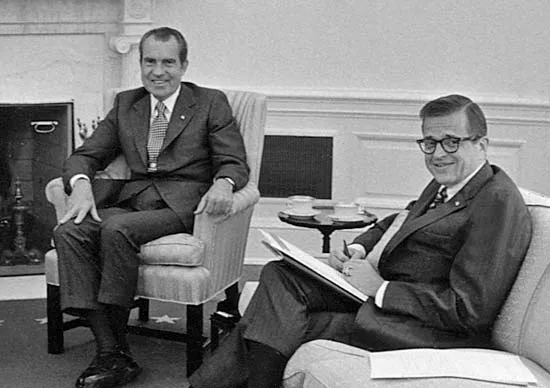
[photo_footer] Nixon’s personal adviser was Chuck Colson, who was in charge of the White House’s dirty laundry. [/photo_footer]
Chuck Colson is, as All the President’s Men film puts it, Nixon’s “personal adviser”. Redford asks Jack Warden’s character who he is, and he replies with the crude vulgarity of the tasteless phrase that Colson has hanging in his office. The best biography of him that I know of is the one I have, signed by its author, Jonathan Aitken, who has also written one on Nixon. Aitken is an Oxford graduate in law and theology, who was involved in British politics until 1999 and ended up in prison, just like Colson.
What attracted Colson to Nixon was his pragmatism – the quintessential American philosophy. Note how, in the 1968 election, he distanced himself from the civil rights struggle, securing the support of segregationists in the South by focusing on the issue of law and order. Offering security always helps to win elections.
Colson prided himself on being able to get whatever the President wanted. When Nixon had a fit of rage and started shouting at members of his team, everyone ignored him except Colson, who volunteered to do anything, such as breaking into the Internal Revenue Service offices at night to retrieve whatever files were needed. Colson’s misdeeds are countless. He had Gordon Liddy and Howard Hunt at his service as the White House ‘plumbers’ – a name they gave themselves as a joke and which has since been used to refer to anyone who deals with the ‘dirty business’ of any company or government.
Colson and Liddy broke into a psychiatrist’s office to find something with which to accuse a man who had leaked an official report to the Times and the Post about the failures in Vietnam. Hunt was already gathering information against Ted Kennedy, in case he stood for president, after fabricating a false document in which JFK ordered the assassination of the president of South Vietnam, an ally of the United States. It was he who had previously employed Cubans with links to the CIA to crush an anti-war campaign. He was even looking into how to kill a journalist and plant a bomb at an opposition think tank. All the orders stemmed from something Nixon would say; Colson would take the idea literally as a command and assign the task to Hunt – the CIA officer turned novelist (the film’s investigation begins with him phoning his publisher) – who went on to become a covert operations agent for the White House.
The book by Silliman begins with the scene that strikes me most in Oliver Stone’s film about Nixon.
It is the night before his resignation. He is sitting in the Lincoln Room around midnight on 7 August 1974, drinking brandy by the light of the single lamp illuminating the darkness, unable to find the words to face the misfortune of that historic humiliation. He is alone, embittered and desperate in his shame, when Kissinger arrives – the German Jew who escaped the Holocaust and who had shaped US foreign ‘realpolitik’ since the last century.
Kissinger said he saw Nixon plunged into “a fate of biblical proportions” as he asked him to kneel down to say a prayer. Neither of them had ever done such a thing in their lives, but Nixon said to him: “Henry, you’re not a very orthodox Jew, nor am I a true Quaker, but we need to pray.” The President took his hand and began to weep: ‘What have I done? What have I done?’ Kissinger cannot recall whether he put his arm round him then, or gave him a hug, but he made a gesture of comfort. This is probably the moment in Nixon’s life that moves me the most.
It was common for Americans at the time to imagine that the Last Judgement before God would be like playing back a tape on which your whole life has been recorded, just as in Chick’s famous comic strip adaptation of the Gospel. Nixon had a similar fantasy, but in his version, he would not be condemned but justified.
The tapes he had been recording became evidence of his guilt, making him the first president to be forced to resign. Had Nixon been a different sort of Christian, he would have trusted in God’s judgement, knowing that, because of God’s love, when the tape of his life would be played back, God’s grace would save him; but he felt he had to justify himself.
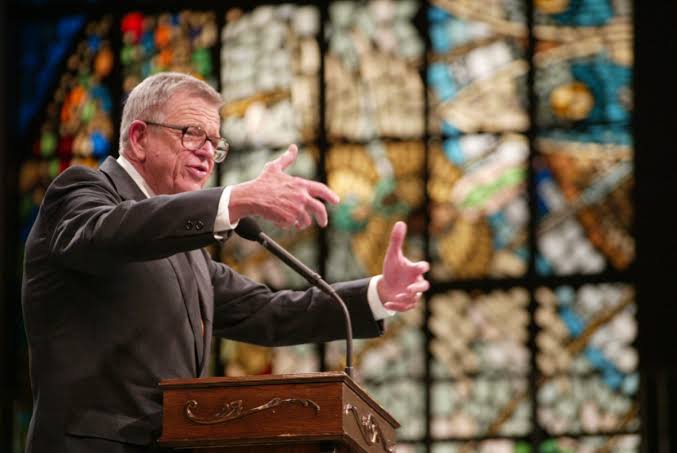
[photo_footer] Colson discovered the wonder of forgiveness in C. S. Lewis’s ‘Mere Christianity’ before going to prison. [/photo_footer]
Born Again is the title of the testimony in which Chuck Colson recounted his conversion. He begins by saying that “he wasn’t looking for Christ, but Christ found him”. It is the marvellous discovery of the Gospel, through which God saves sinners. His search began even before he went to prison.
When, in 1973, he tried to return to work in the legal department of the defence contractor Raytheon in Lexington (Massachusetts), his manager had only just come to the Christian faith. Tom Phillips was praying to God that Colson would not be hired by the company. At the end of the interview, Colson said to him: “I’ve been told you’re very involved in religious activities”. Tom seemed uncomfortable and embarrassed by the comment, Colson recalled. He did not look him in the face, but said, his eyes fixed on the clock on the wall: “Yes, it’s true, I have accepted Jesus Christ, I have surrendered my life to him, and it has been the most wonderful experience I have ever had in my life”.
To Colson, all this talk of ‘accepting Christ’ and ‘surrendering your life to him’ – as if Jesus were still walking the earth – seemed incomprehensible. When the subject of Watergate came up, Colson began to say that he had nothing to do with it. Tom Phillips cut him off and told him he didn’t need to hear his explanations. As they parted, Tom put his arm round his shoulder and told him that his life had been empty before he met Christ. That sense of emptiness and his kind, compassionate gaze made a deep impression on Colson.
Phillips invited Colson to visit him at home, and that summer it occurred to him to go and see Phillips. Tom spoke to him again about the emptiness he had felt before, whilst chasing after success. He began reading the Bible, searching for answers, and listened to Billy Graham at the ‘crusade’ held in New York’s Madison Square Garden, asking Christ to come into his life. Since then, he told Colson, he had felt the peace of His presence.
When the subject of Watergate came up, Colson was once again trying to justify himself, when Phillips told him he had to face up to his sin. Phillips then took out C. S. Lewis’s book, Mere Christianity, and read him a passage from the eighth chapter: ‘The Great Sin’. In it, the Oxford professor – who had converted to the Christian faith whilst an atheist – states that “the essential vice, the greatest evil, is pride”. It is “the chief cause of all misery”. Pride, says Lewis, means “enmity, not only with other human beings, but against God”. Therefore, “as long as you are proud, you do not know God”. It is a “spiritual cancer that consumes every possibility of love and contentment”. At that moment, all the arrogance Colson had harboured since childhood flashed through his mind. “This has struck a chord with me”, he said, “but I can’t tell you that I can make the commitment that you have”.
Phillips took the Bible and read Psalm 37 to him, whilst Colson began to feel the words as a healing balm. He wanted to trust in the Lord but did not know how. Tom took him to the third chapter of the Gospel according to John and invited him to pray with him. Colson told him that he had never prayed with anyone in his life. He gave him Lewis’s book, which he took to prison later, but as soon as he left Tom’s house and sat in the car, he burst into tears. The emotion he had been holding back suddenly welled up, and he thought of going back to the Phillips’ house and asking him to pray for him. He went as far as the door but saw that the only light on was in the bedroom, so he returned to the car.
On the road back to his parents’ home in another part of Boston, he could go on no further and stopped the car. He rested his head against the steering wheel, offering up the first true prayer of his life. The tears streaming down his face were no longer just tears of sadness and remorse, but of relief. He had surrendered himself to Christ, and nothing was ever the same again.
He entered prison fearing he would be raped, but his life had changed. He had been born again. He was no longer one of ‘All the President’s men’. Now he served another Lord—not himself, but Christ Jesus. Chuck Colson’s ego surrendered to the God who loved him so much that, through ‘the blood of his Son, he cleanses us from all our sins’ (1 John 1:7) and gives us new life.
This article is a translated and shortened version of the original piece in Spanish language published on Protestante Digital.
[analysis]
[title] Do you see a need for this kind of journalism? [/title]
[text] Evangelical Focus is a network of many people in Europe and beyond who strive to bring a uniquely Christian perspective to the big issues of conversation.
Through news, interviews, opinion and analysis, we seek to build bridges between evangelical churches and the societies in which they live.
As a non-profit entity, the big challenge is to be sustainable, month by month. We invite you to make a difference! Join the readers who make Evangelical Focus possible.
[/text][/analysis]






Las opiniones vertidas por nuestros colaboradores se realizan a nivel personal, pudiendo coincidir o no con la postura de la dirección de Protestante Digital.


Si quieres comentar o