


The danger is not being exposed to erroneous theology or receiving incorrect information. The real risk is to start relying on AI to such an extent that it affects the natural processes of faith.
 Photo: [link]Google Deepmind[/link], Unsplash, CC0.
Read the first part of this article here.
At this point, the question that truly concerns our churches arises: it is not whether the technology can save us work, but whether it compromises the doctrinal integrity of what we teach, whether it might sneak a theology that is not our own in through the back door, or put words into our mouths that do not reflect what we believe.
All Evangelical Focus news and opinion, on your WhatsApp
It is a legitimate concern and deserves a serious response, but in order to provide one, we first need to understand how this works from the inside – which is not complicated and reveals much more than it seems.
[destacate]A language model does not think, does not believe and does not pray, but rather calculates, word by word, what the most likely continuation of a text is
[/destacate] A language model does not think, does not believe and does not pray, but rather calculates, word by word, what the most likely continuation of a text is, based on the patterns it has learnt from a vast amount of written material; so that when we provide it with a biblical or evangelical context, it is not accessing any revealed truth, but rather recognising the terrain we are navigating and calculating which terms, which turns of phrase and which structure tend to occur there.
And now comes the part that concerns us in particular, which also has its charm.
The more homogeneous and repetitive a type of text is, the easier it is for the machine to imitate it, and it just so happens that ours is quite so, because we tackle the same big questions time and again—salvation, eternity, forgiveness, grace and purpose—and we do so, moreover, with a remarkably stable repertoire of expressions that we have all been refining for decades.
The result is that artificial intelligence produces convincing evangelical language with an ease that is almost offensive – not because it understands the Gospel, but because, statistically speaking, we are predictable. Admitting this stings a little, but it is healthy, and perhaps explains why our sermons sometimes resemble one another so closely even without the help of any machine.
There is a second, rather more delicate feature, which is that these systems are partly adjusted in response to user feedback, which pushes them to pleasing users.
This is not merely a suspicion of mine: in April 2025, OpenAI withdrew an update to its model and publicly explained that it had become excessively flattering and accommodating because too much weight had been given to immediate user feedback, generating responses that the company itself described as overly sympathetic but insincere. They corrected this, and current models incorporate safeguards to prevent it, but the underlying tendency remains because it is part of how they are trained; so one would do well to remember that they are conversing with something which, when faced with the choice between telling the truth and being liked, has a certain inclination towards the latter.
None of this replaces a Christian minister’s discernment, it should be said, but neither does it prevent or hinder it; what it does—and this is certainly worth bearing in mind—is to return to us with remarkable ease, and moreover in our own spiritual language, precisely what already fitted with what we ourselves had put before it. Understanding this is key.
With that description on the table, doctrinal concerns can be viewed with far greater calm, because a machine that believes nothing has no theology of its own to defend nor any interest in introducing one, and what it will do is operate within the parameters we set for it.
[destacate]Artificial Intelligence produces convincing evangelical language with an ease that is almost offensive – because, statistically speaking, we are predictable[/destacate] In fact, an assistant can work strictly within the documentation one provides, following the instructions one gives and within the doctrinal framework one sets, and whilst this may not constitute a perfect filter—and anyone who claims otherwise is exaggerating—it does greatly reduce that risk, among other things because the result is laid out in writing before you and can always be reviewed at your leisure, which is more than can always be said for what one improvises from the pulpit.
In fact, the opposite of what is feared occurs: when properly guided, the tool can review a pre-written sermon and highlight where a statement deviates from what we hold to be true; so for a minister with a reasonable fear of having strayed without realising it, this is not a threat to their doctrinal fidelity but rather a support for it, and I do not know of many forms of support that are available at eleven o’clock on a Saturday night.
There is, however, a far more mundane and considerably more frequent danger, and that is of accepting as true, without checking it, information that the machine has simply made up. Because these AI tools generate the most plausible continuation—and not necessarily the most accurate one—so that a false piece of information comes across with the same confidence and the same impeccable wording as a true one.
A date that isn’t correct, a quote from Spurgeon that Spurgeon never said, a biblical reference that doesn’t support what it’s claimed to support: all of this pops up from time to time, presented flawlessly, and spreads from the pulpit with dizzying ease, because nobody leaves the service to verify what they’ve just heard. Checking what is going to be said remains our job, and there is no tool that can do it for us.
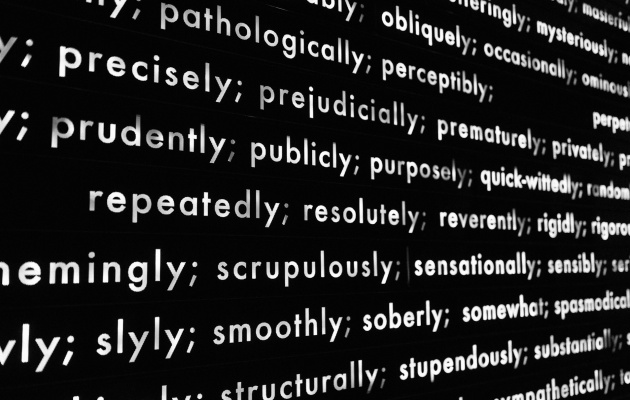
[photo_footer]Large Language Models learn to predict the next word in sentences that become fine-tuned texts. / Photo: Jason Leung, Unsplash, CC0[/photo_footer]
The real risk, in my view, is something else entirely, and it’s far harder to spot because it leaves no trace on paper: dependence.
I can’t recall any previous technology that has generated anything similar, with the possible exception of social media, given the way it taps into the brain’s reward mechanism; though even there the comparison falls short, because social media hooks us through entertainment, whilst this hooks us through our capabilities – which is a far more subtle lure.
[destacate]There are people in our congregations consulting a machine, in the early hours of the morning and in silence, about matters of health, money, marriage, children and faith [/destacate] It’s like having a friend with superpowers sitting next to you who edits a video for you, programmes a game for you, writes a story for the children, organises a database for you, solves a maths problem for you, plans a trip for you and drafts a difficult letter for you – all from the same place, without complaining and at any time of the day or night; and when someone like that is constantly available, the dependence it creates is overwhelming.
I say this bluntly and with no intention of lecturing, because I don’t want to issue a warning from the outside about a pitfall I’ve fallen into three times this week: my greatest challenge with artificial intelligence today is neither doctrinal nor ethical, but my own dependence on it – to the extent that I work with it for so many hours and on so many different tasks that I’ve had to start keeping an eye on myself, something that hasn’t happened to me with any computer programme until now.
Nor is this merely a personal impression, as research is beginning to accumulate in this area (thank you, Claude Opus 5, for finding the studies that support this point).
A study by the MIT Media Lab published in June 2025 followed 54 people writing texts for four months—some with an assistant and others without—measuring their brain activity. It observed that connectivity decreased in proportion to the support received, and that those who had worked with the tool were precisely the ones who had the worst recall and struggled most to quote what they had just written themselves—a phenomenon the authors termed ‘cognitive debt’, although this should be treated with caution as it is a preliminary study, not peer-reviewed and based on a small sample.
[destacate]Amongst those who used AI assistants daily, 87% used them for personal matters, including emotional support. Those who did so exhibited more symptoms of depression, anxiety and irritability[/destacate] Another study by Microsoft Research in collaboration with Carnegie Mellon University, published in January 2025, found that the more trust one places in the tool, the less critically one examines what it returns, so that the system ends up rewarding precisely those who stop checking.
And a study by Mass General Brigham published in JAMA Network Open in January 2026, involving nearly 21,000 people, found that, amongst those who used assistants daily, 87 per cent used them for personal matters, including emotional support, and that those who did so exhibited more symptoms of depression, anxiety and irritability, whilst use for work or study did not show this association. However, the authors themselves caution that this does not prove cause and effect and that it could well be a vicious circle: those who are already struggling turn to the assistant more, and the more they do so, the worse they feel.
Translated into our own reality, this means that there are people in our congregations consulting a machine, in the early hours of the morning and in silence, about matters of health, money, marriage, children and faith – that is to say, issues which, until very recently, would have been taken to a pastor, a trusted brother or directly to the altar – and they do so without telling anyone, with the same sense of shame with which others conceal how they prepare their sermons, without knowing whether what they’re doing is right or wrong and with no one to ask. That, it seems to me, is the real pastoral problem we face, and we won’t resolve it whilst the subject remains taboo.
In the preacher, this dependence takes on a form of its own and is considerably more difficult to detect, because it is not evident in the result but precisely in what the outcome does hide.
[destacate]A doctrinally flawless discourse is of little use if the one delivering it has not lived it out. Scripture does not call us to produce correct content but to a relationship with God that has been nurtured[/destacate] An assistant can be asked to prepare a sermon on almost any topic, and within seconds – with very few instructions – they’ll produce something perfectly competent, with its three well-balanced points, its illustration of the lighthouse in the midst of the storm, and its closing appeal – so presentable that it could be preached as it stands without anyone likely noticing anything unusual.
That path exists; it’s convenient and just a click away. What it isn’t, and anyone who’s tried it knows exactly what I’m talking about, is rewarding, because you end up stepping up to the pulpit to defend content that you haven’t worked on, that you haven’t wrestled with and that you haven’t taken to heart, feeling rather out of place within your own words, with that dull unease that sometimes only the preacher himself perceives and which is best not to stifle too quickly.
It is here that the two problems converge, because deep down they are one and the same: a doctrinally flawless discourse is of little use if the one delivering it has not lived it out, since Scripture does not call us to produce correct content but to a relationship with God that has been nurtured and to a continuous study that begins within; and it is precisely said of Ezra that he had prepared his heart to seek the law of the Lord, and to obey it, and to teach it—in that order and no other.
Dependence disrupts precisely that order, because it allows one to teach without having sought it out and without having obeyed it, and it does so with such finesse that it can take years to notice the gap.
The third and last part of this article will be published next week.
Daniel Gómez, Communications Coordinator for the Federation of Assemblies of God of Spain. This piece was originally published in 'Fiel' magazine and has been translated with permission.
[analysis]
[title] Do you see a need for this kind of journalism? [/title]
[text] Evangelical Focus is a network of many people in Europe and beyond who strive to bring a uniquely Christian perspective to the big issues of conversation.
Through news, interviews, opinion and analysis, we seek to build bridges between evangelical churches and the societies in which they live.
As a non-profit entity, the big challenge is to be sustainable, month by month. We invite you to make a difference! Join the readers who make Evangelical Focus possible.
[/text][/analysis]






Las opiniones vertidas por nuestros colaboradores se realizan a nivel personal, pudiendo coincidir o no con la postura de la dirección de Protestante Digital.


Si quieres comentar o